The Response of Genetic Correlations to Drift
Response of Genetic Correlations to Drift
What are genetic correlations?
- Between loci:
![]()
- Between traits:
![]()

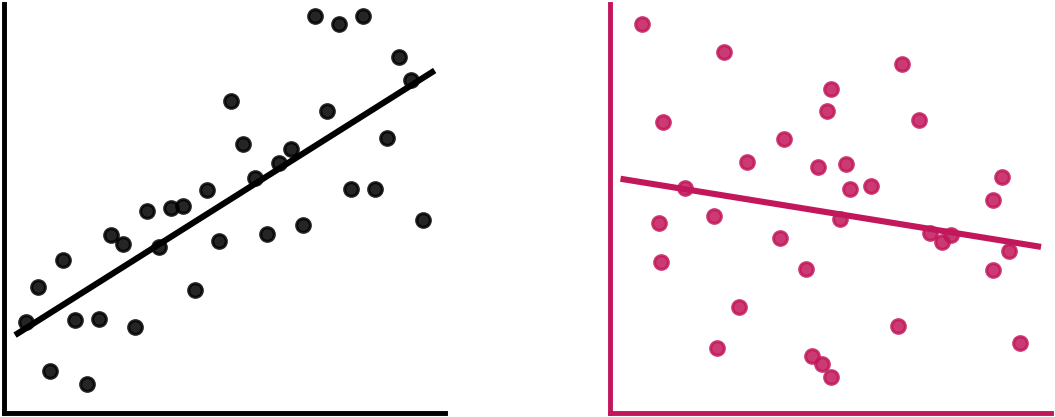
Why do genetic correlations matter?
- Alter patterns of variation
- Constrain adaptation
How do genetic correlations respond to drift?
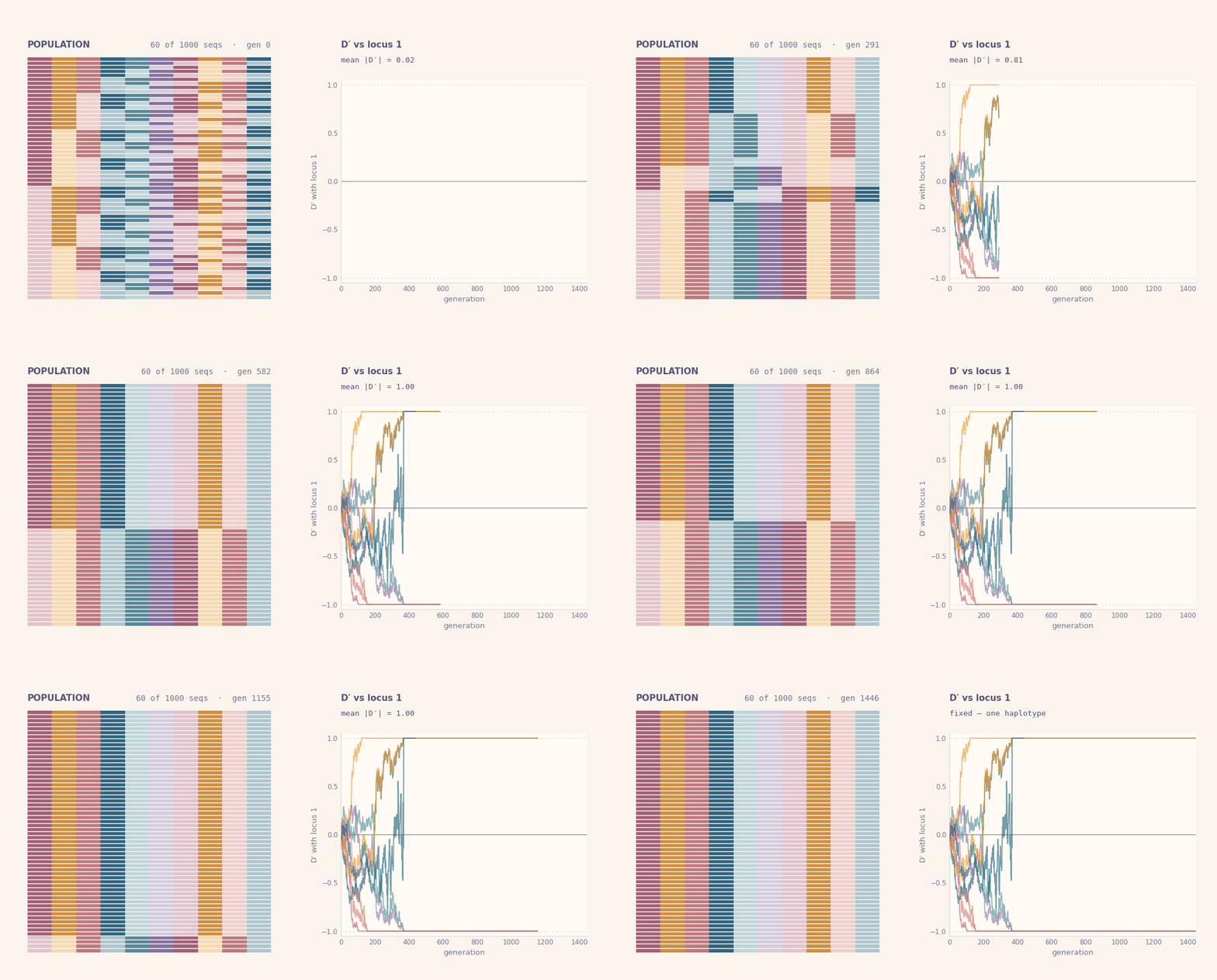
- Genetic correlations among loci become more extreme
What about quantitative characters?
- Multivariate trait vector: \({\bf z}=\bigl(\begin{smallmatrix} z_1 \\ z_2 \end{smallmatrix}\bigr)\)
- Genetic covariance structure ~ \({\bf G}\)-matrix: \(\bigl(\begin{smallmatrix} G_{11} & G_{12} \\ G_{12} & G_{22} \end{smallmatrix}\bigr)\)
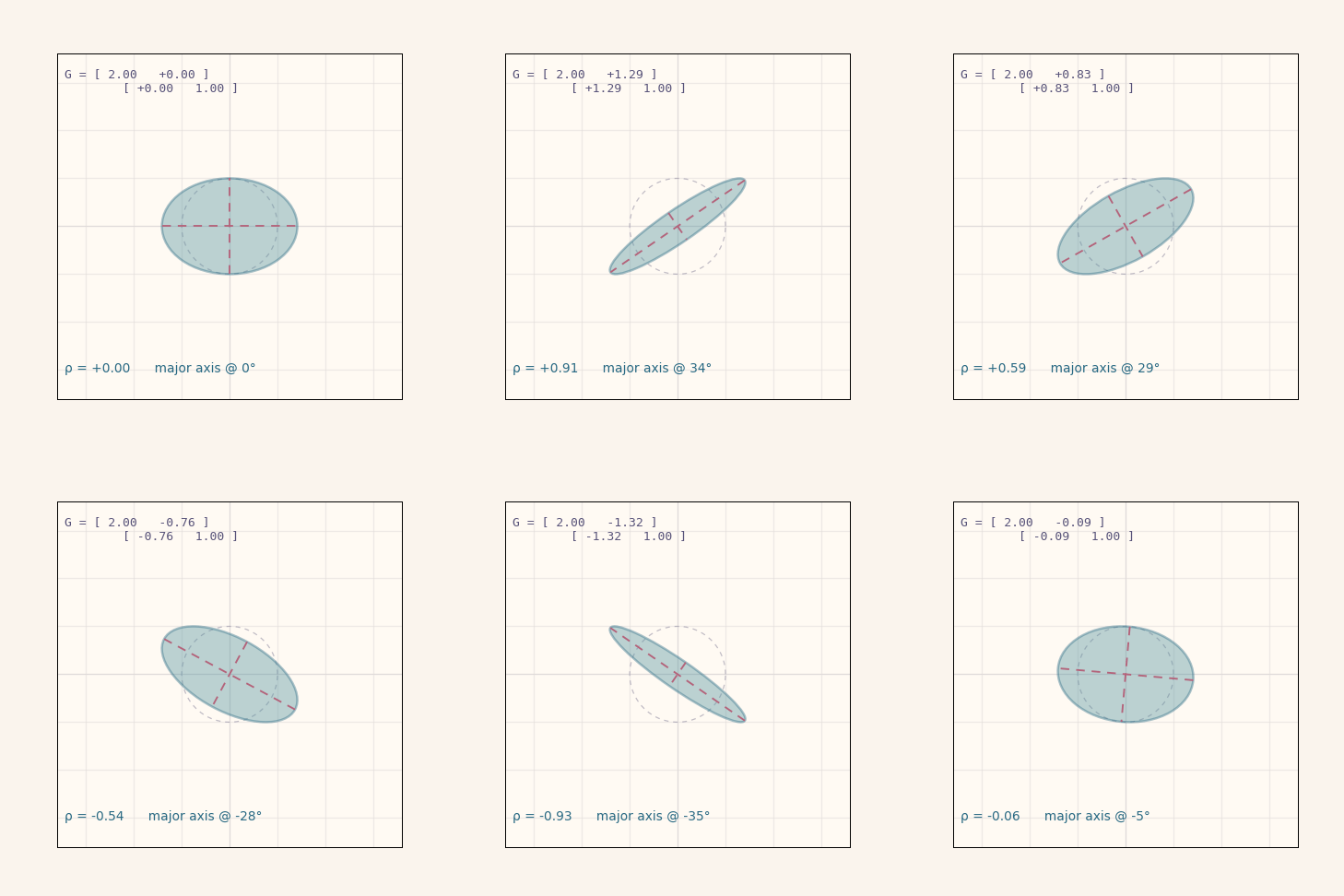
![]()
- Genetic correlation: \(\rho({\bf G})=G_{12}/\sqrt{G_{11}\,G_{22}}\)
- How does \(\bf G\) respond to drift?
- \(\mathbb E[{\bf G}_t]={\bf G}_0e^{-t/N_e}\), (Lande, 1979, 1980)
![]()
- \(\rho(\mathbb E[{\bf G}_t])=\rho({\bf G}_0)\), constant correlation
- \(\mathbb E[{\bf G}_t]={\bf G}_0e^{-t/N_e}\), (Lande, 1979, 1980)
- Genetic correlation: \(\rho({\bf G})=G_{12}/\sqrt{G_{11}\,G_{22}}\)
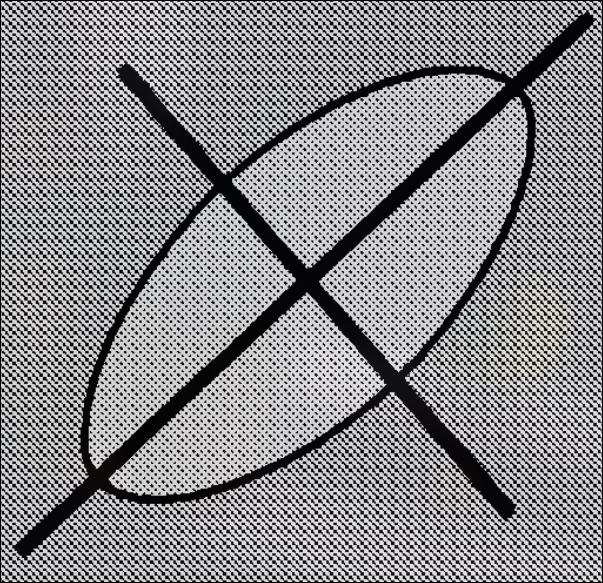
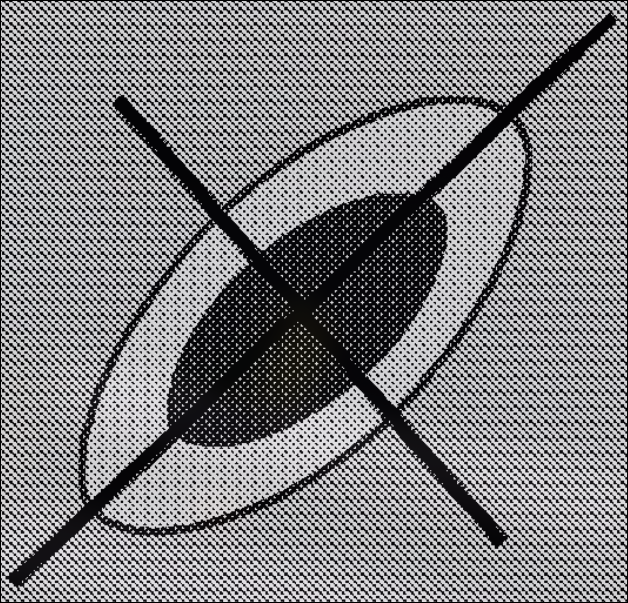
The conventional view
- Drift “shrinks” \(\bf G\)-matrices
![]() (Roff 2000)
(Roff 2000)
- No effect on genetic correlations between traits
- Differences in orientation ~ selection, mutation, migration
![]()
- … but variation around \(\mathbb{E}[{\bf G}_t]\) (Phillips et al, 2001; Steppan et al, 2002)
- … still lacking neutral model (Mallard et al, 2024; Blomberg et al, 2025)
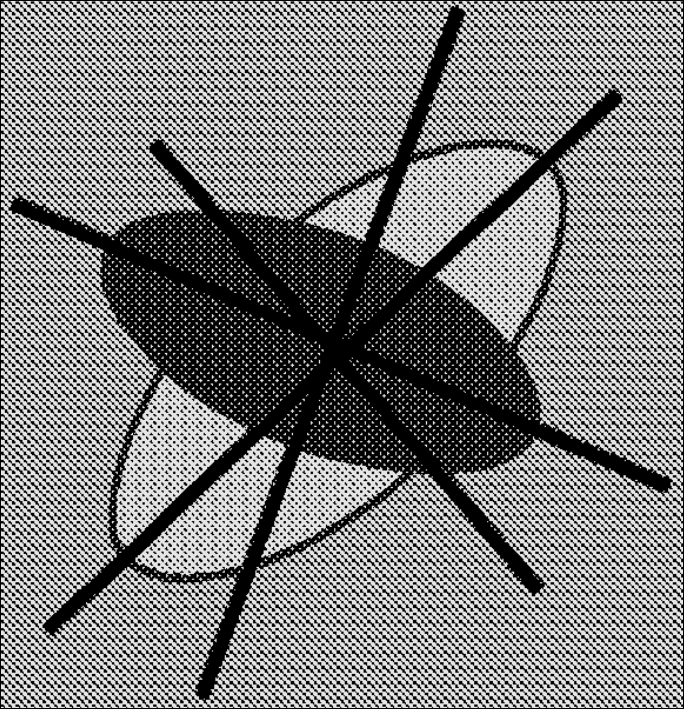
Genetic correlations tend towards ±1
- \(d\rho/dt\) from \(d{\bf G}/dt\) using chain rule: \(\frac {d\rho}{dt}=-\frac{v}{2N_e}\,\rho\,(1-\rho^2)+\sqrt{\frac{v}{N_e}\,(1-\rho^2)}\,\frac {dB}{dt}\)
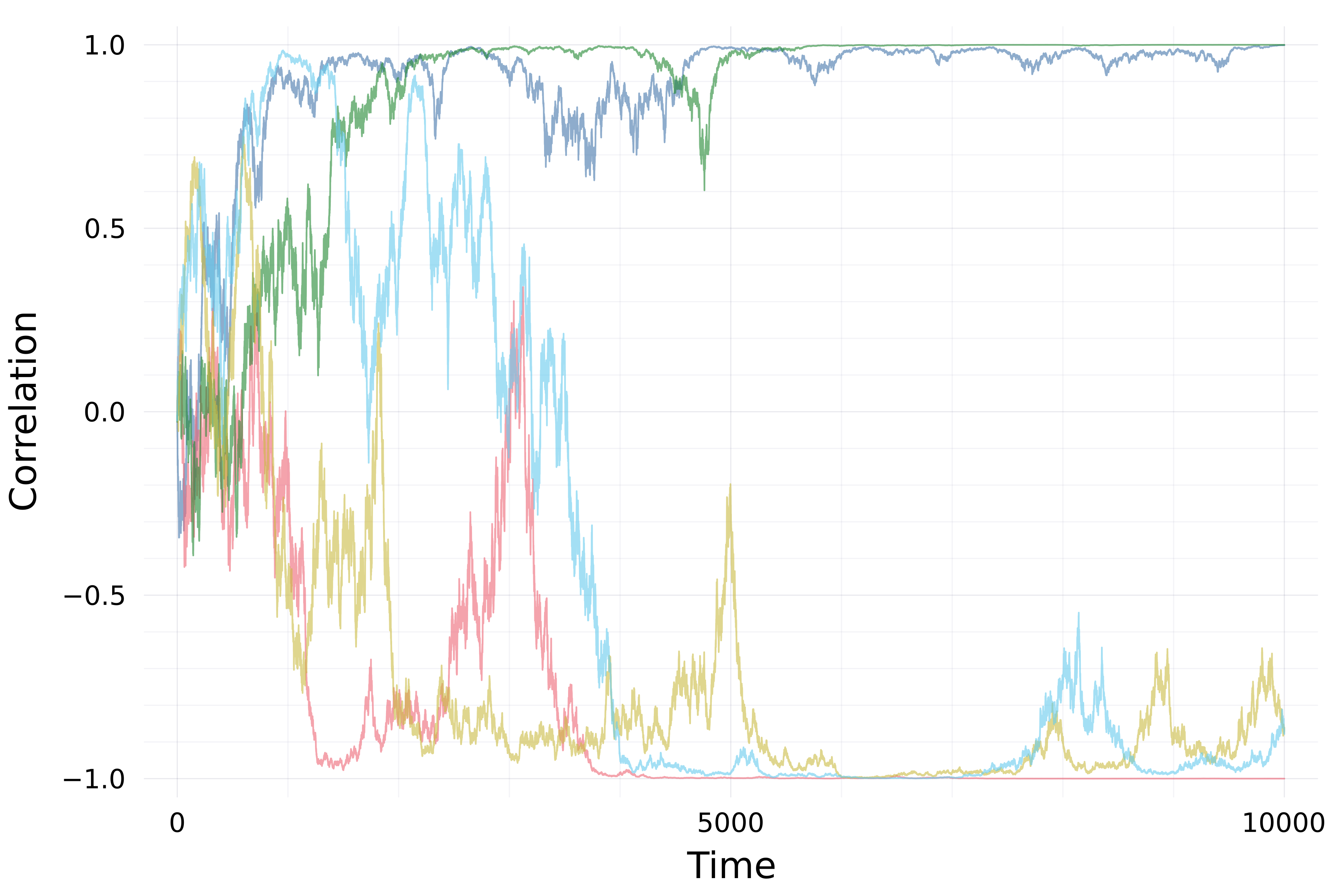
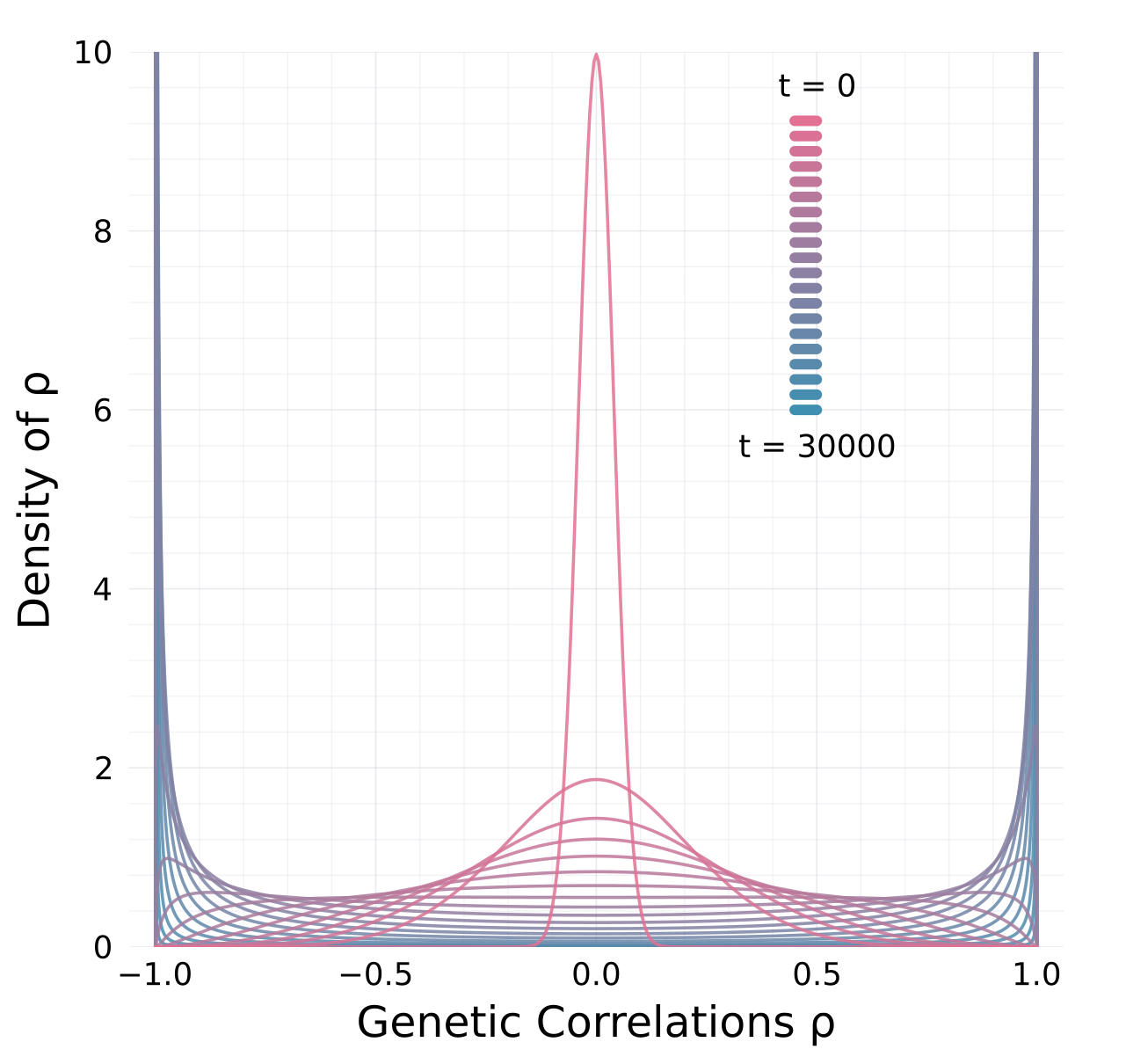
Effect of correlation on \(\bf G\)-matrix
Rate of attraction to ±1 set by \(v/N_e\)
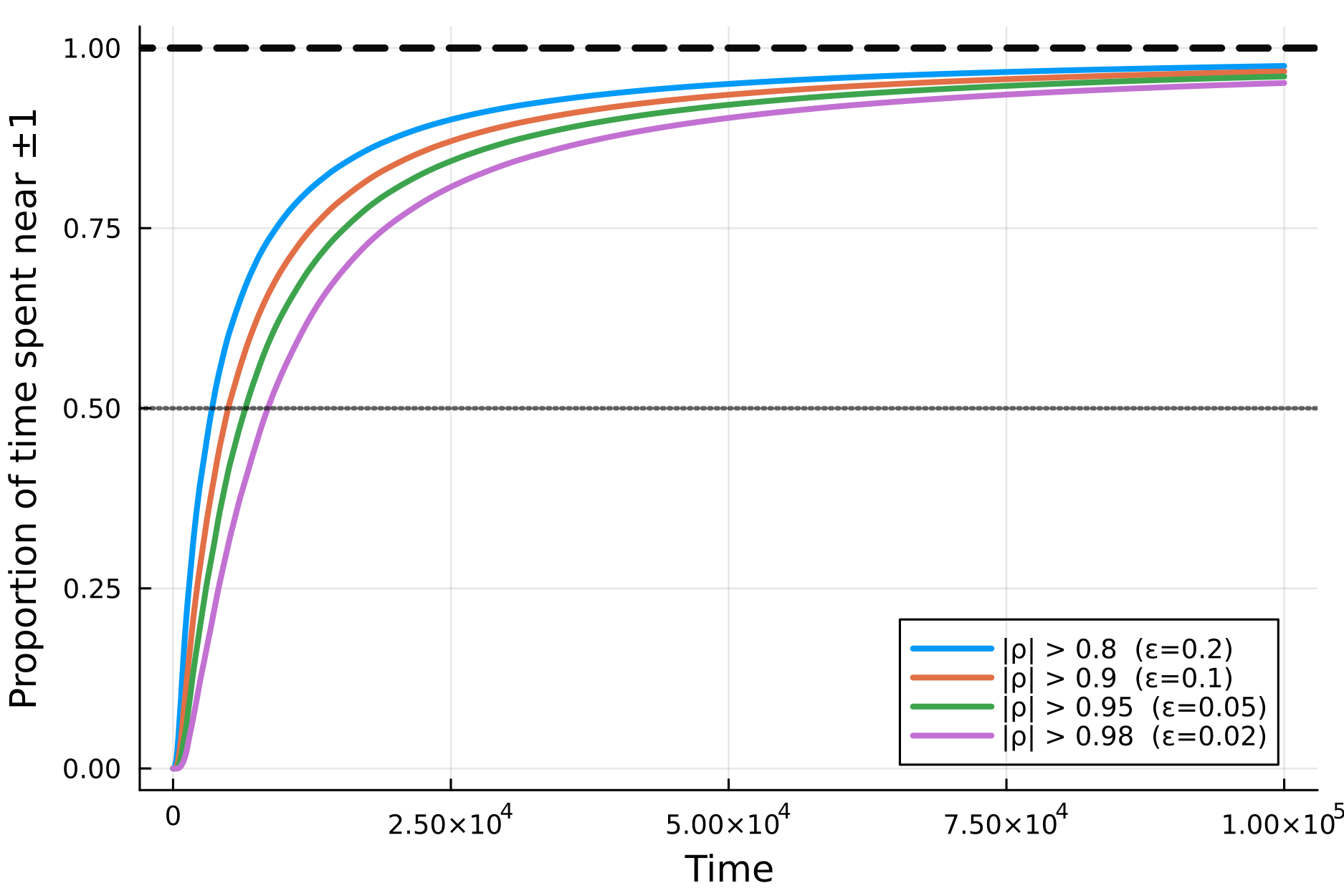
Colors correspond to near ±1 thresholds
- Interesting it does not depend on genetic vars \(G_{11},G_{22}\)
- Evolution always depends on amount of genetic variation
- How to test result?
- sets of replicated mesocosms of clonal populations controlling for mutation
- for each set impose different \(N_e\) using bottlenecks
- time-series measurements of genetic correlations
Revised view
- Drift alters orientation of \(\bf G\)-matrices
- while also eroding variation
- Stability of \(\bf G\)-matrix structure due to
- mutation, migration, selection
- Essentially complete opposite of previous view (Roff 2000)
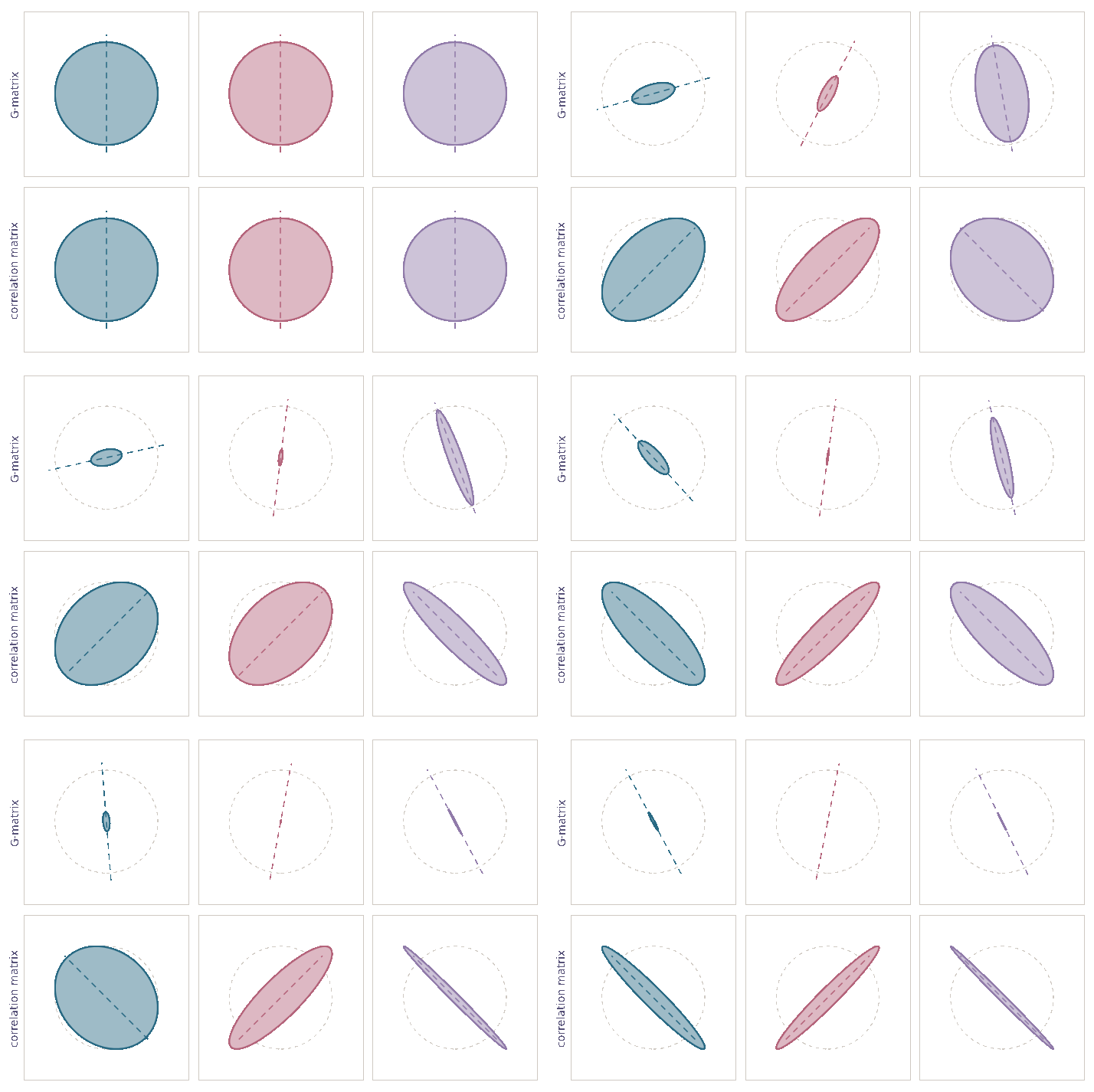
Consequences for understanding evolution
McGlothlin et al (2018):
- \(\bf G\)-matrice of Anolis lizards
- Variation across lineages => evolution
- Overall structure conserved
- Explanations:
- Plieotropy
- Stabilizing selection
- “Genetic drift is predicted to primarily influence G-matrix size…”
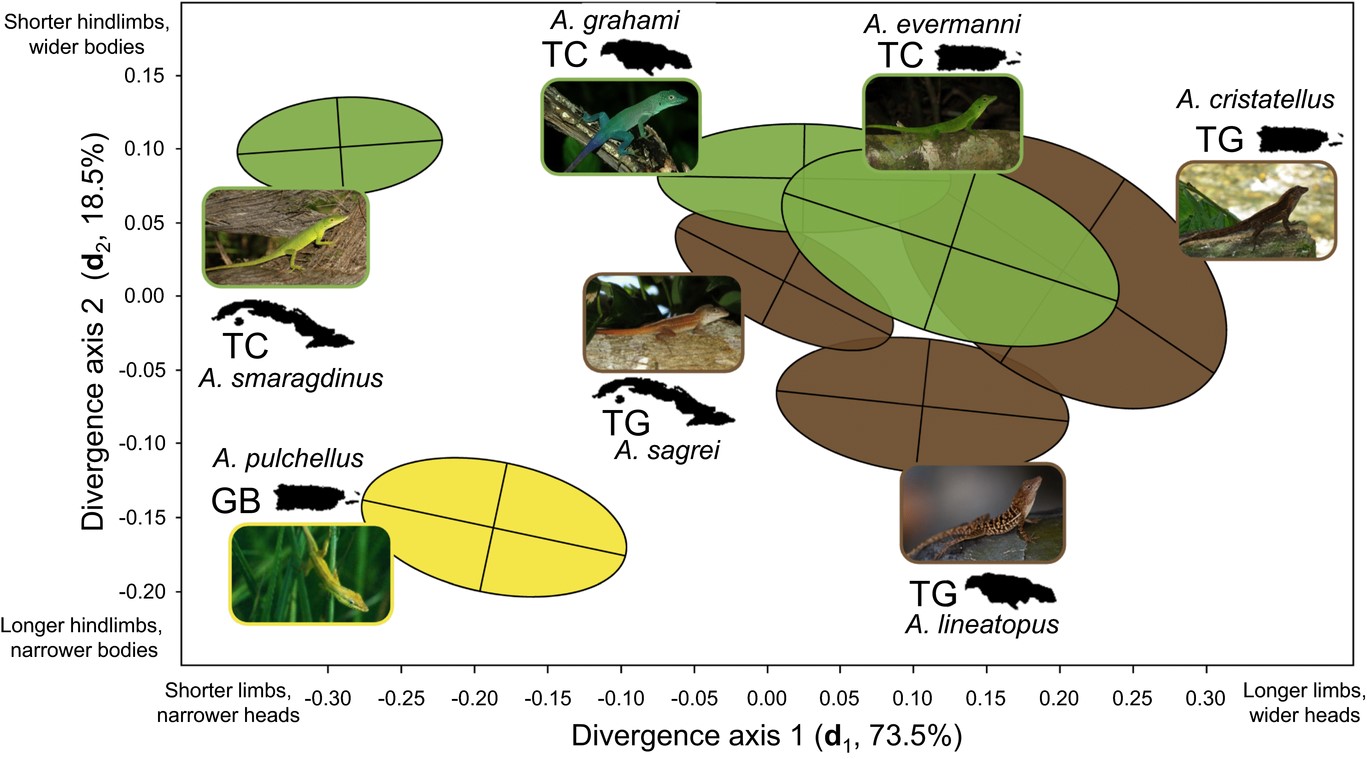
If drift explains small \(\bf G\)-matrices, why dont those matrices also have altered orientation?
More in the paper…
Thanks & Questions
Peter L. Ralph, Steve Krone, Hinrich Schulenburg, Patrick C. Phillips, Arne Traulsen, Jonas Wickman, Brendan Bohannan, Carola Peterson, Inga Hamerich, Amande de Azevedo-Lopez, Hildegard Uecker, many more …