Charting the evolutionary consequences of interspecific interactions
Charting the evolutionary consequences of interspecific interactions
From theory to inference
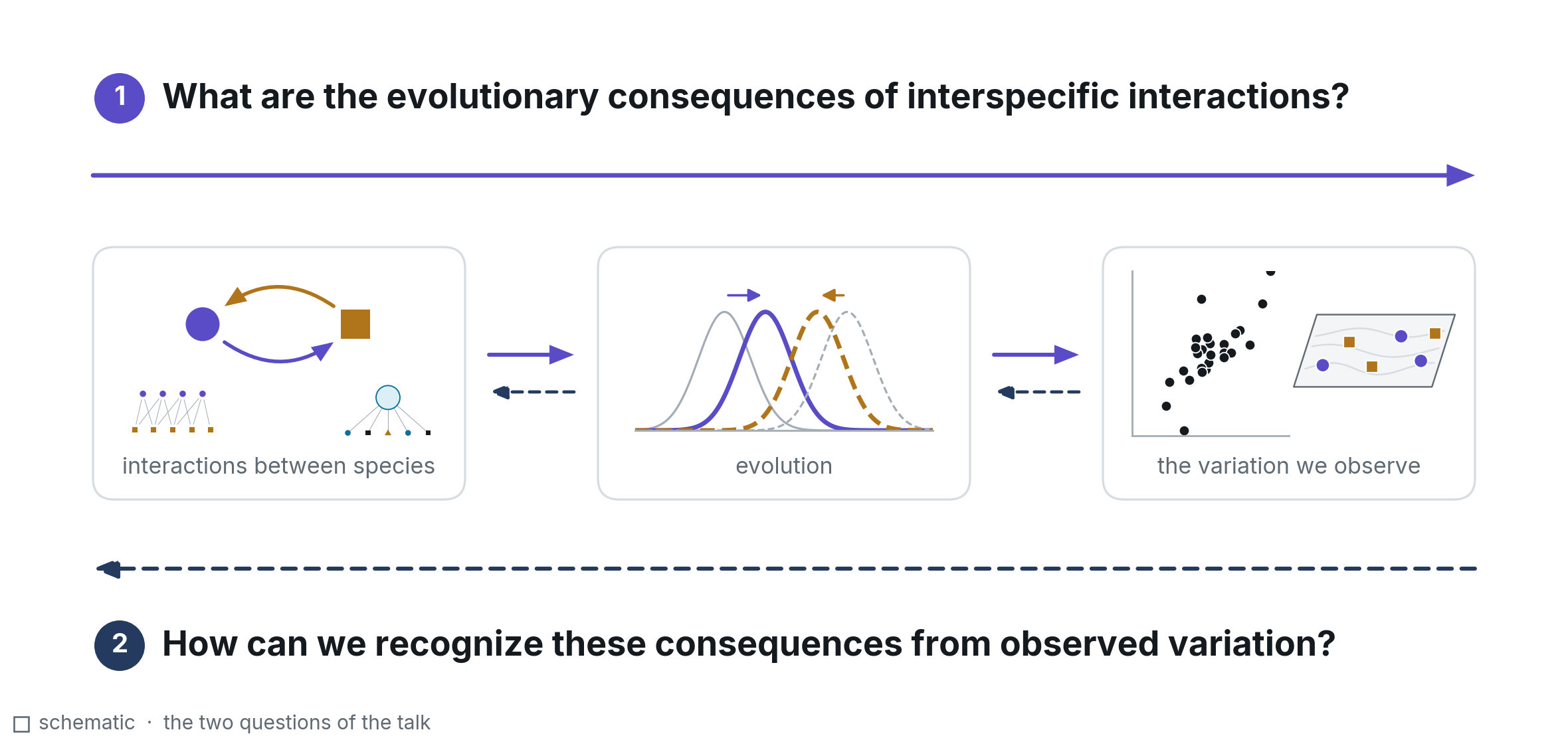
The question
Opening schematic
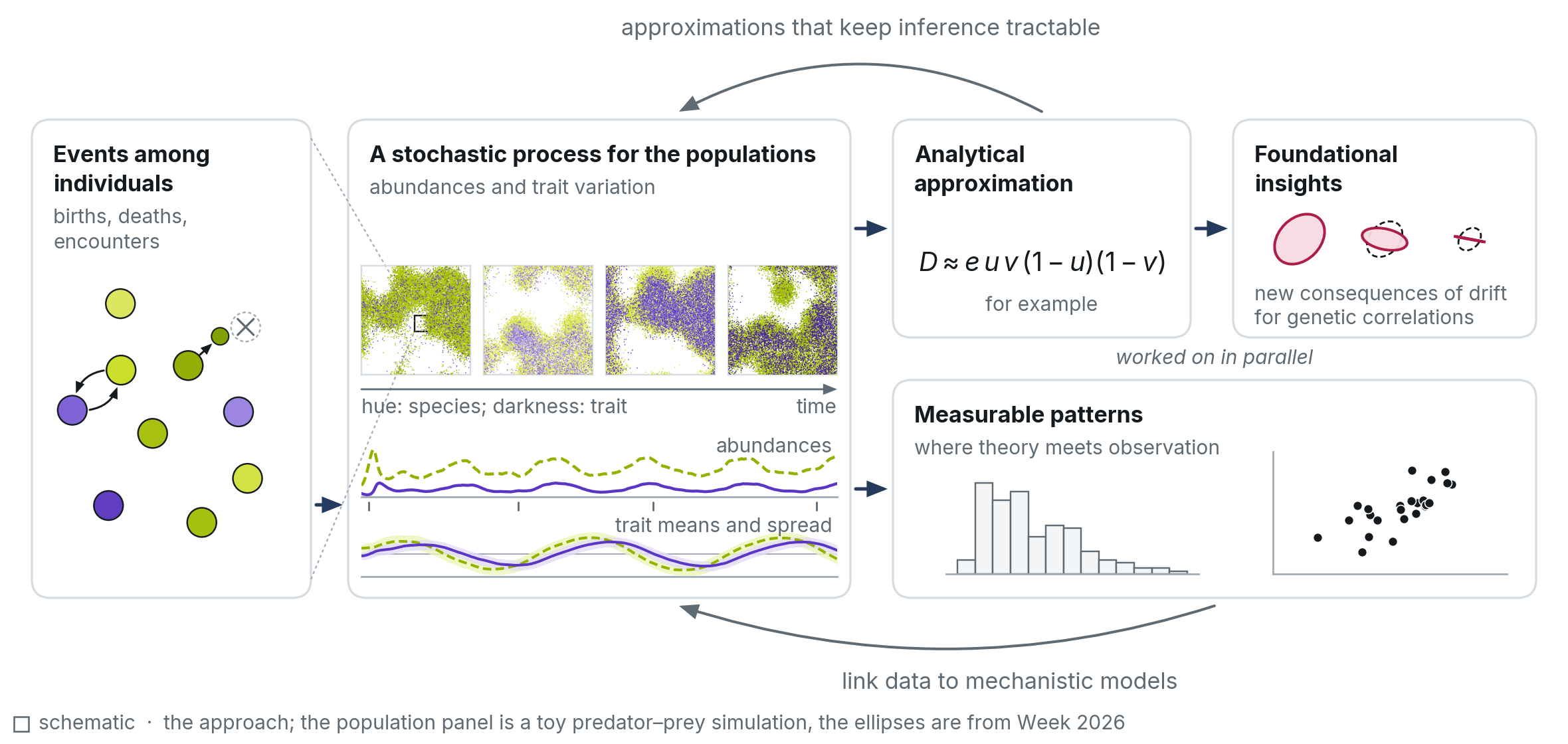
How I approach these questions
Opening schematic
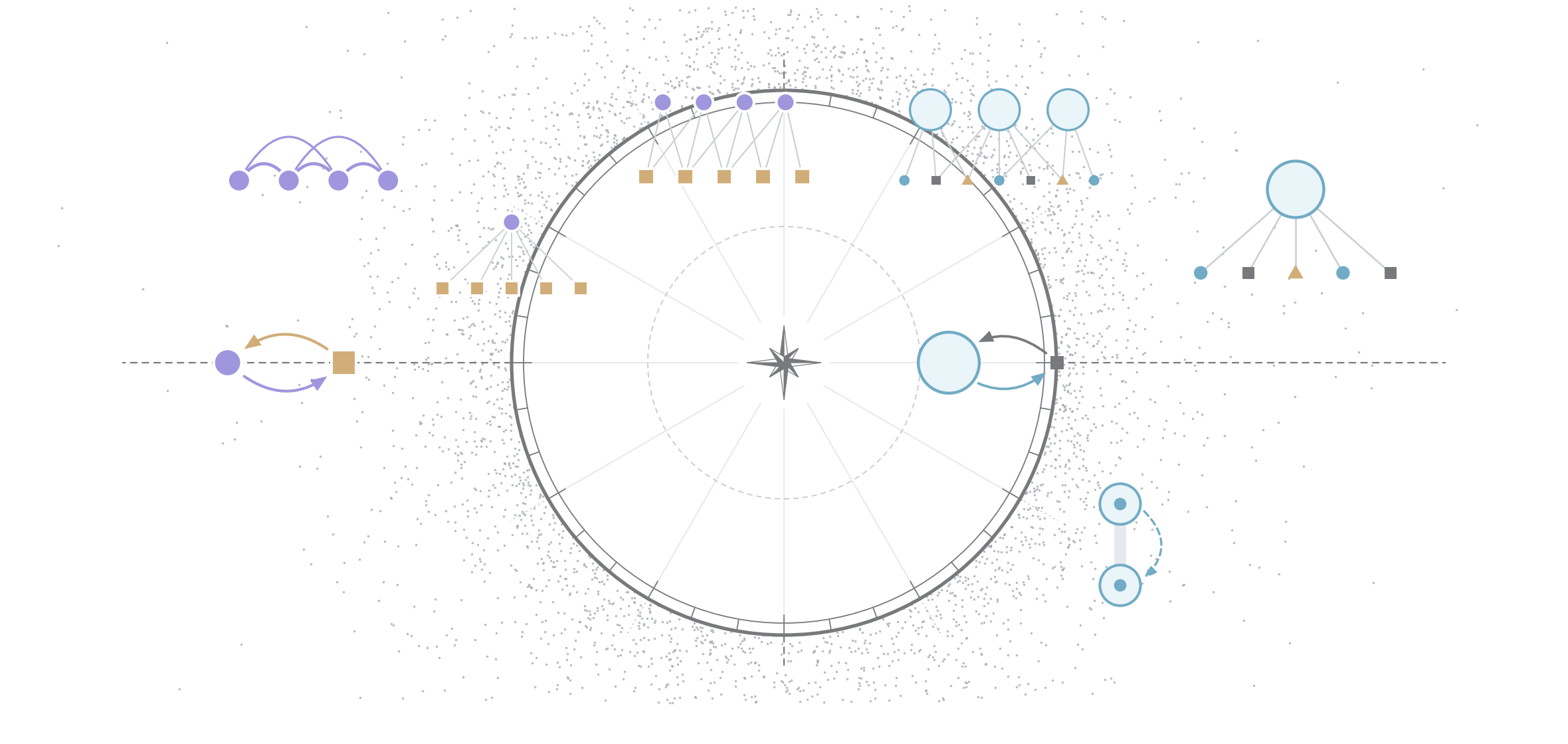
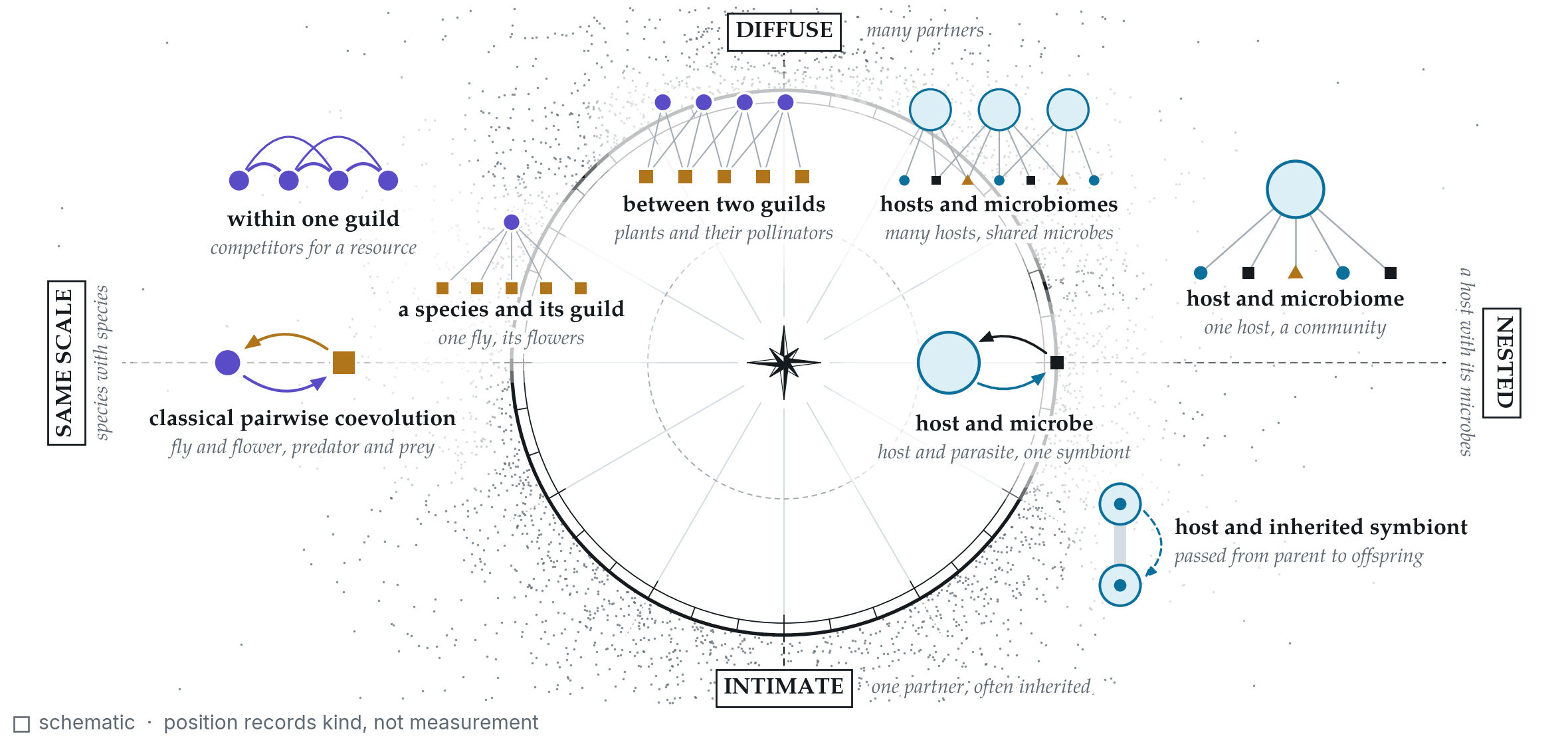
A landscape of interaction systems
Opening schematic
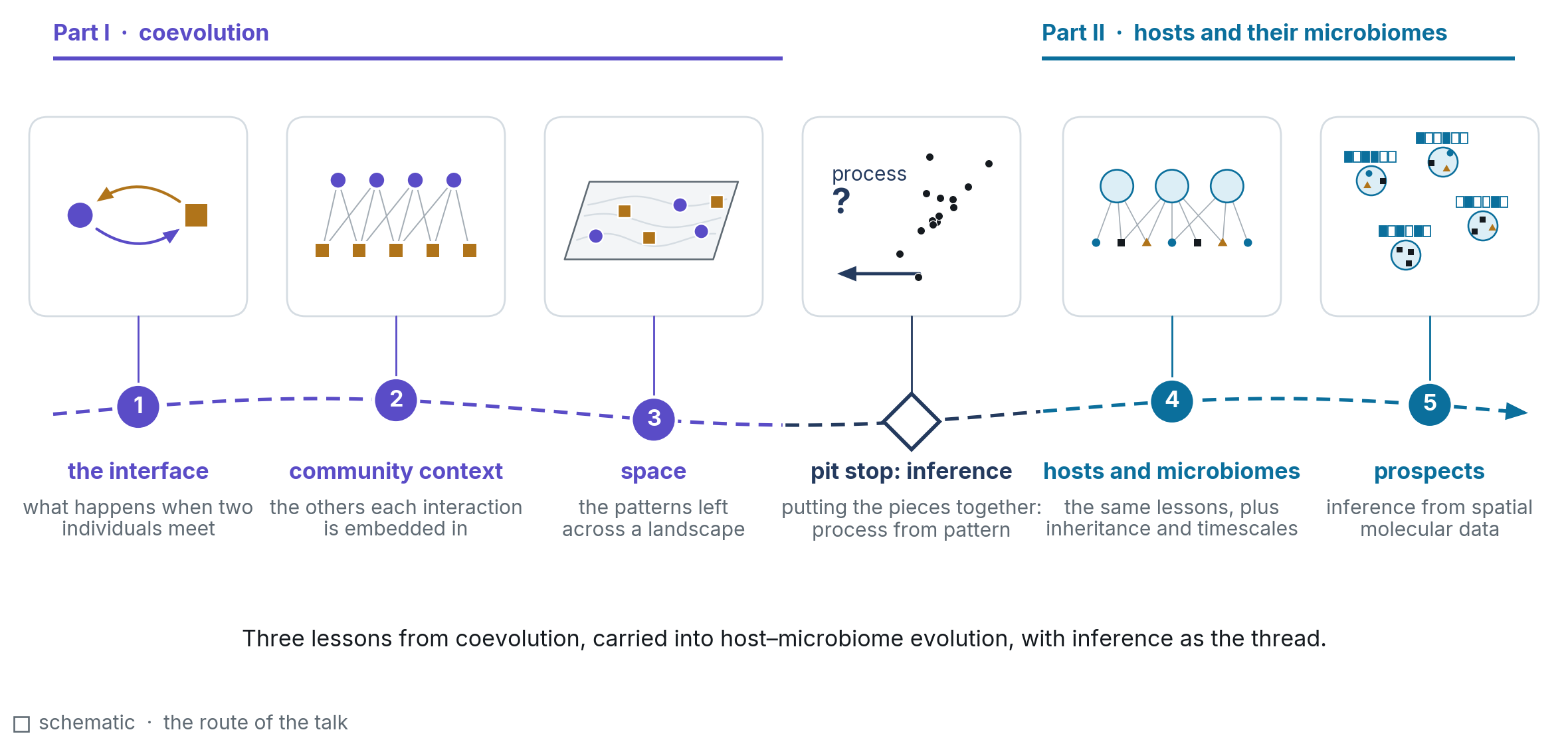
Where we are going
Opening schematic
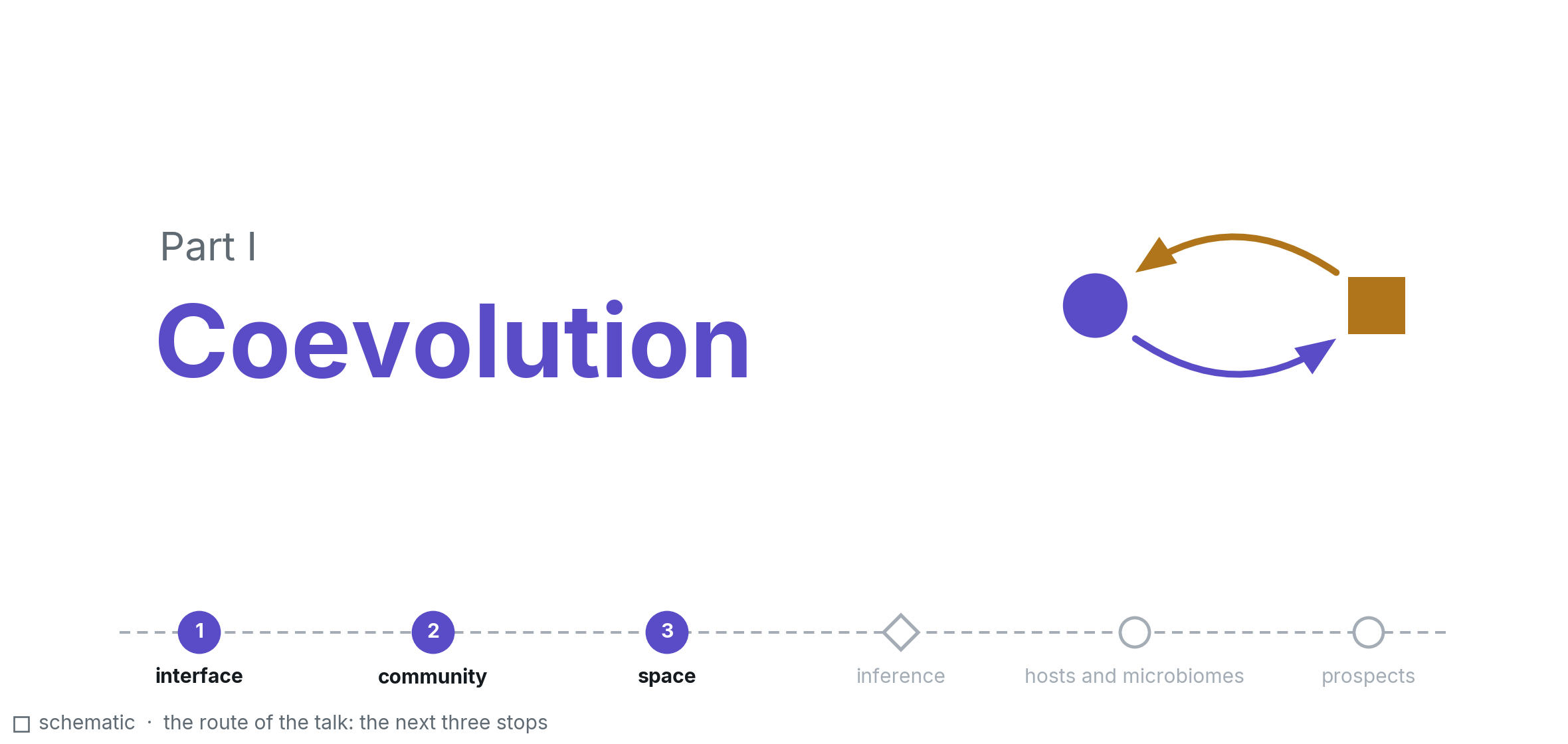
Part I: Coevolution
Part I schematic
What is the interface between interacting species?
Part I · the interface published
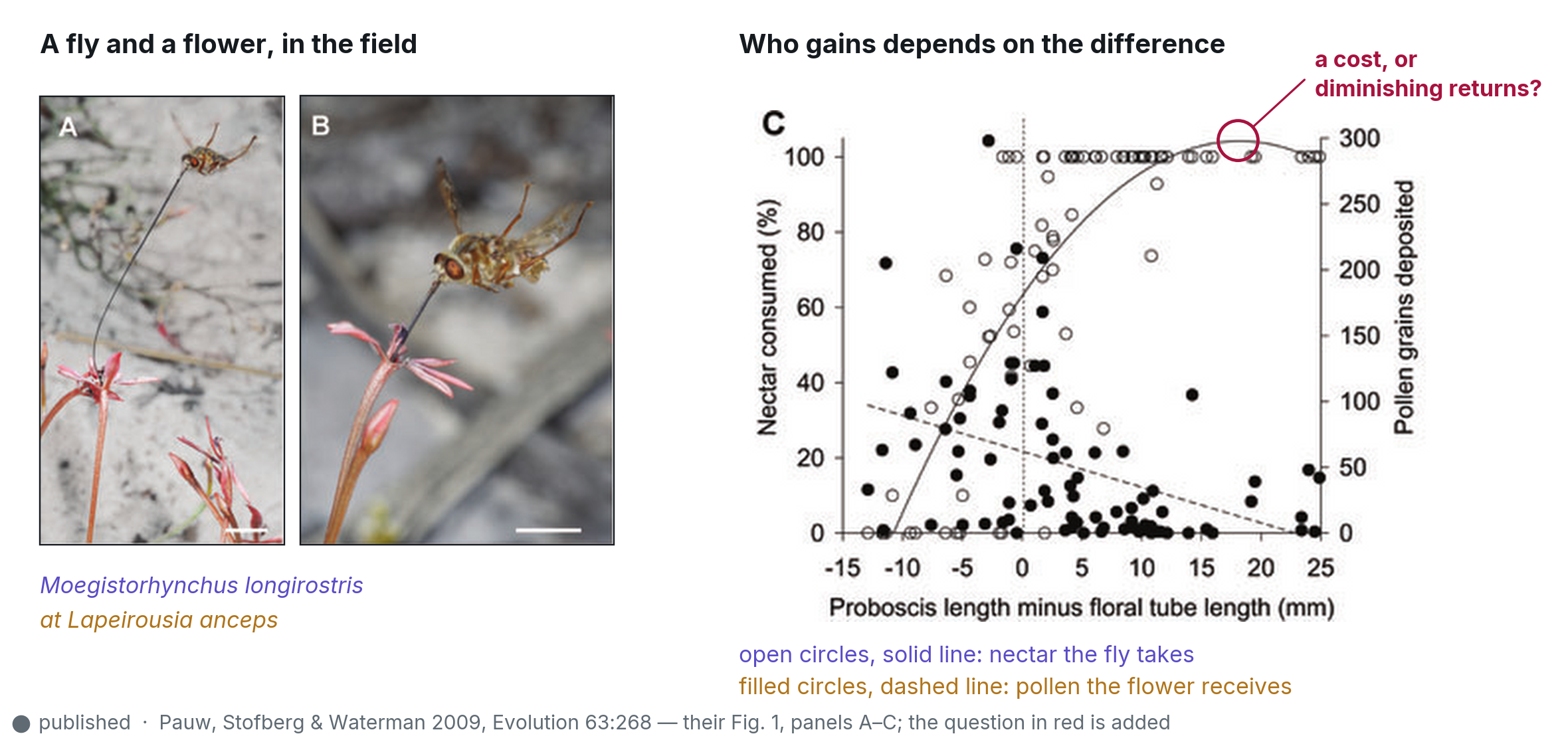
Different interfaces imply different selection
Part I · the interface published
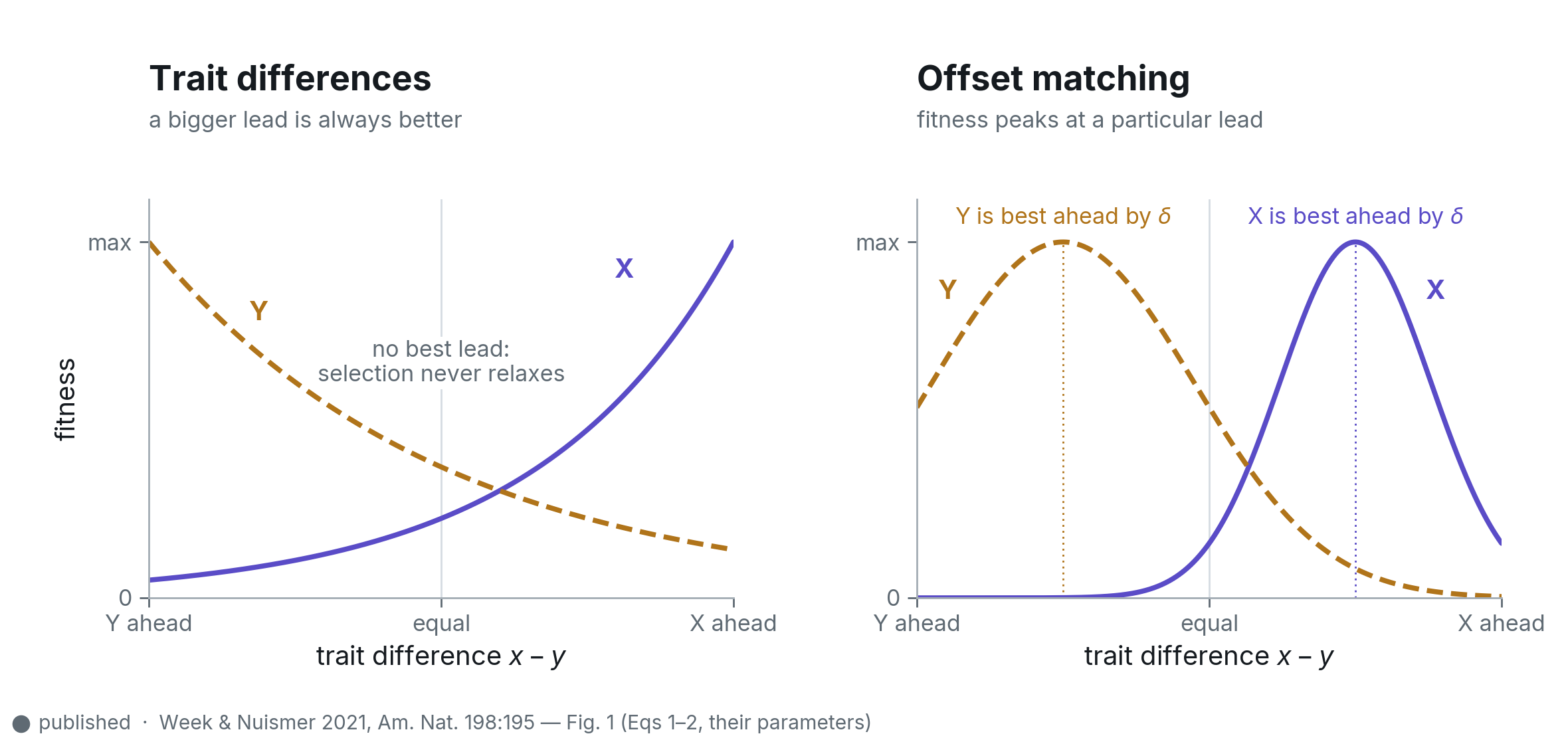
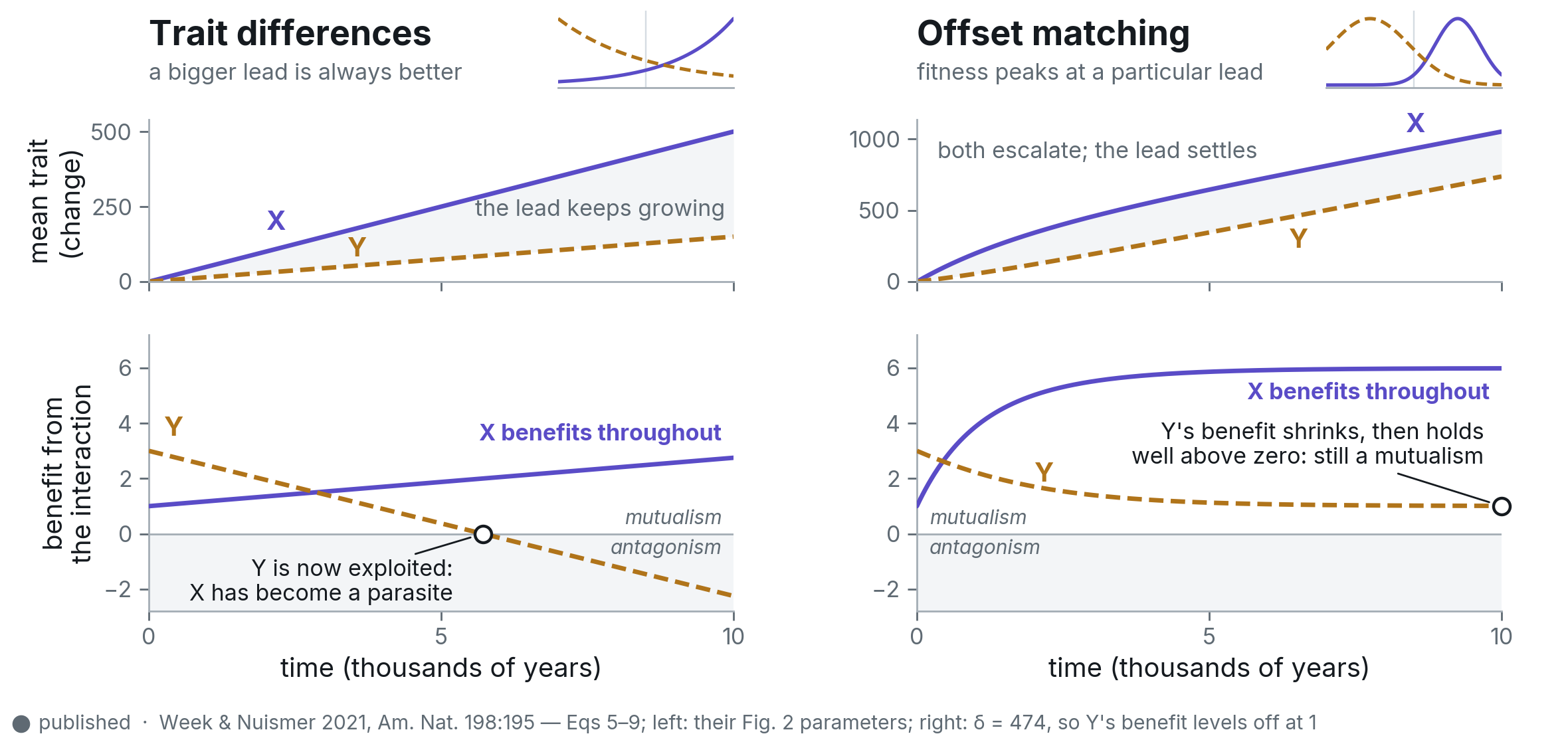
Same arms race, different ecological fate
Part I · the interface published
But the fly and the flower are not alone
Part I · community schematic
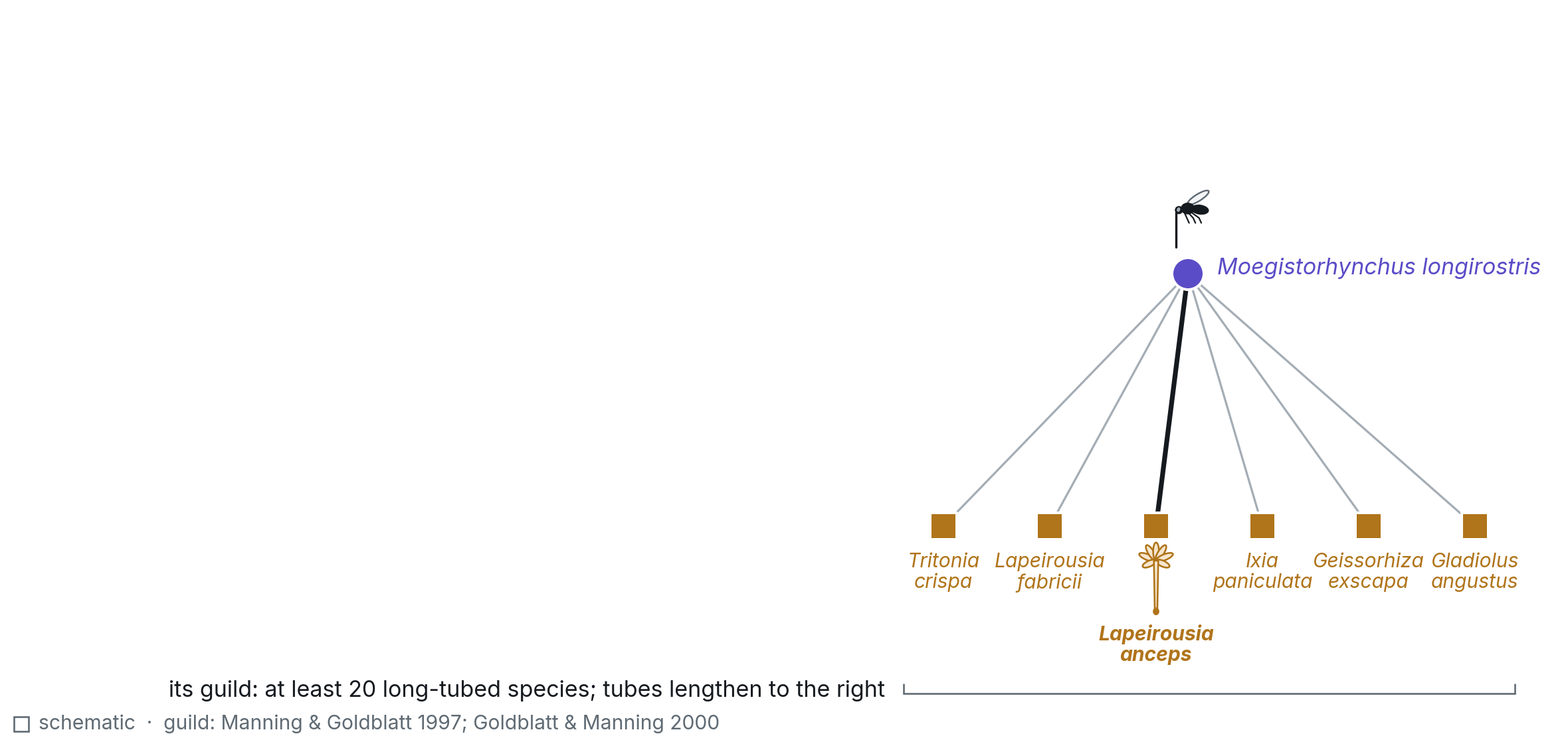
But the fly and the flower are not alone
Part I · community schematic
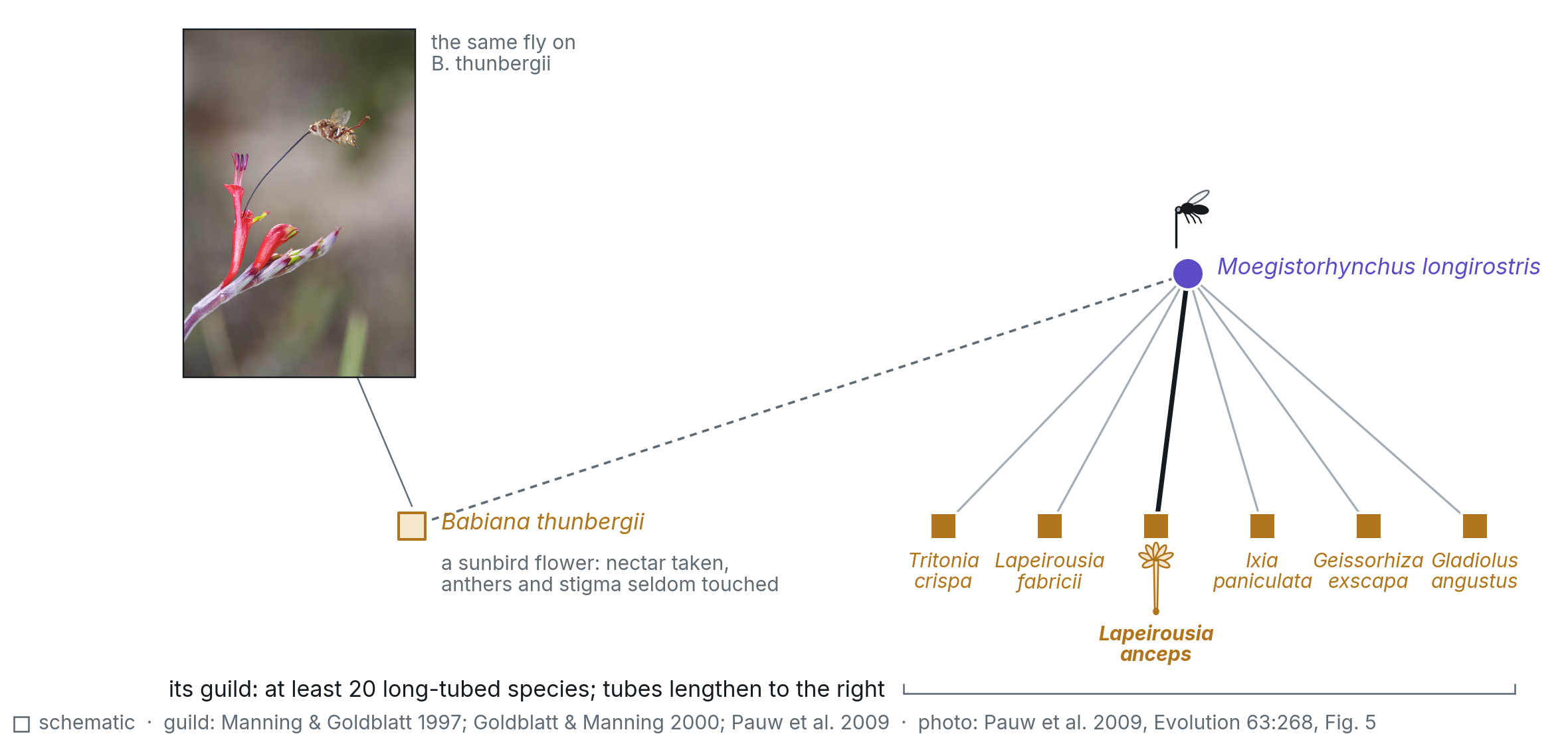
From pairwise interfaces to network architecture
Part I · community schematic
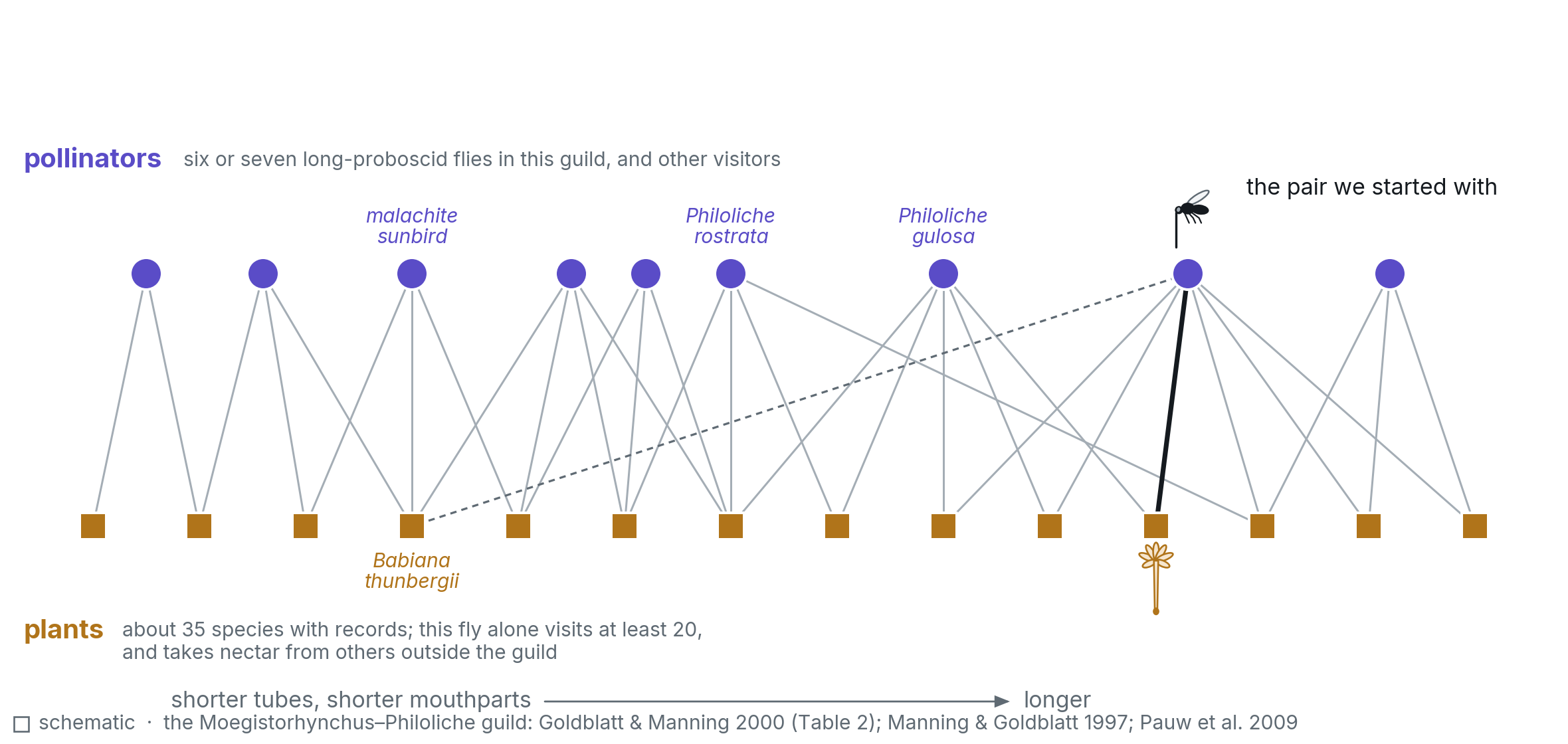
Now change perspective: interactions within a guild
Part I · community schematic
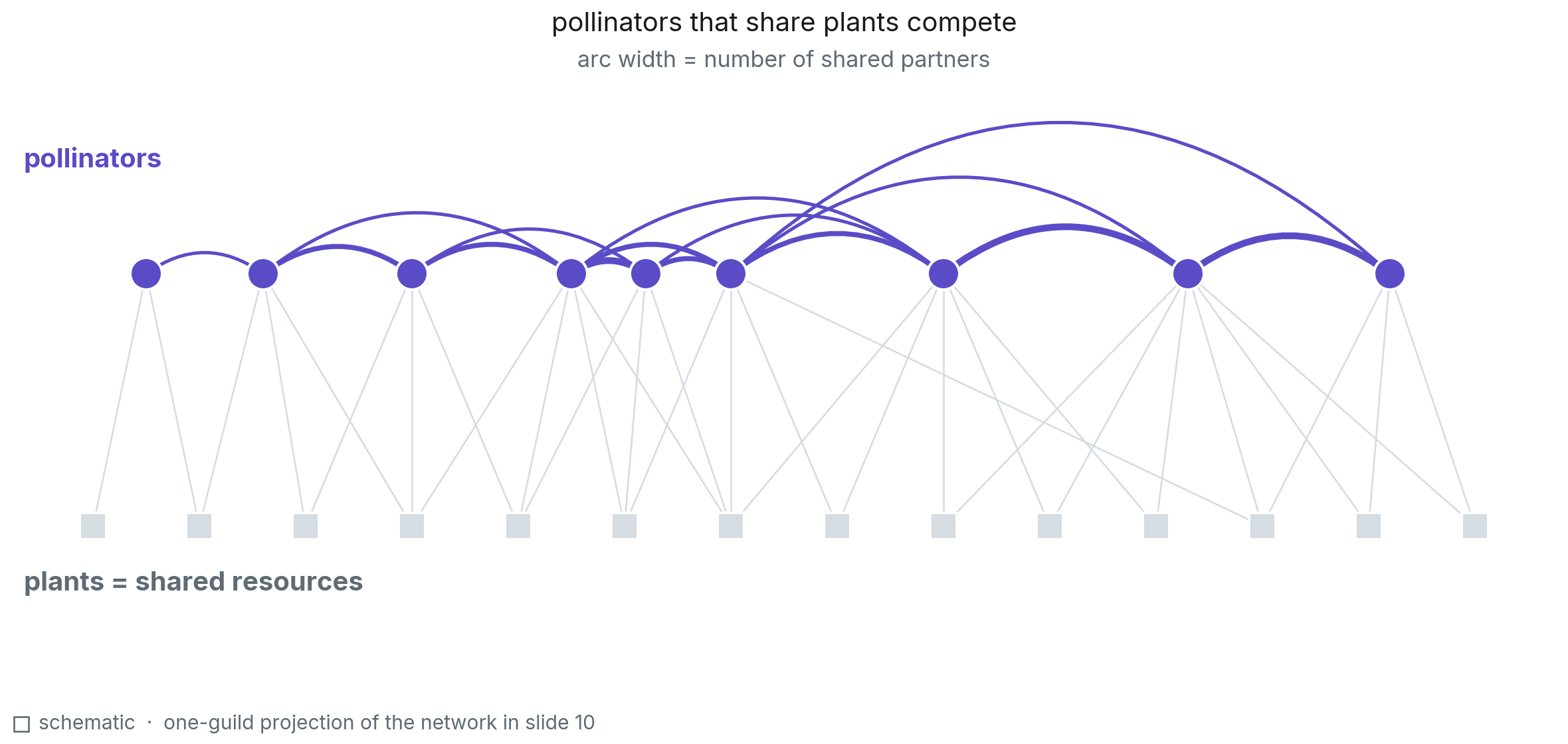
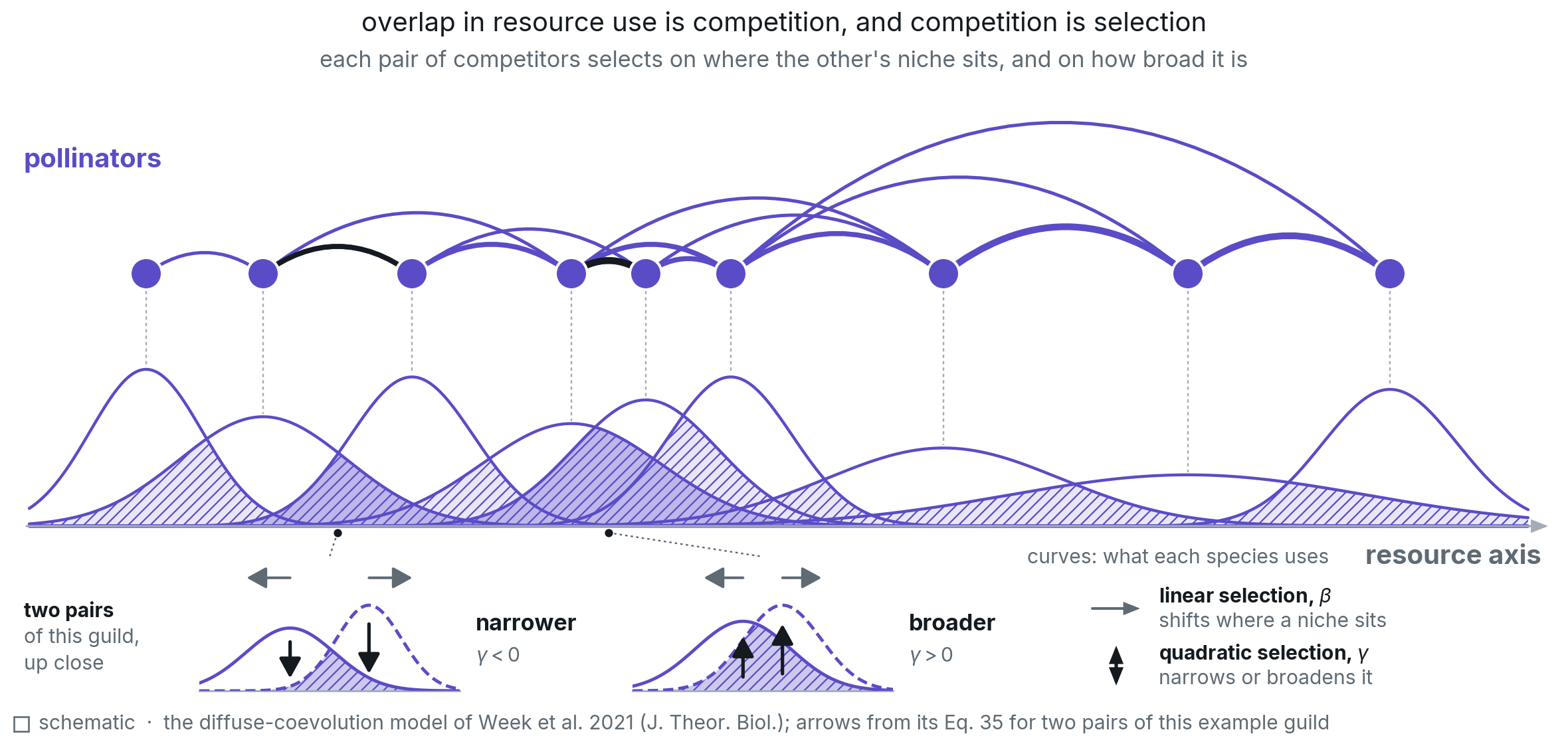
Diffuse coevolution through competition
Part I · community schematic
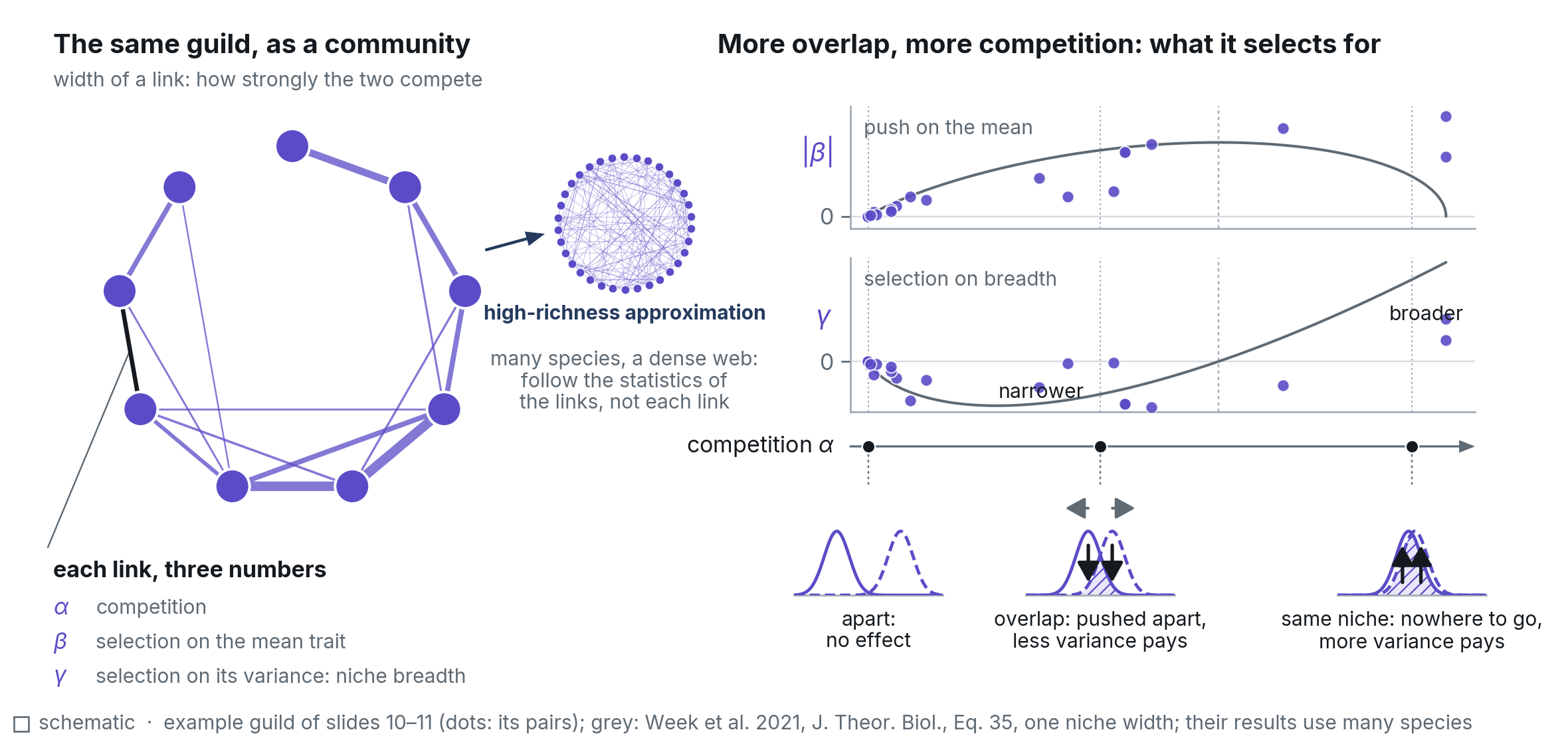
What can we learn without tracking every interaction?
Part I · community schematic
Communities are distributed across landscapes
Part I · space schematic
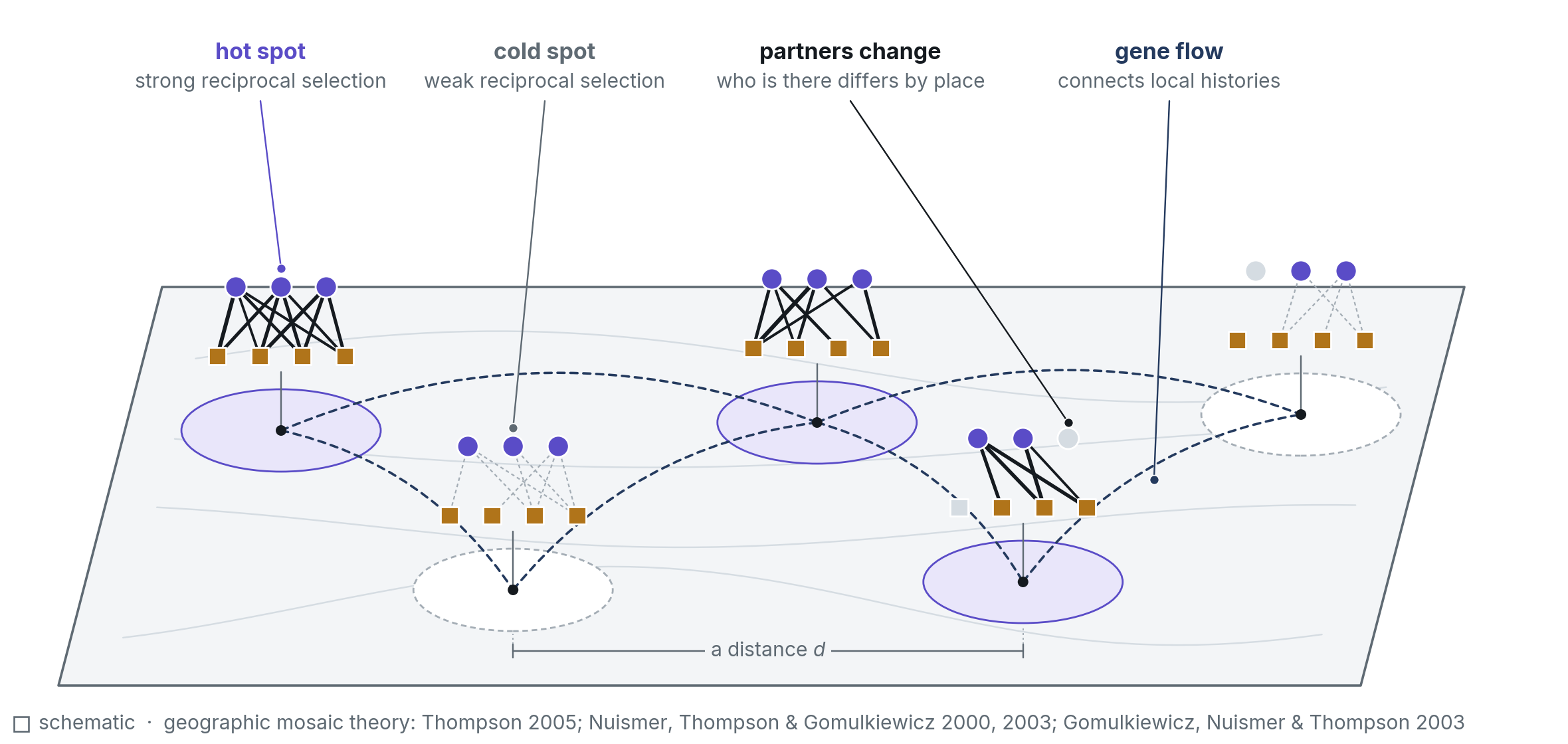
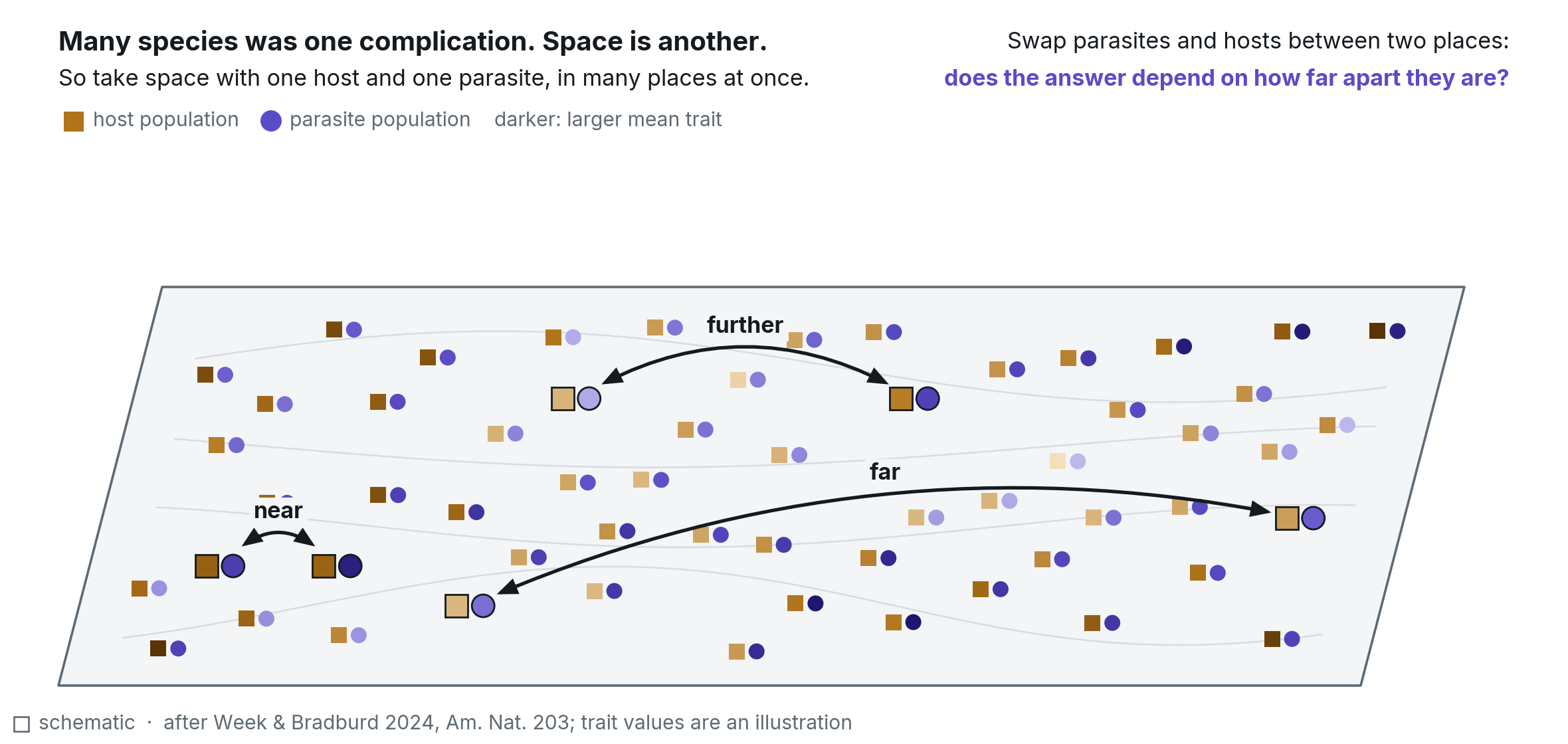
One complication at a time: space, with two species
Part I · space schematic
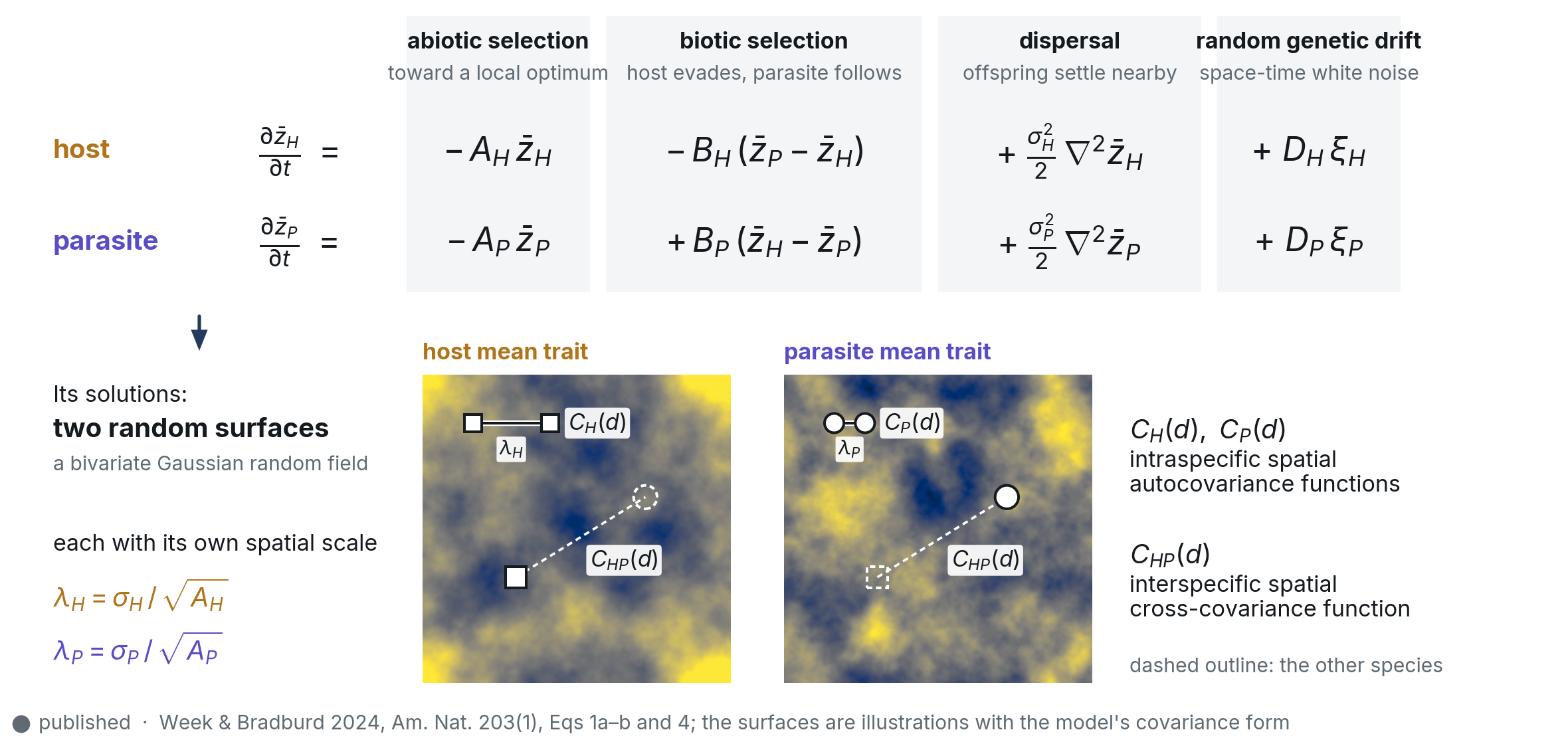
A model of coevolution in continuous space
Part I · space published
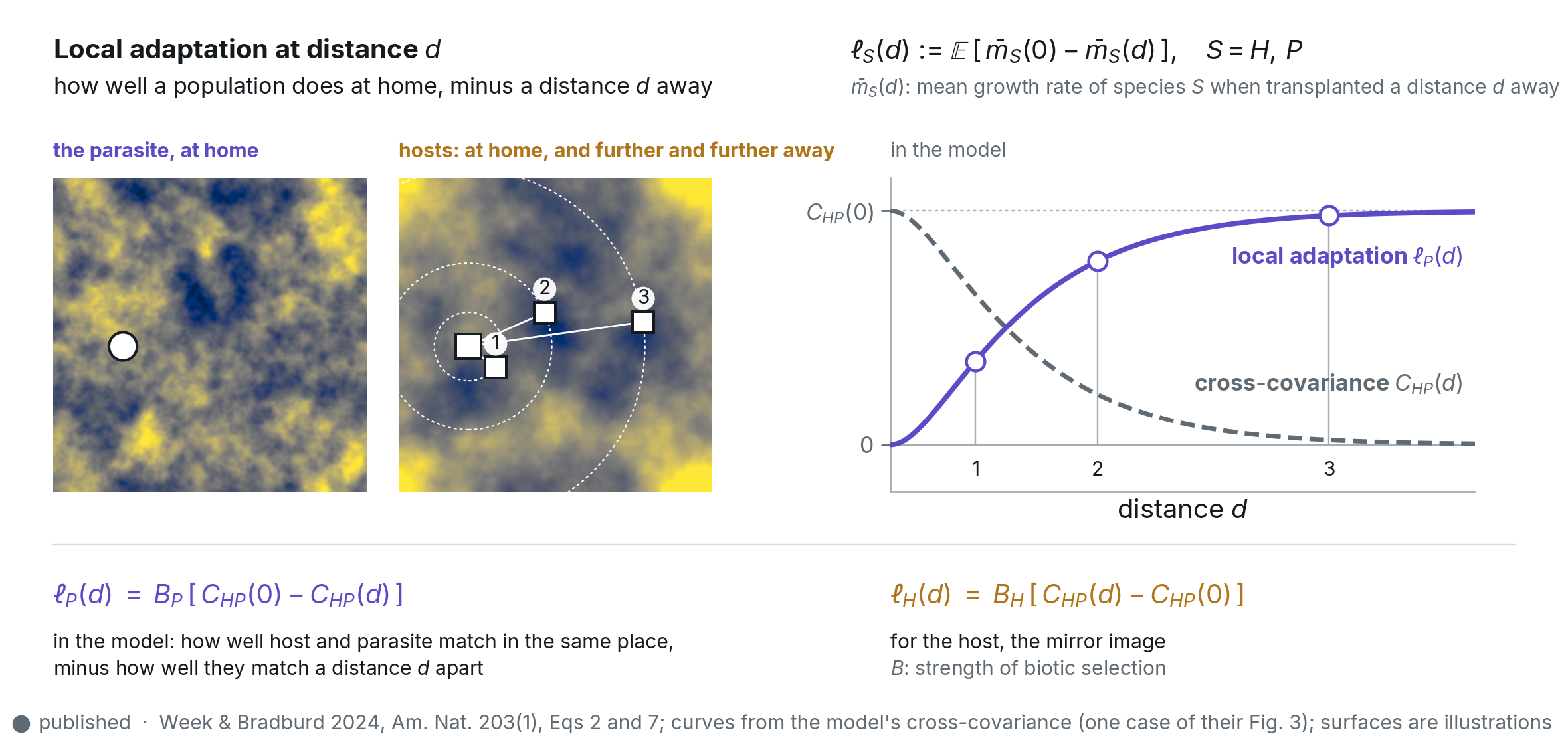
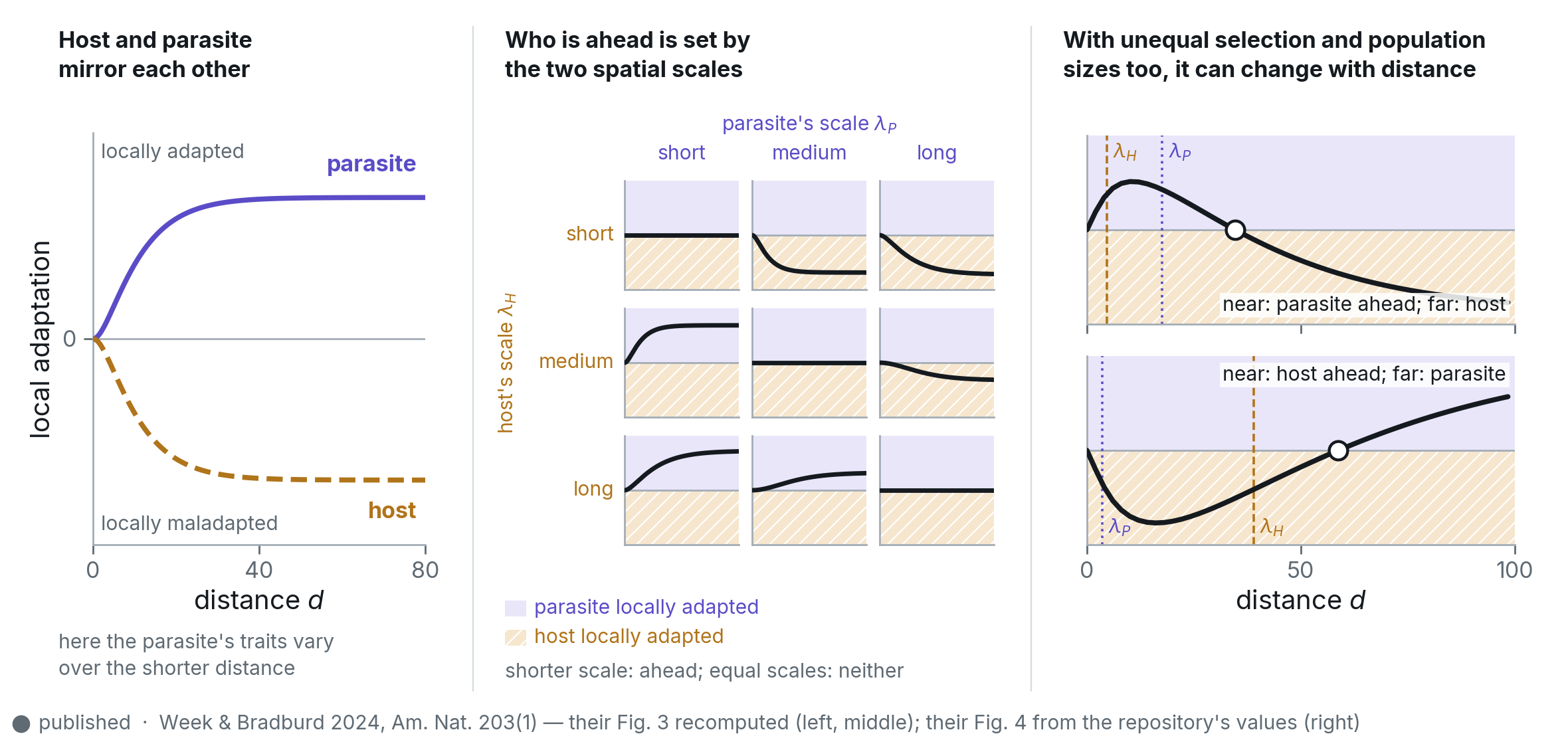
Local adaptation as a function of distance
Part I · space published
Local adaptation depends on the scale at which we ask
Part I · space published
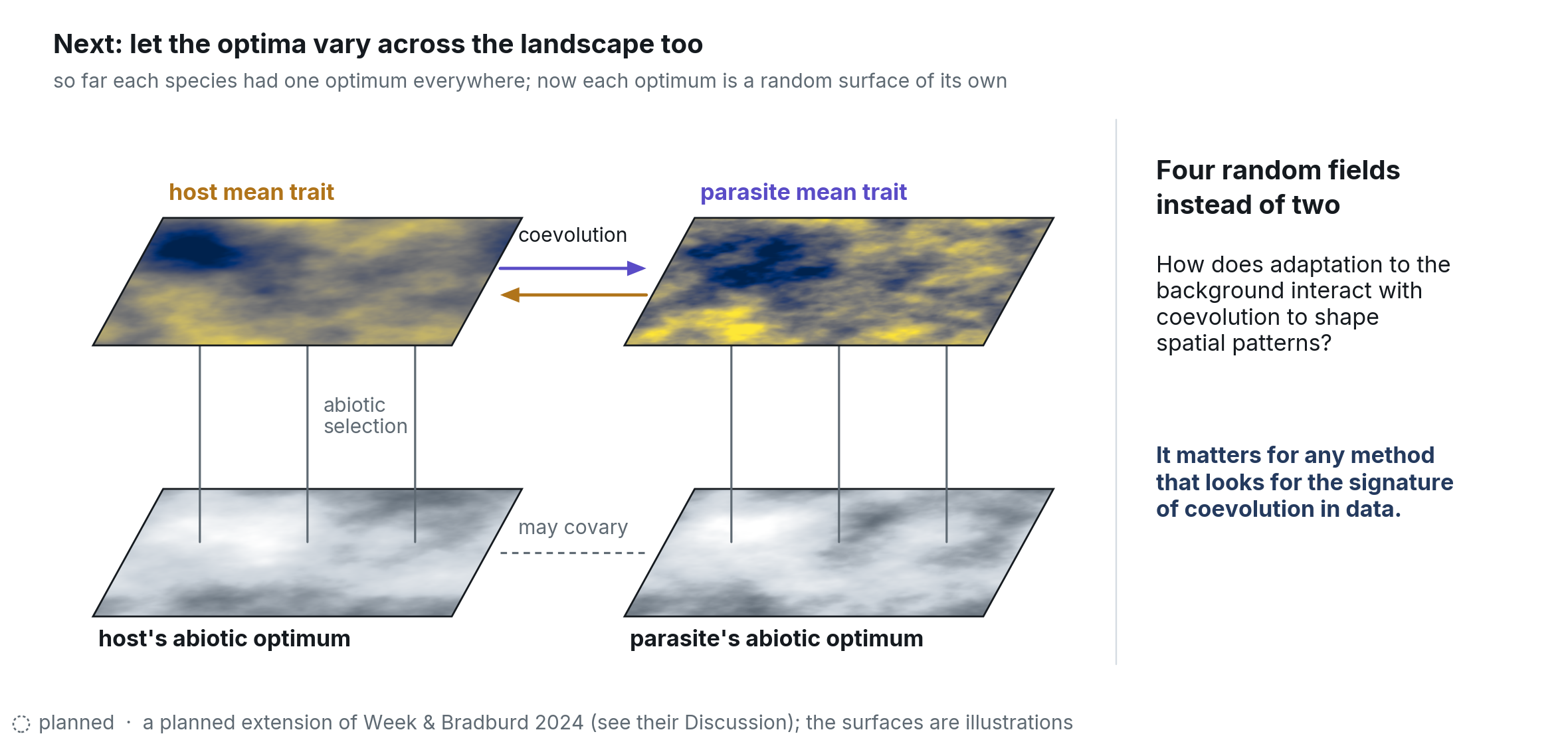
Next: abiotic optima that vary across the landscape
Part I · space planned
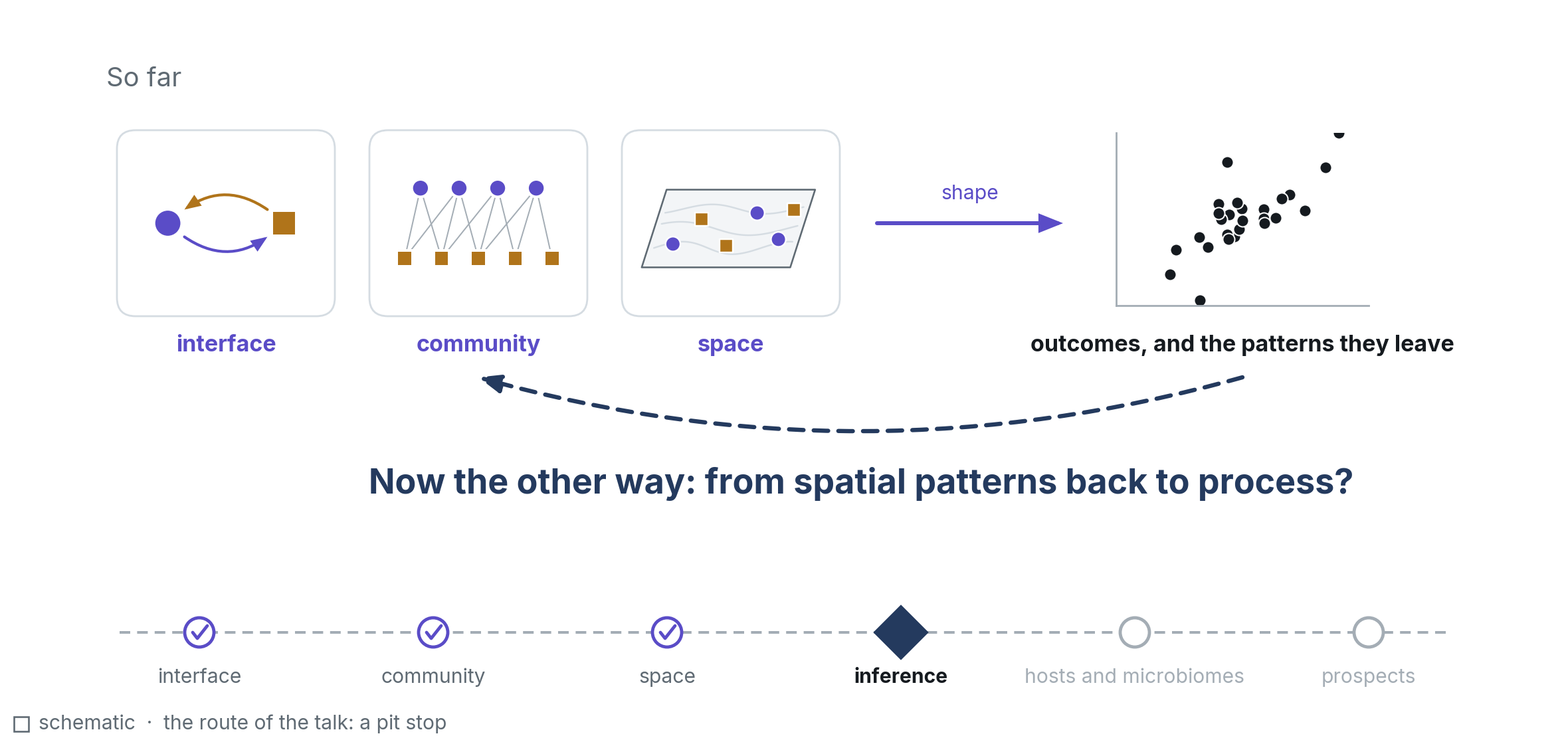
Pit stop: from patterns back to process?
Inference schematic
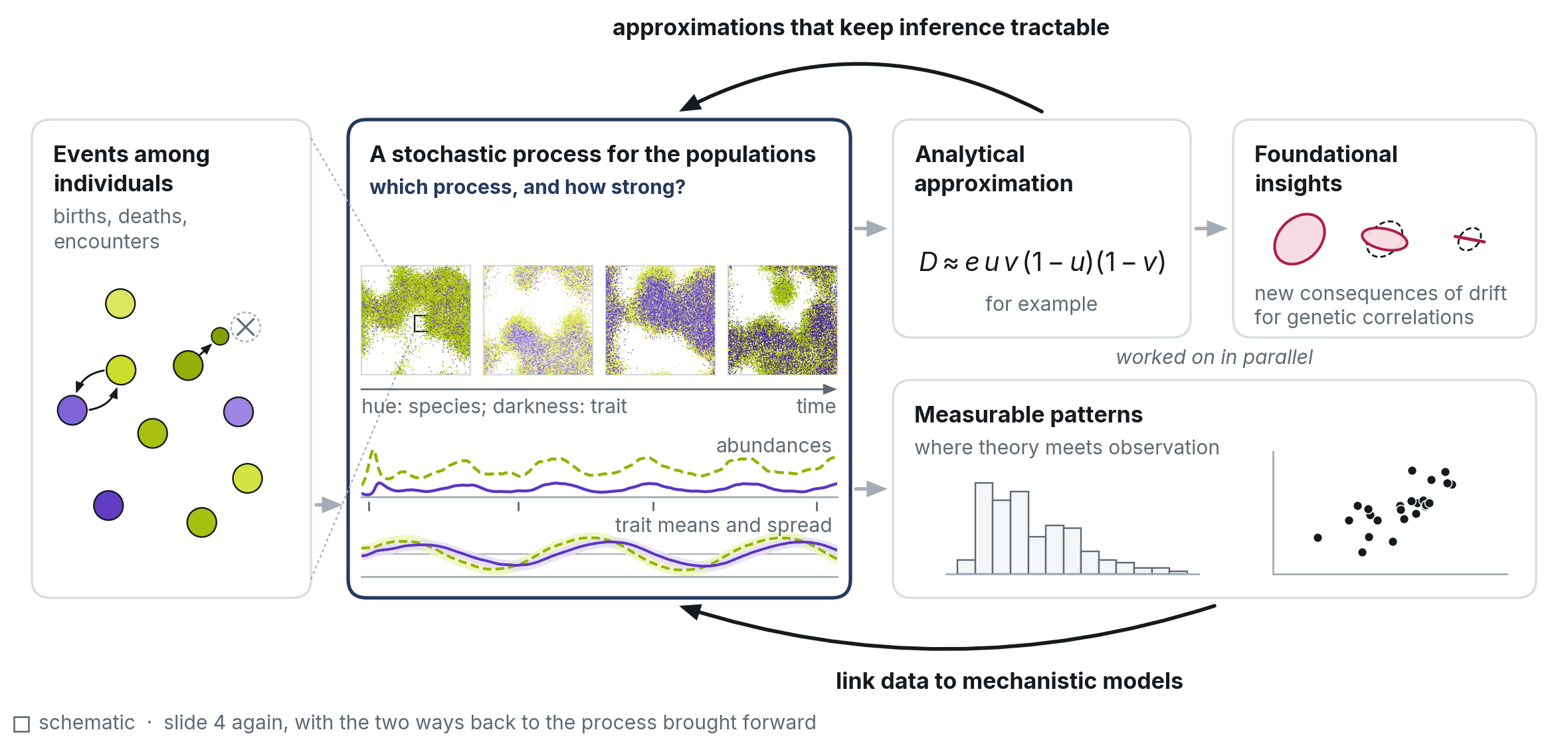
Can we run the map backward?
Inference schematic
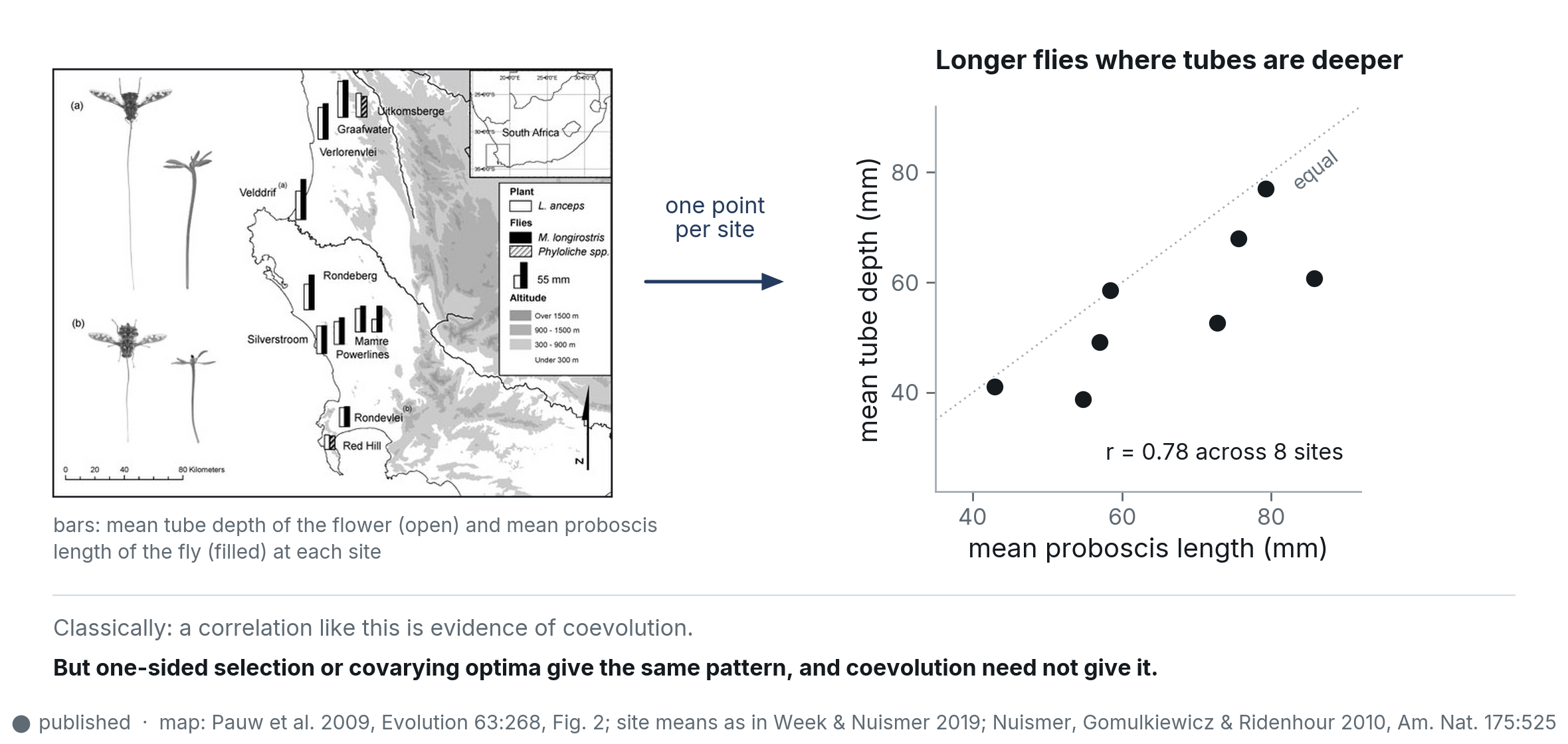
Does a correlation mean coevolution?
Inference published
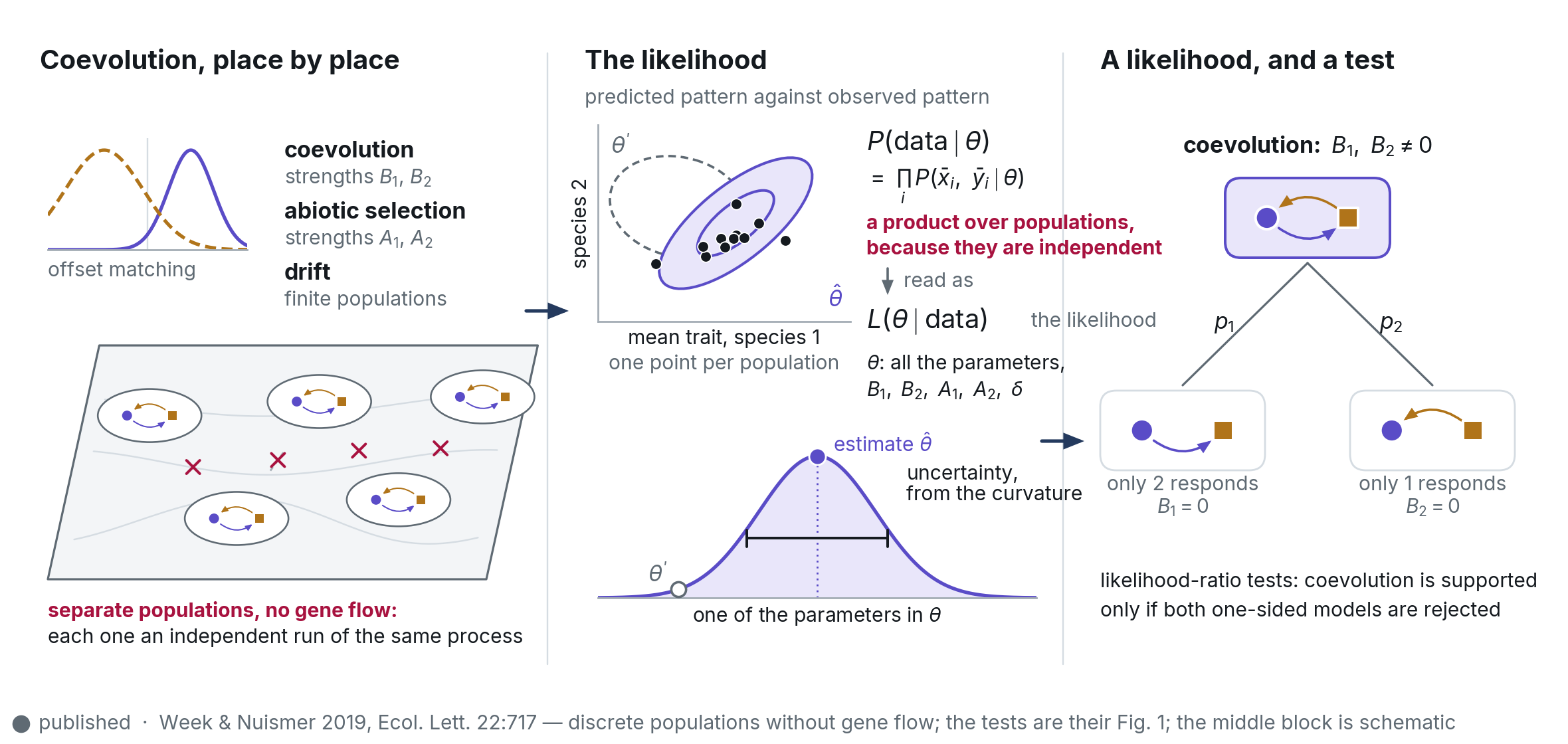
A mechanistic likelihood for coevolution
Inference published
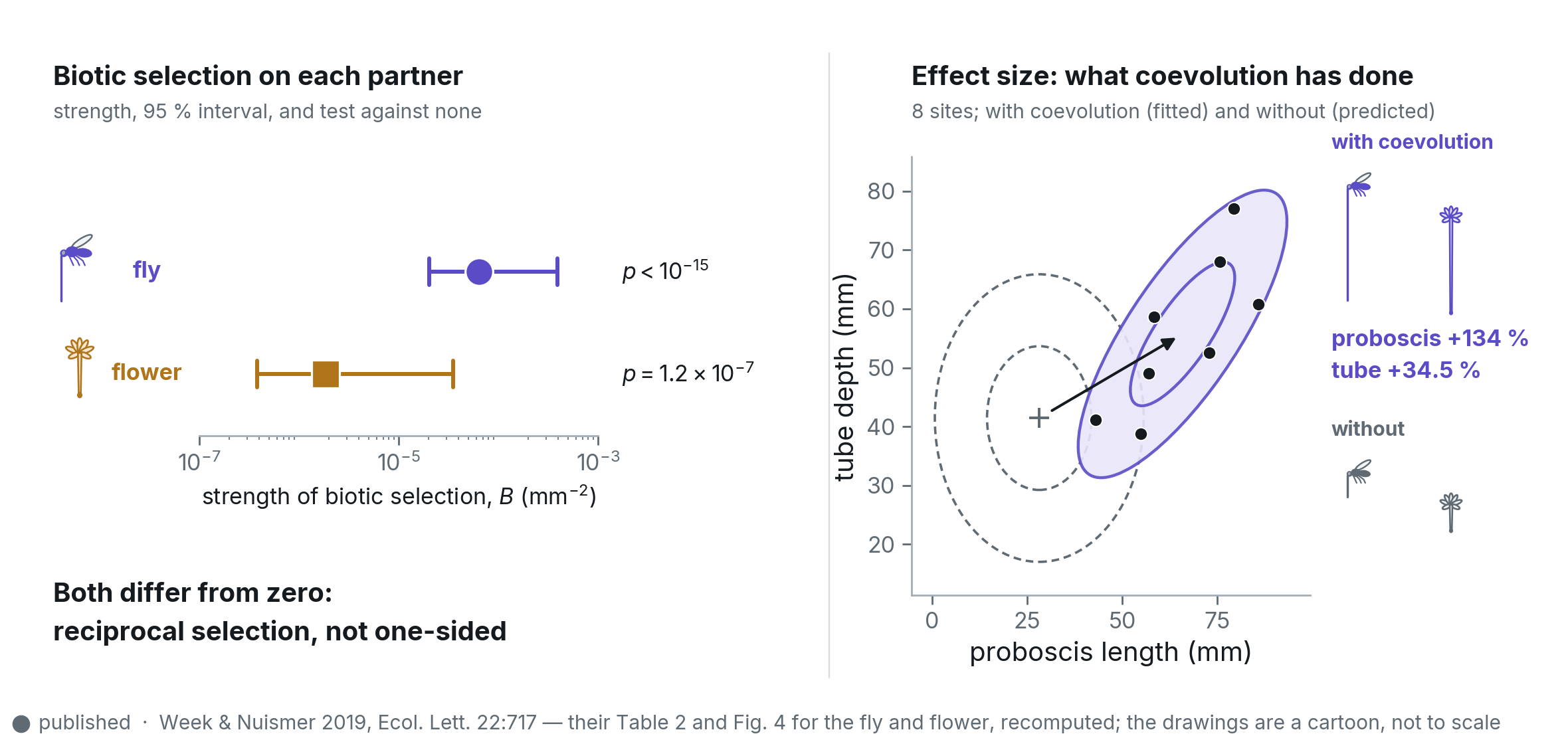
Coevolutionary selection in the fly and the flower
Inference published
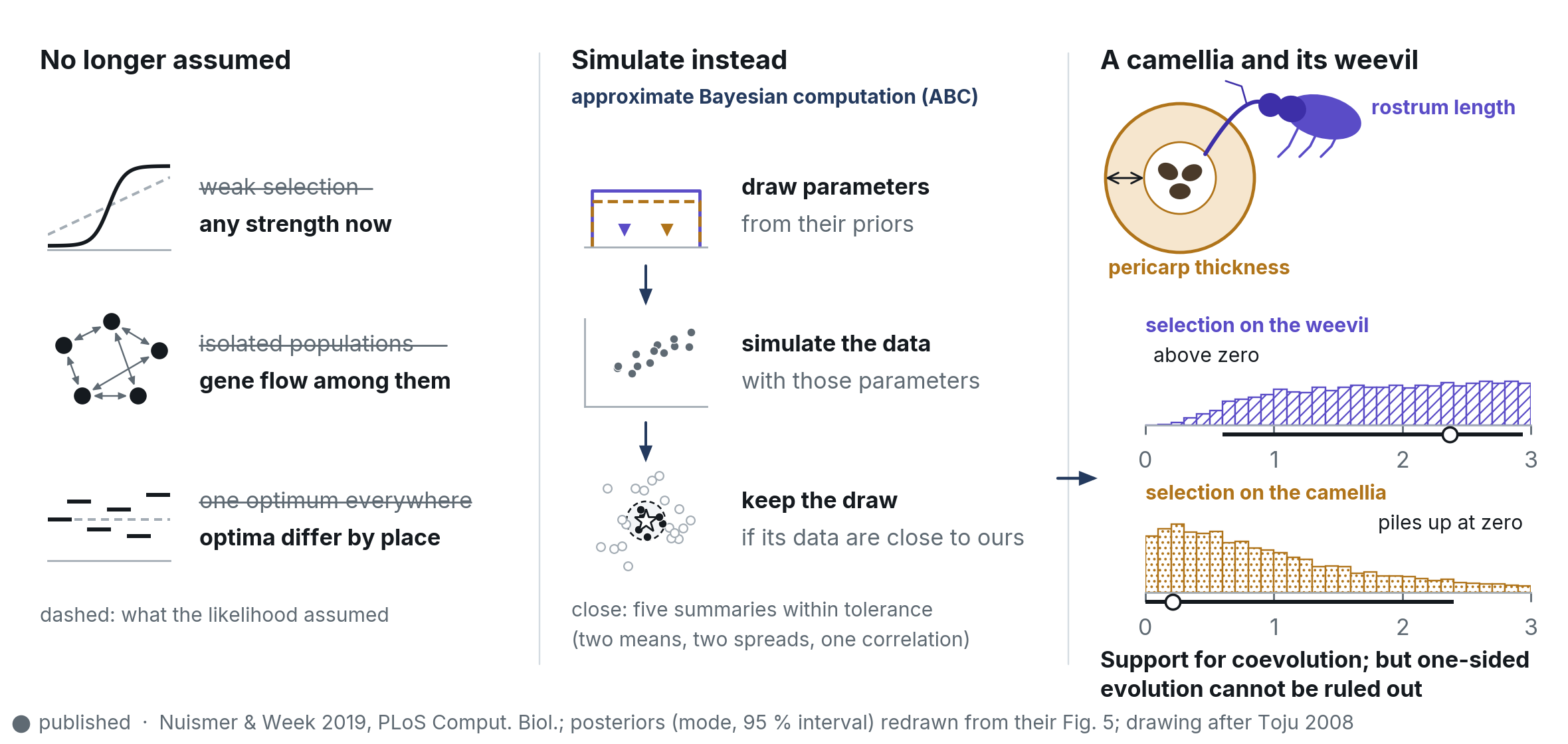
When the likelihood is unavailable
Inference published
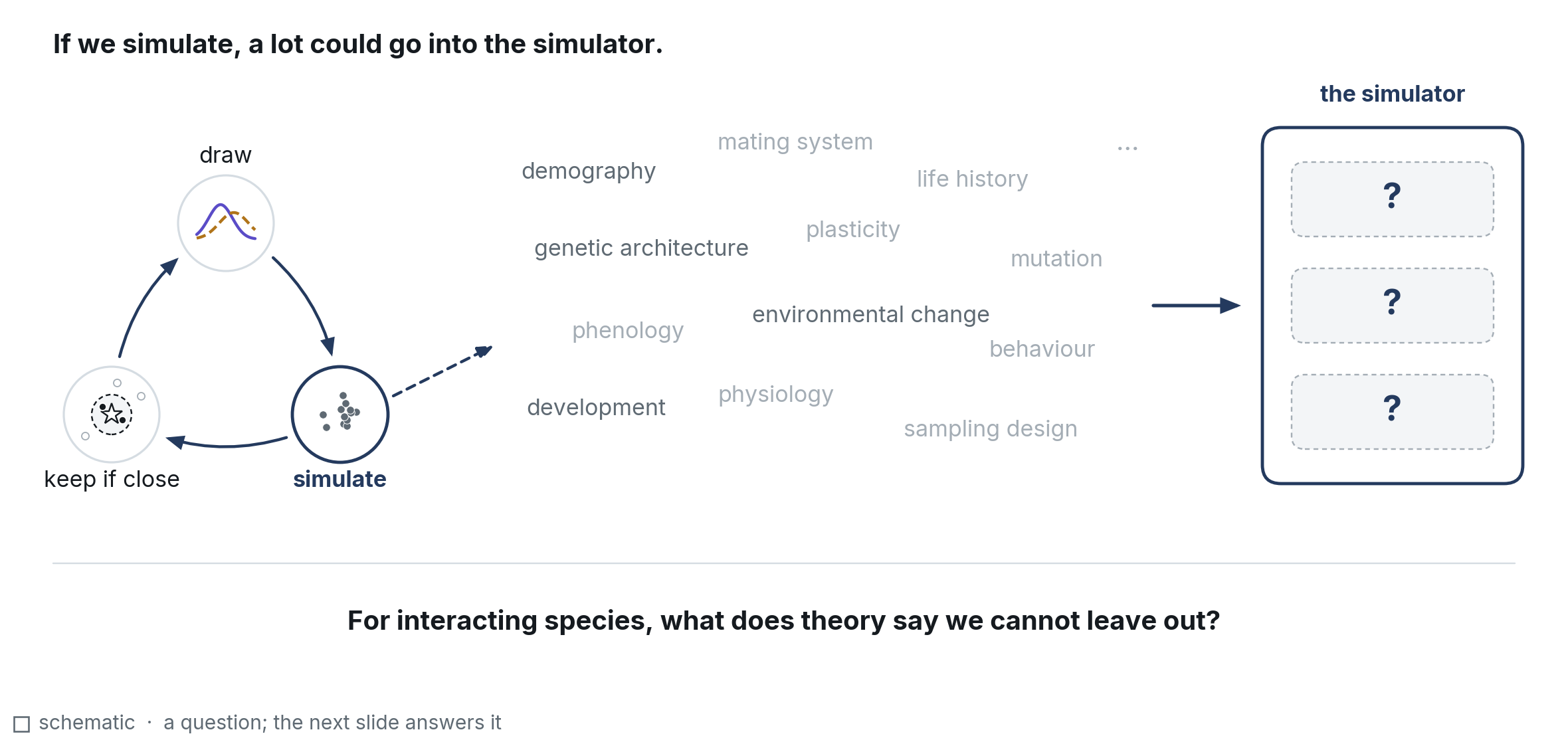
If we simulate, what should the simulator contain?
Inference schematic
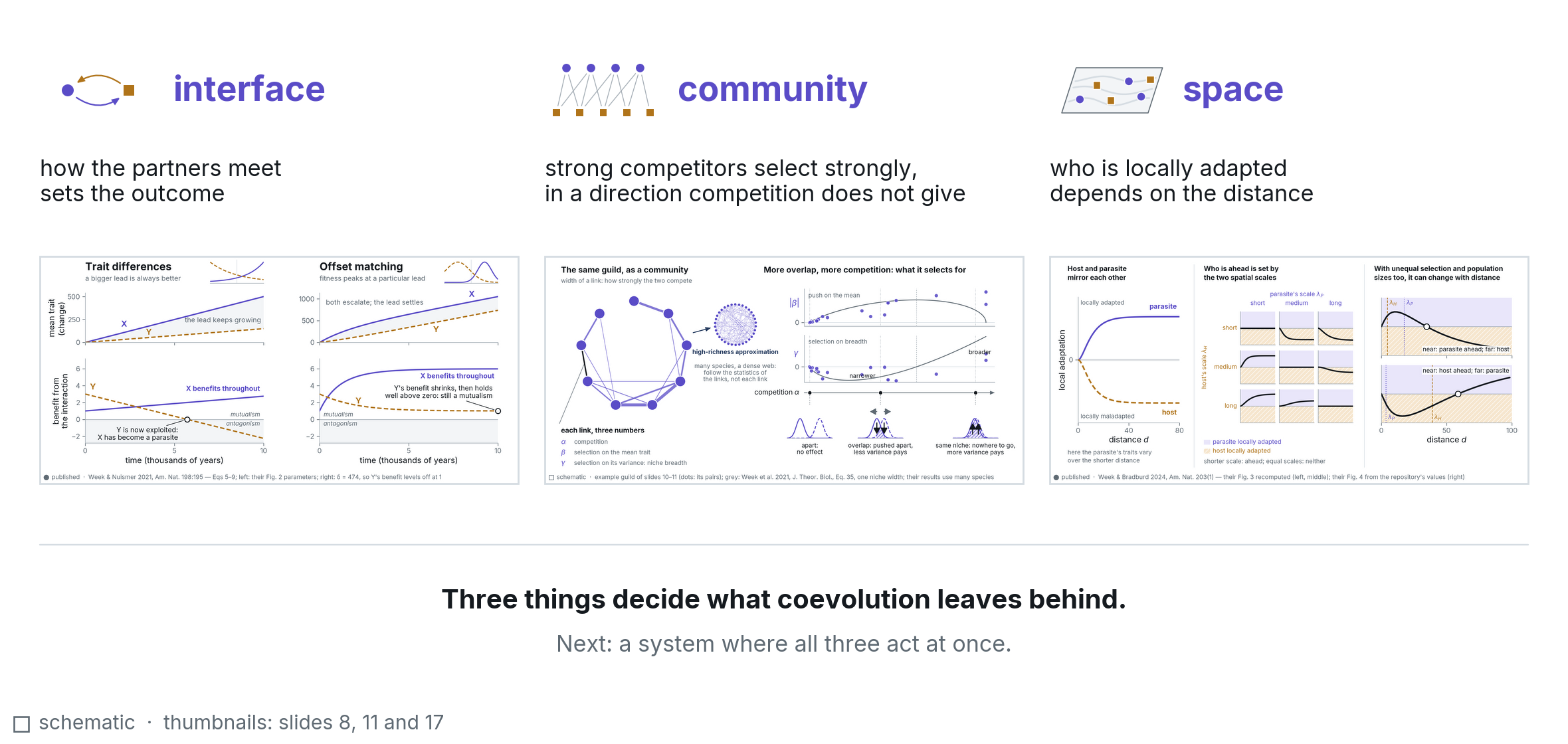
Three things keep appearing
Midpoint schematic
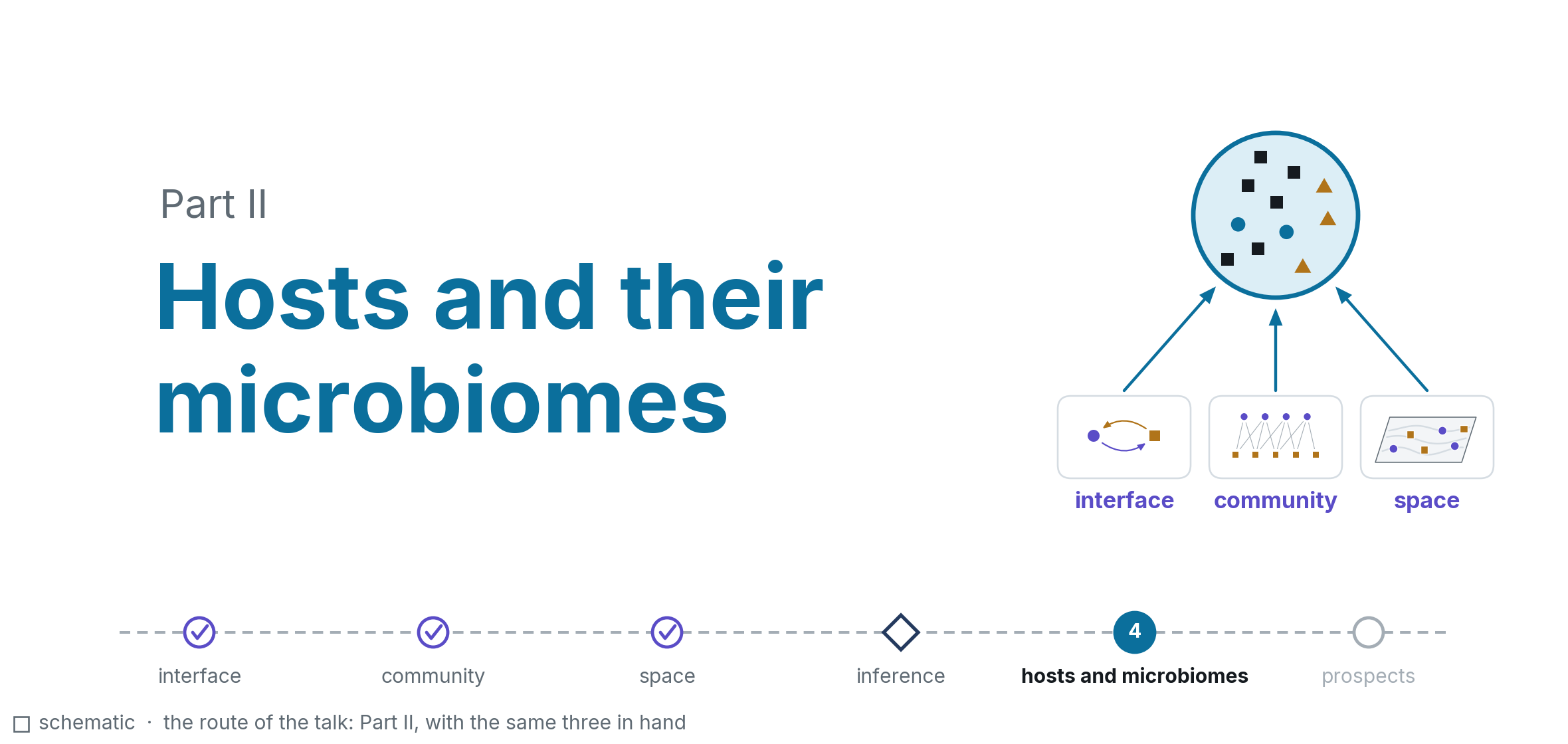
Part II: Hosts and their microbiomes
Part II schematic
Host–microbiome evolution combines all three
Midpoint schematic
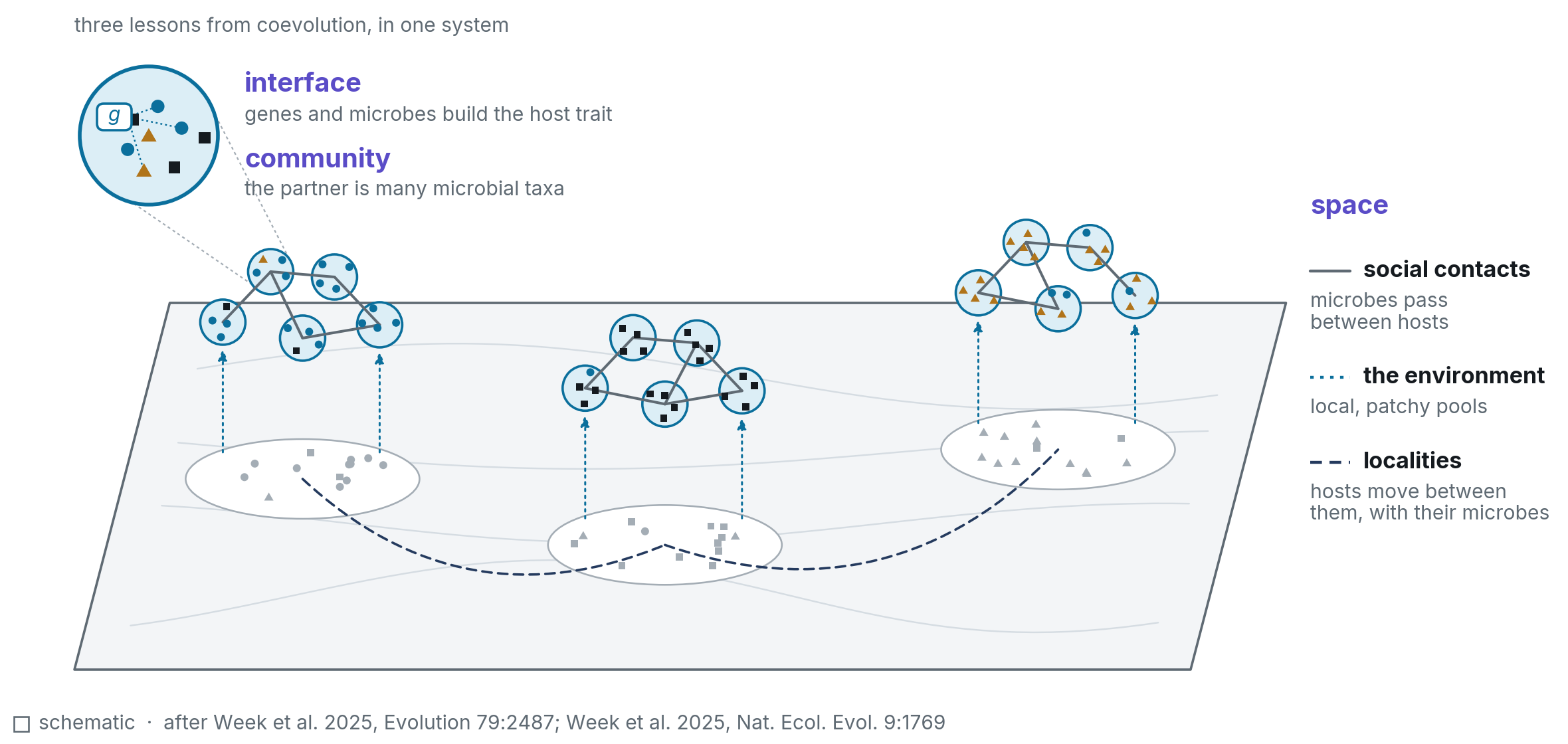
…and adds inheritance and timescales
Midpoint schematic
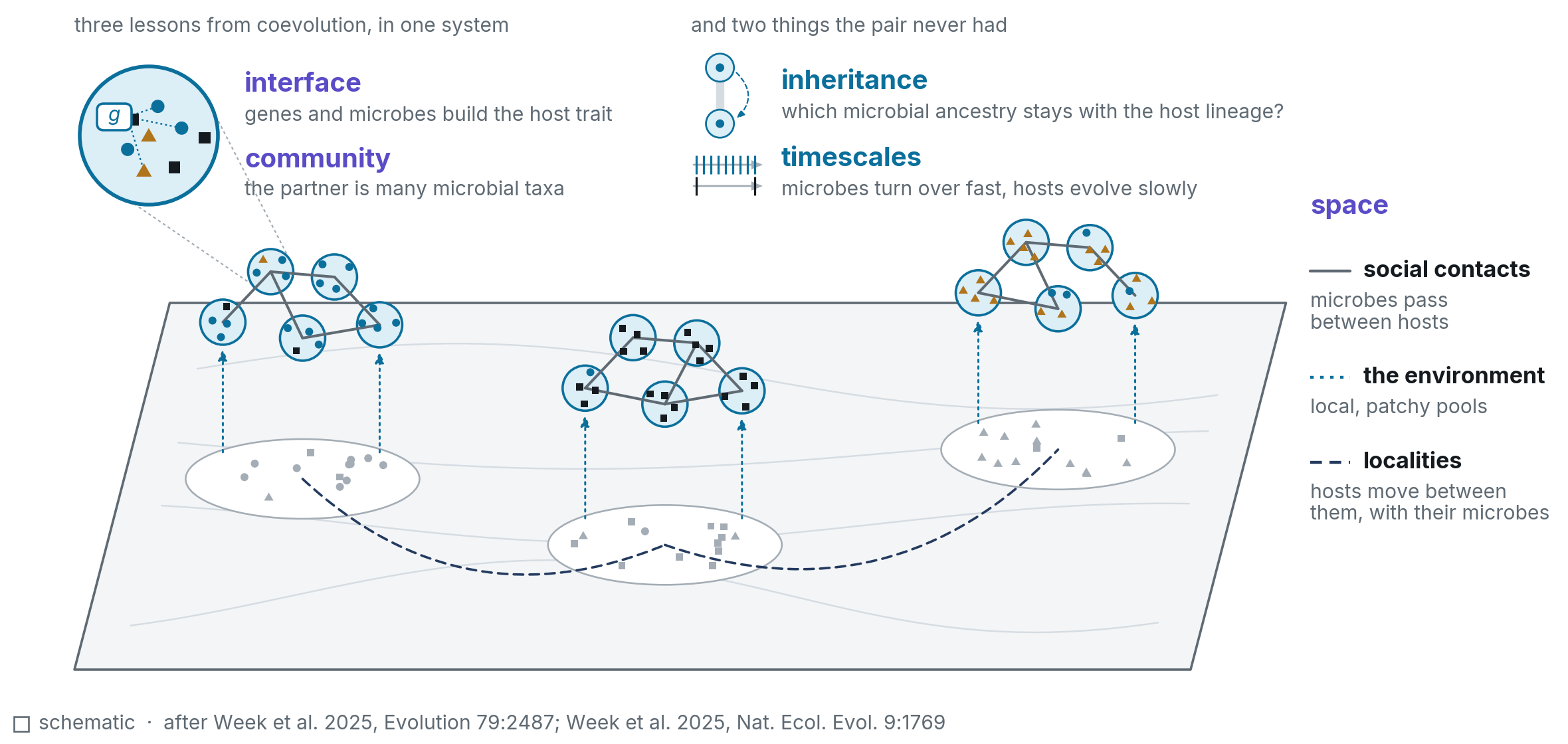
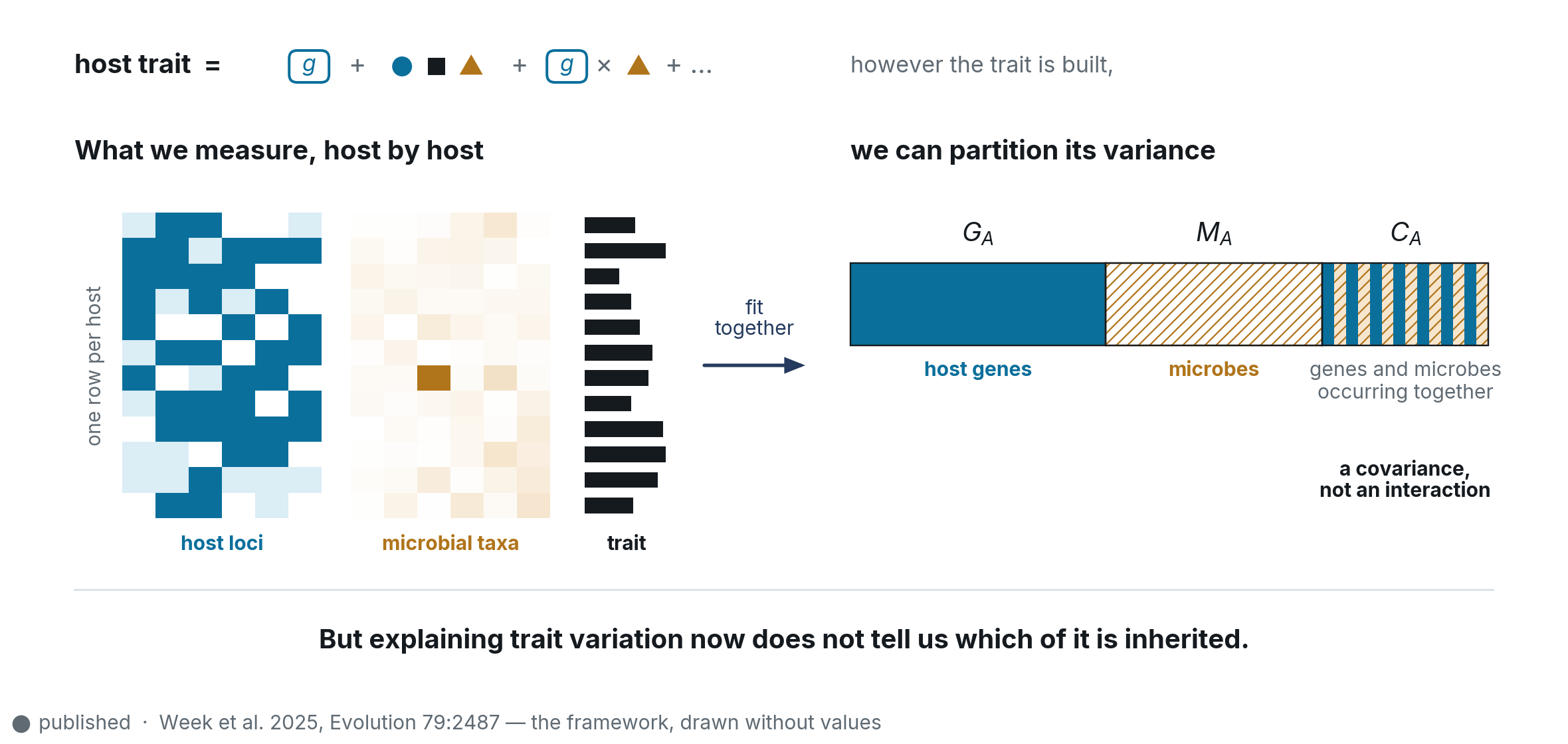
What is the evolutionary interface now?
Part II · the interface published
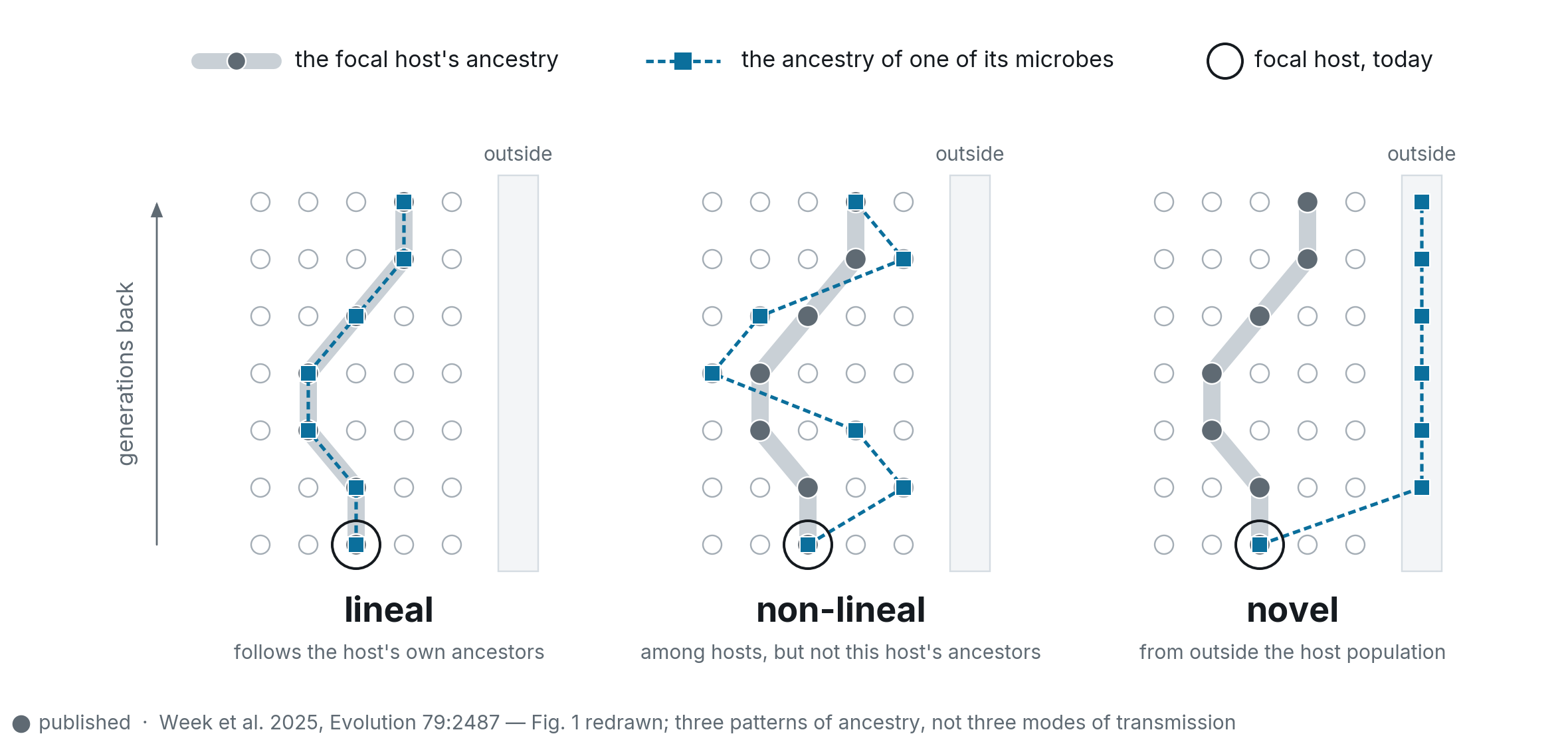
Where does microbial ancestry run?
Part II · inheritance published
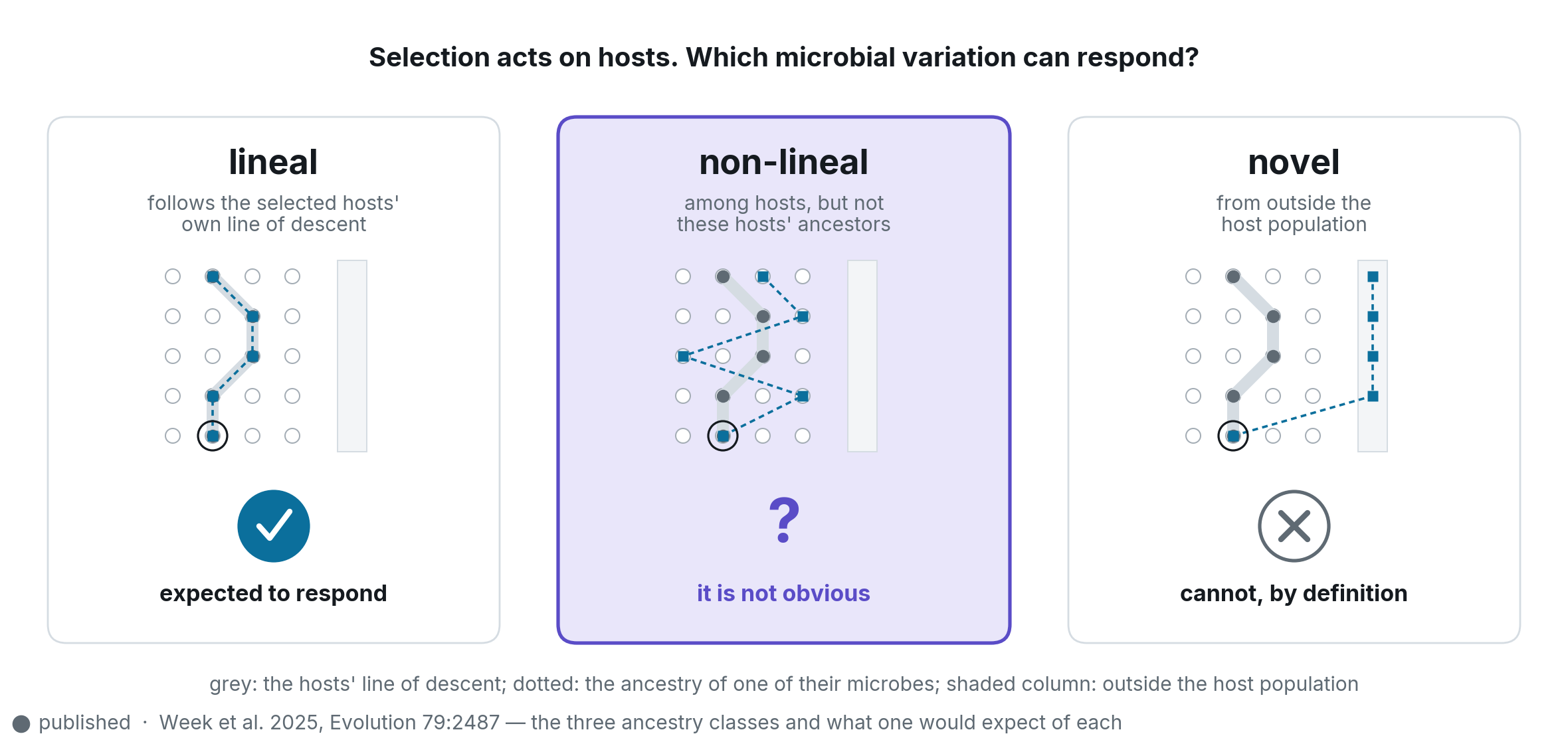
Which microbes can carry a response to selection on hosts?
Part II · inheritance published
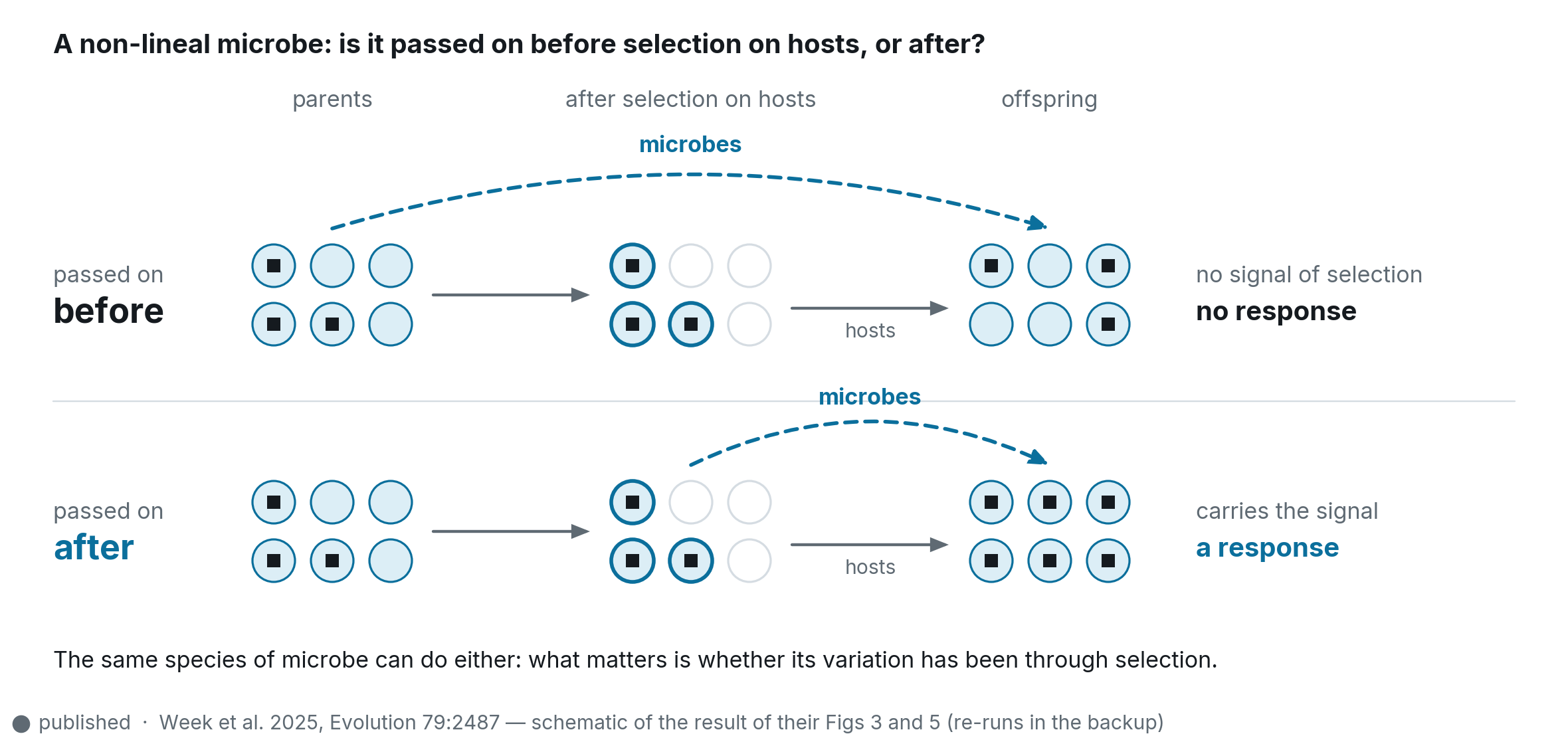
Non-lineal microbes: passed on before selection, or after?
Part II · inheritance published
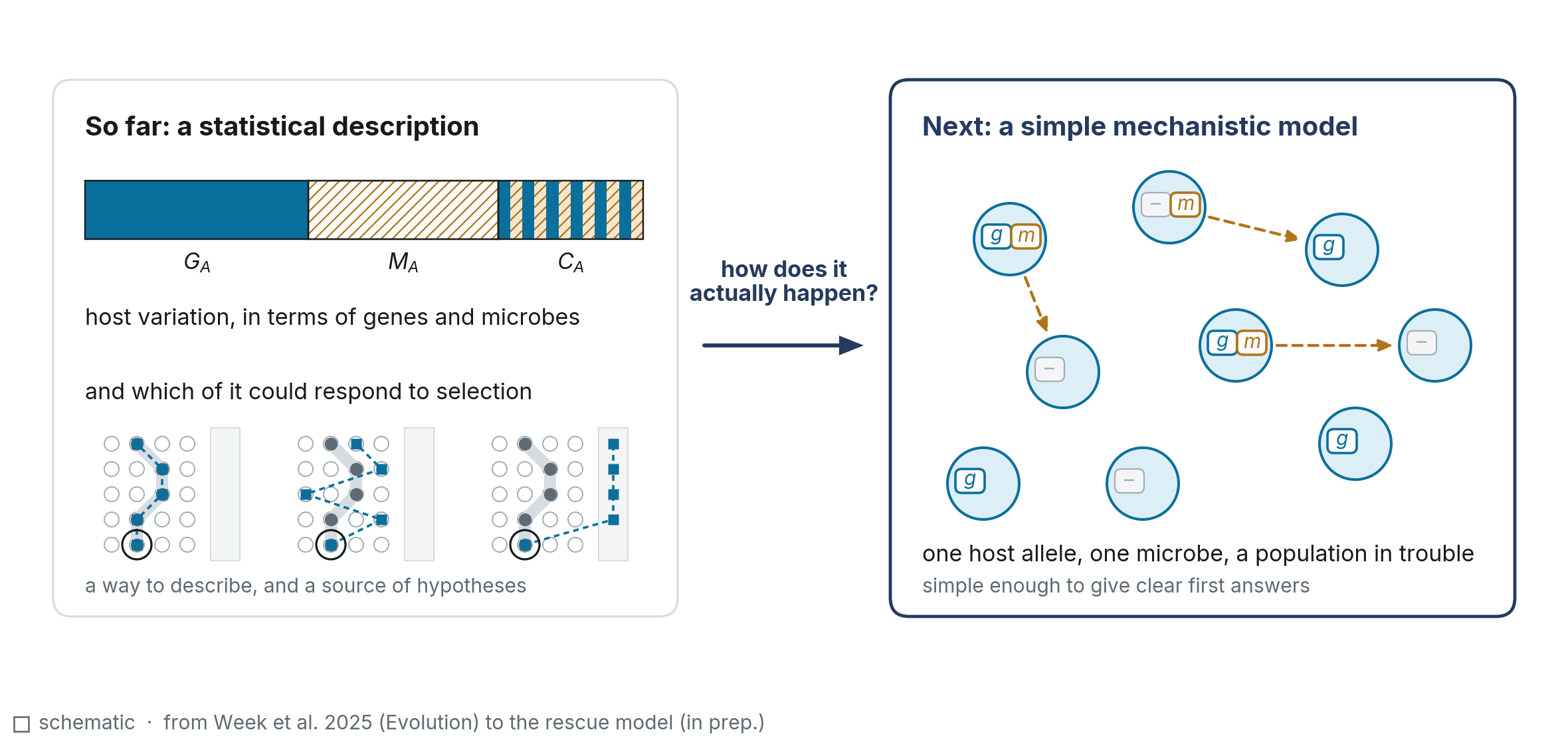
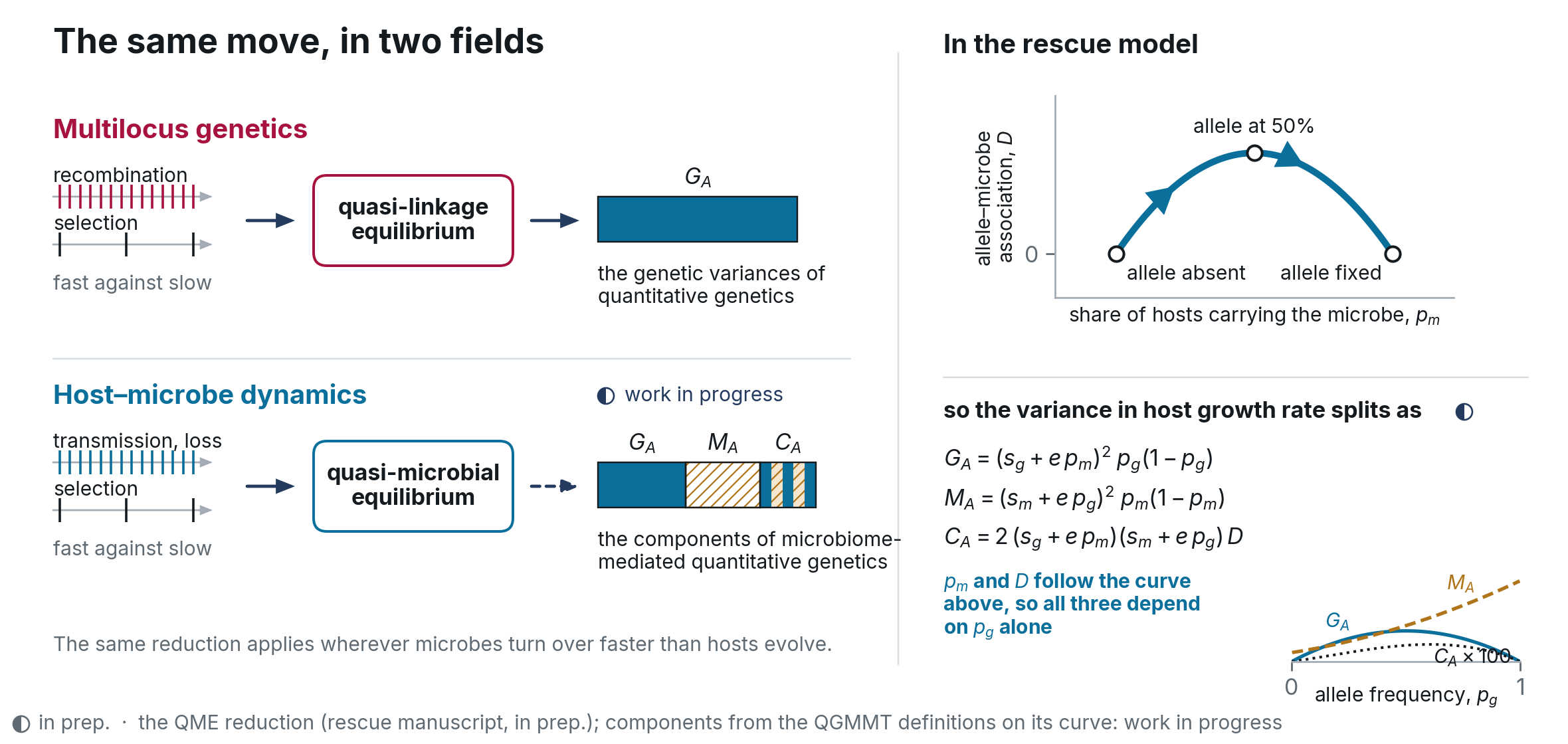
From describing variation to explaining it
Part II · dynamics schematic
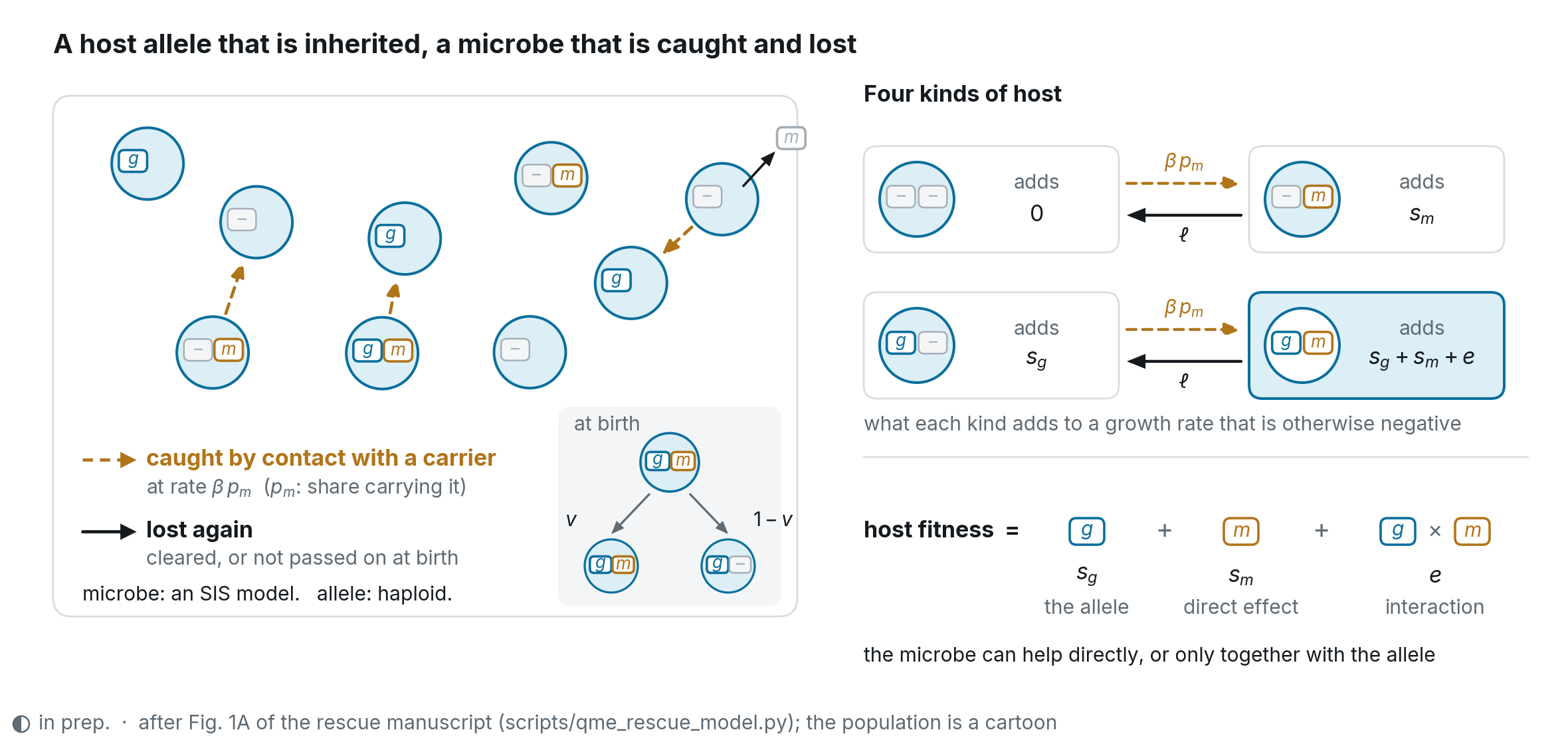
A simple model of microbially-assisted rescue of host populations
Part II · dynamics in prep.
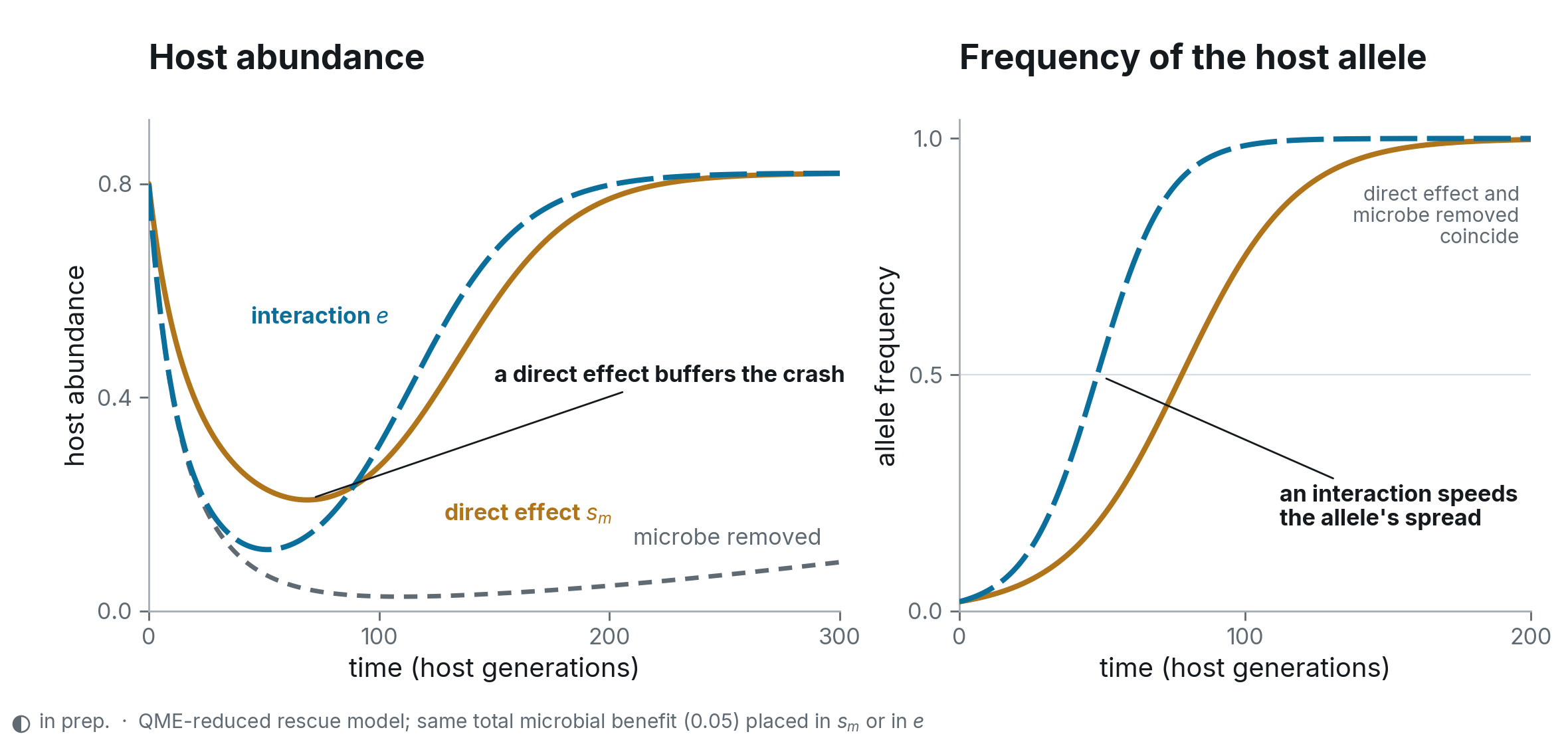
Two routes to rescue
Part II · dynamics in prep.
Quasi-microbial equilibrium
Part II · dynamics in prep.
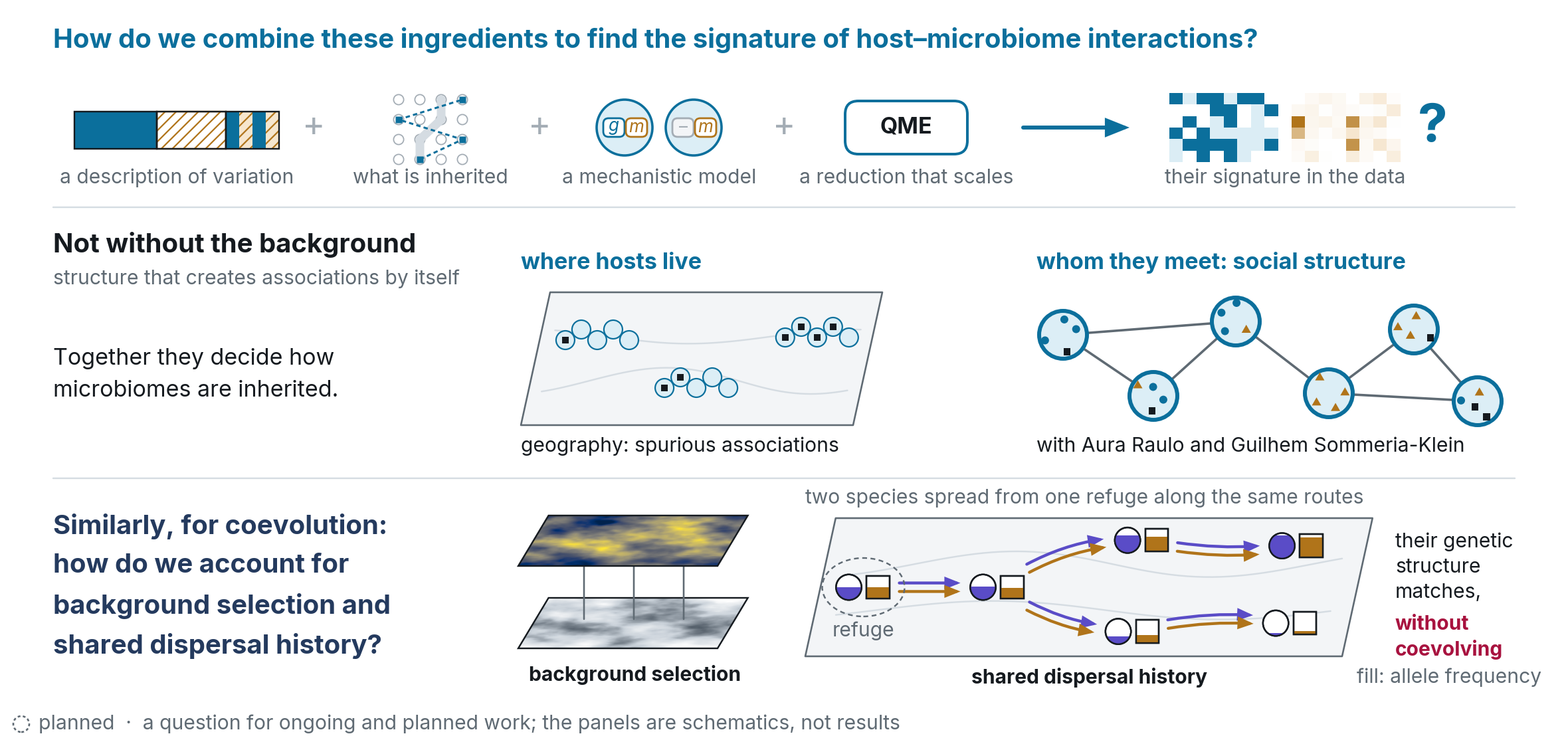
How do we find the signature of host–microbiome interactions?
Looking forward planned
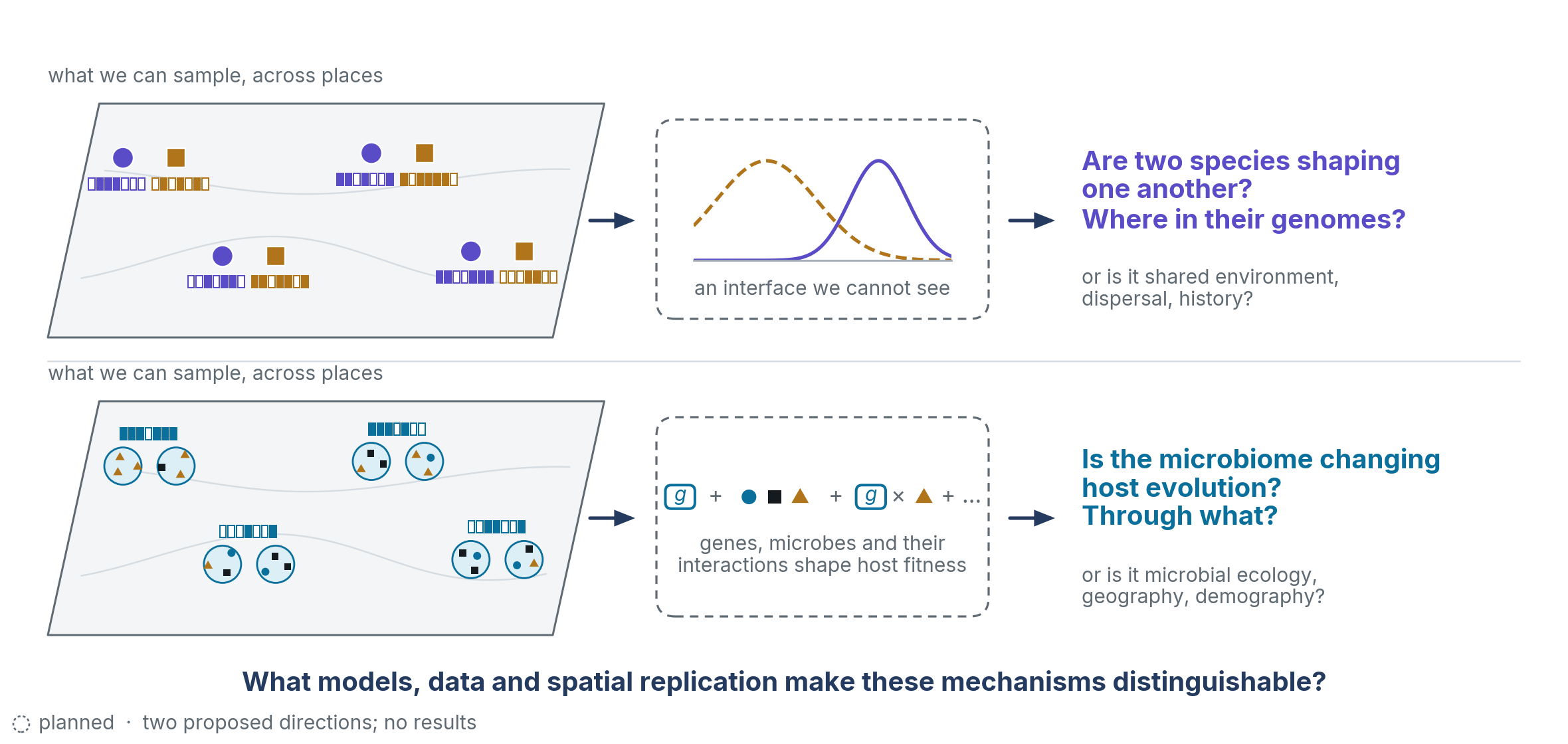
Can we read interaction history from spatial molecular data?
Looking forward planned
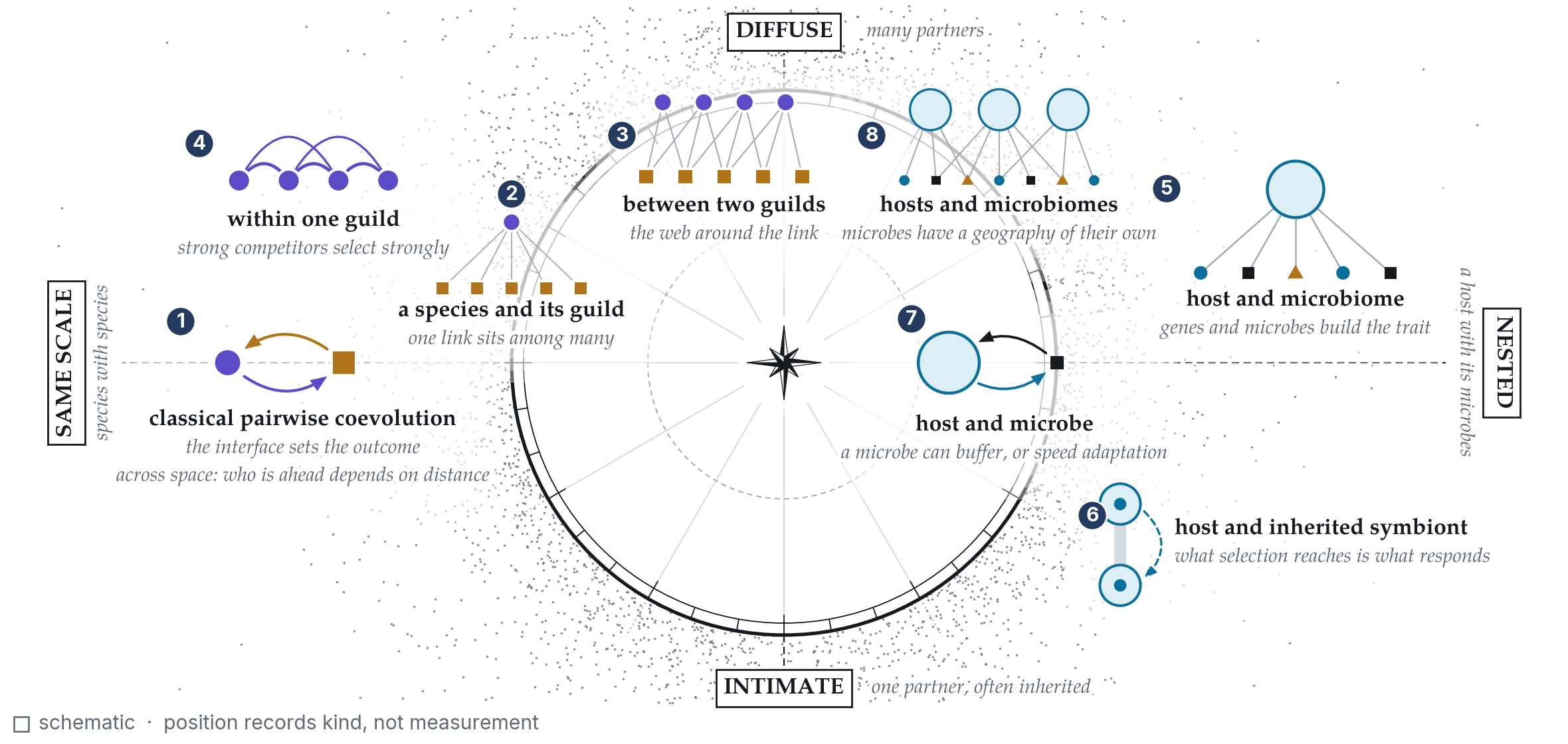
Charting interactions
Close schematic
Thanks
Coevolution and space

 Scott Nuismer · Gideon Bradburd · Stephen Krone
Microbiome-mediated quantitative genetics

 Brendan Bohannan · Peter Ralph · Hannah Tavalire · William Cresko
Microbial rescue and QME

 Hildegard Uecker · Hinrich Schulenburg
Social and spatial microbiomes

 Aura Raulo · Guilhem Sommeria-Klein · Brendan Bohannan
The Schulenburg group for Evolutionary Ecology and Genetics, Kiel






























KiTE is co-funded by the European Union (Marie Skłodowska-Curie 101081480)
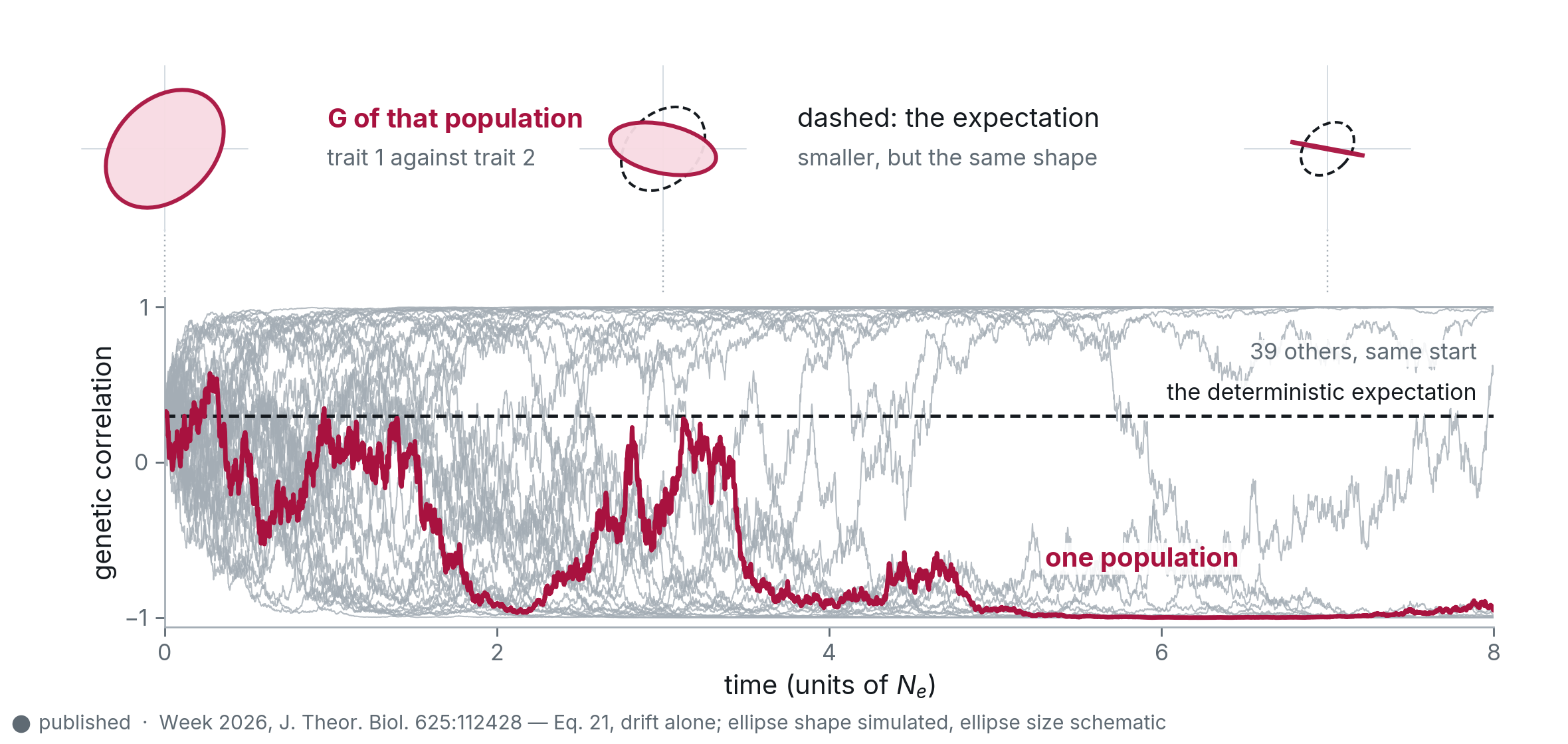
Backup: drift reorients G
Backup published
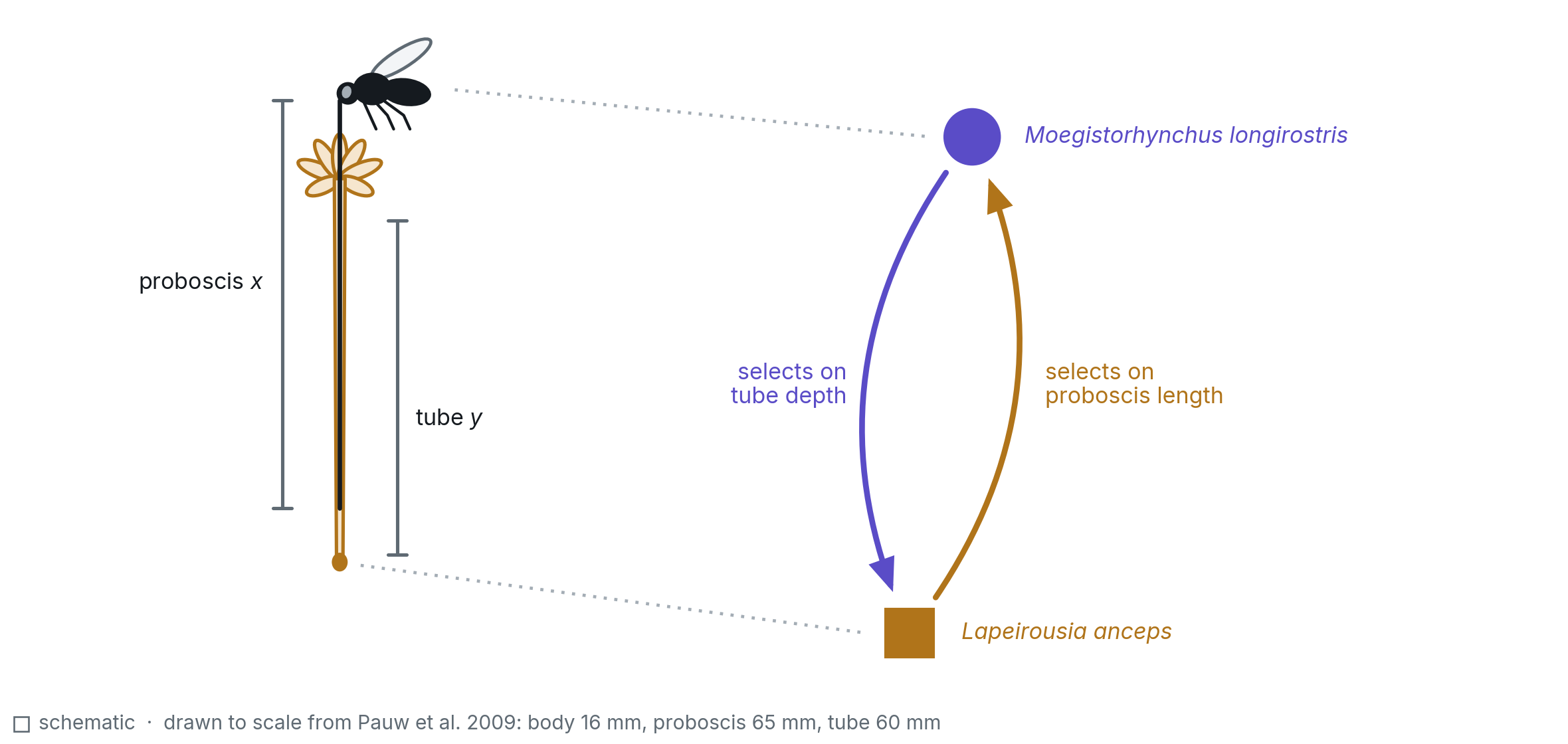
Backup: the fly and flower, to scale
Backup schematic
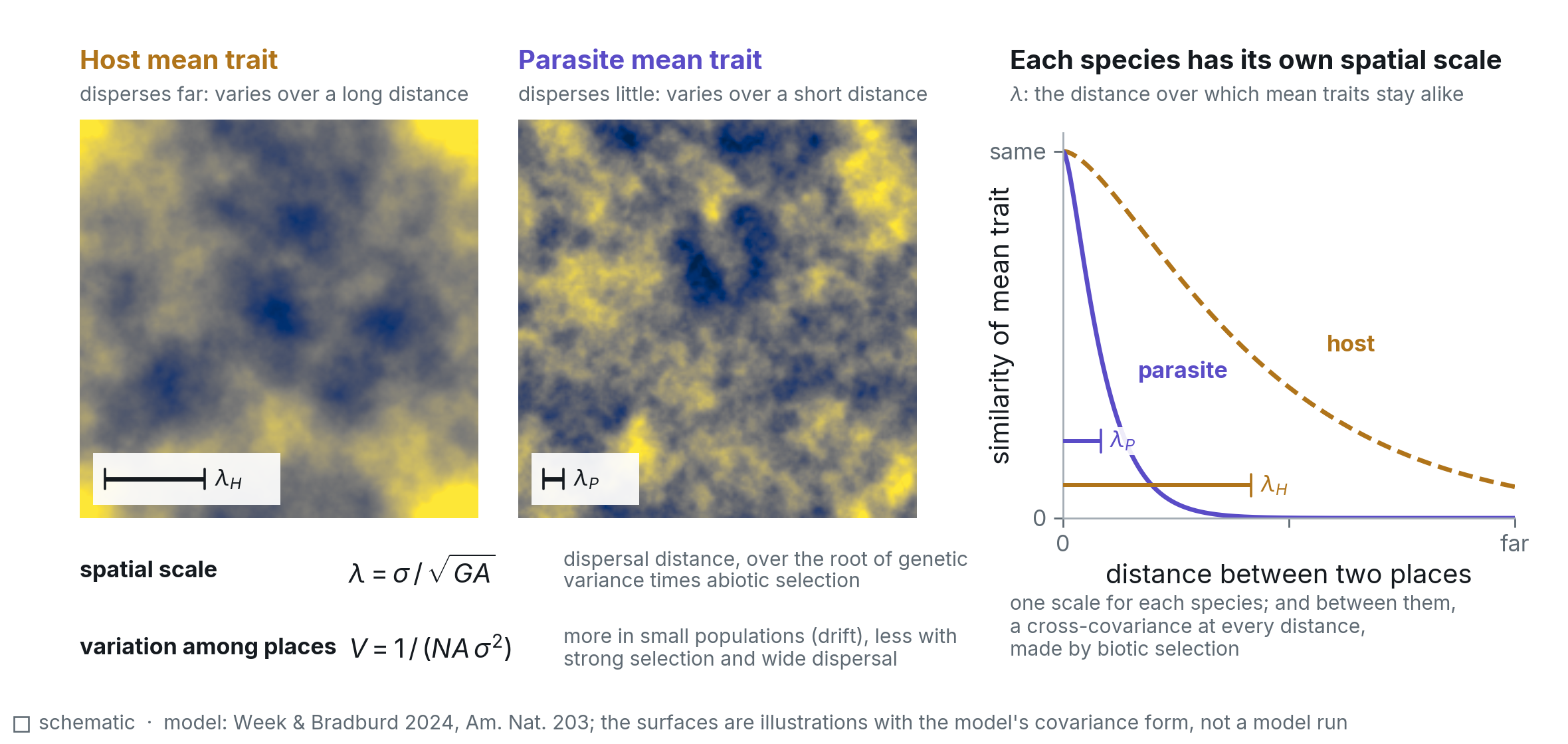
Backup: each species has its own spatial scale
Backup schematic
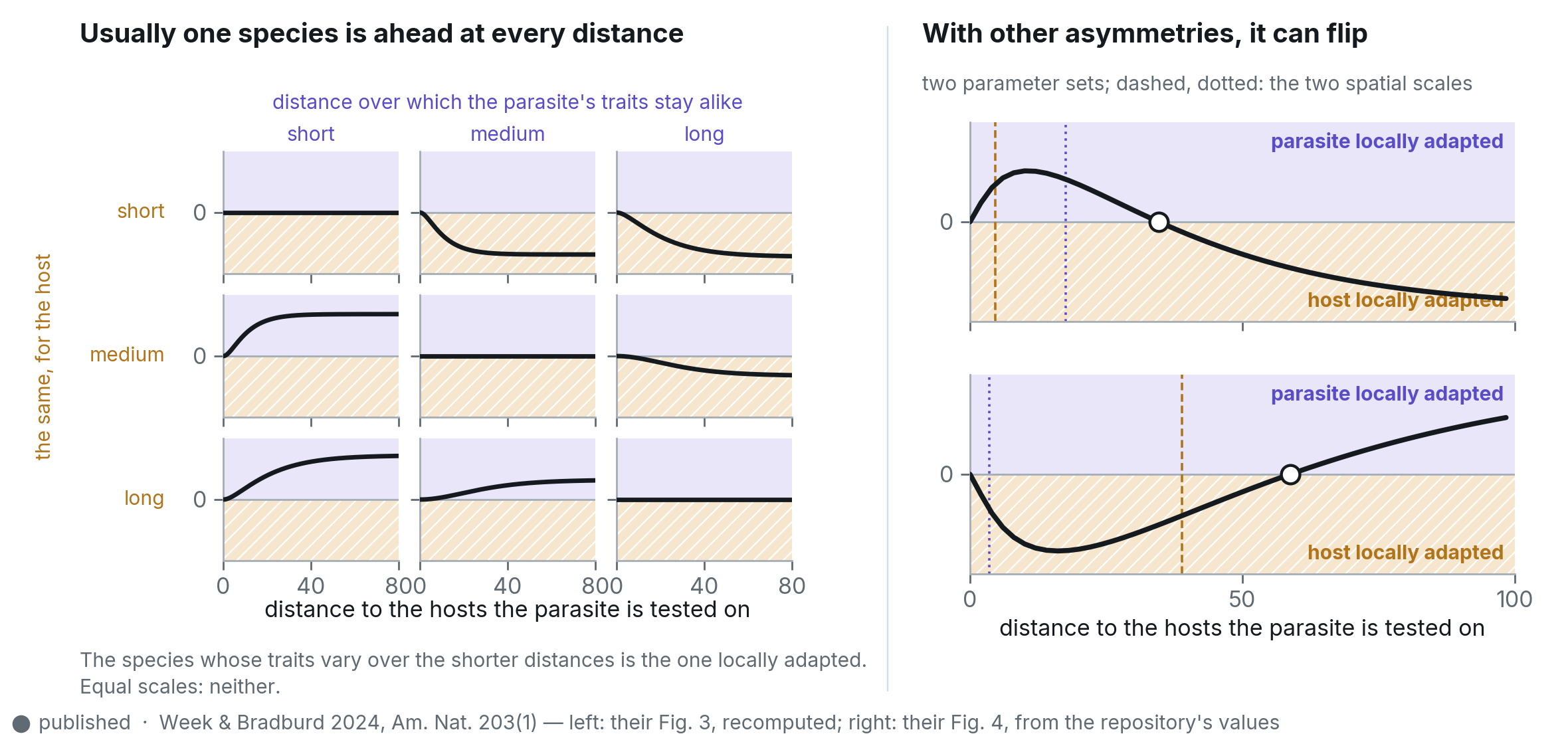
Backup: local adaptation, all nine cases
Backup published
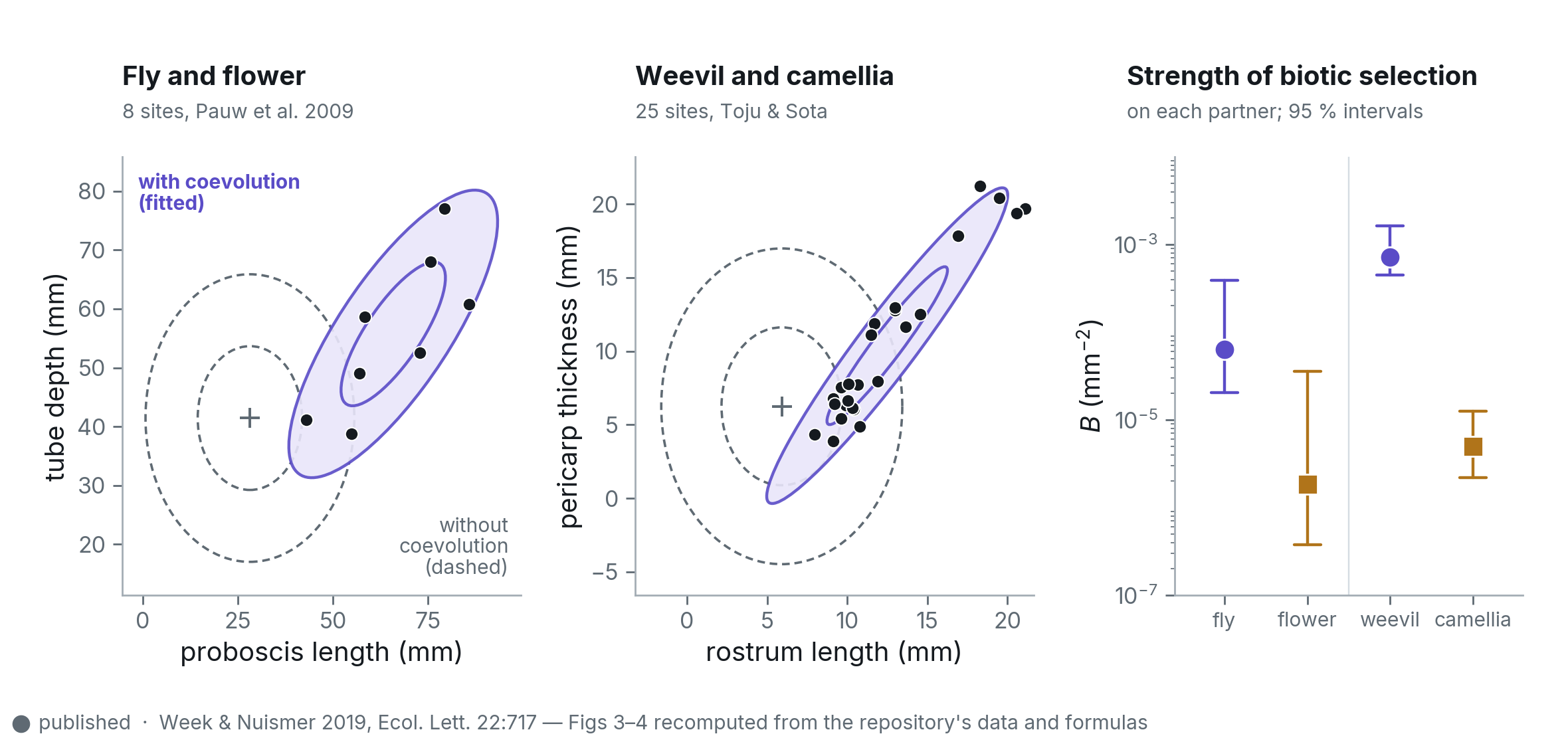
Backup: both systems
Backup published
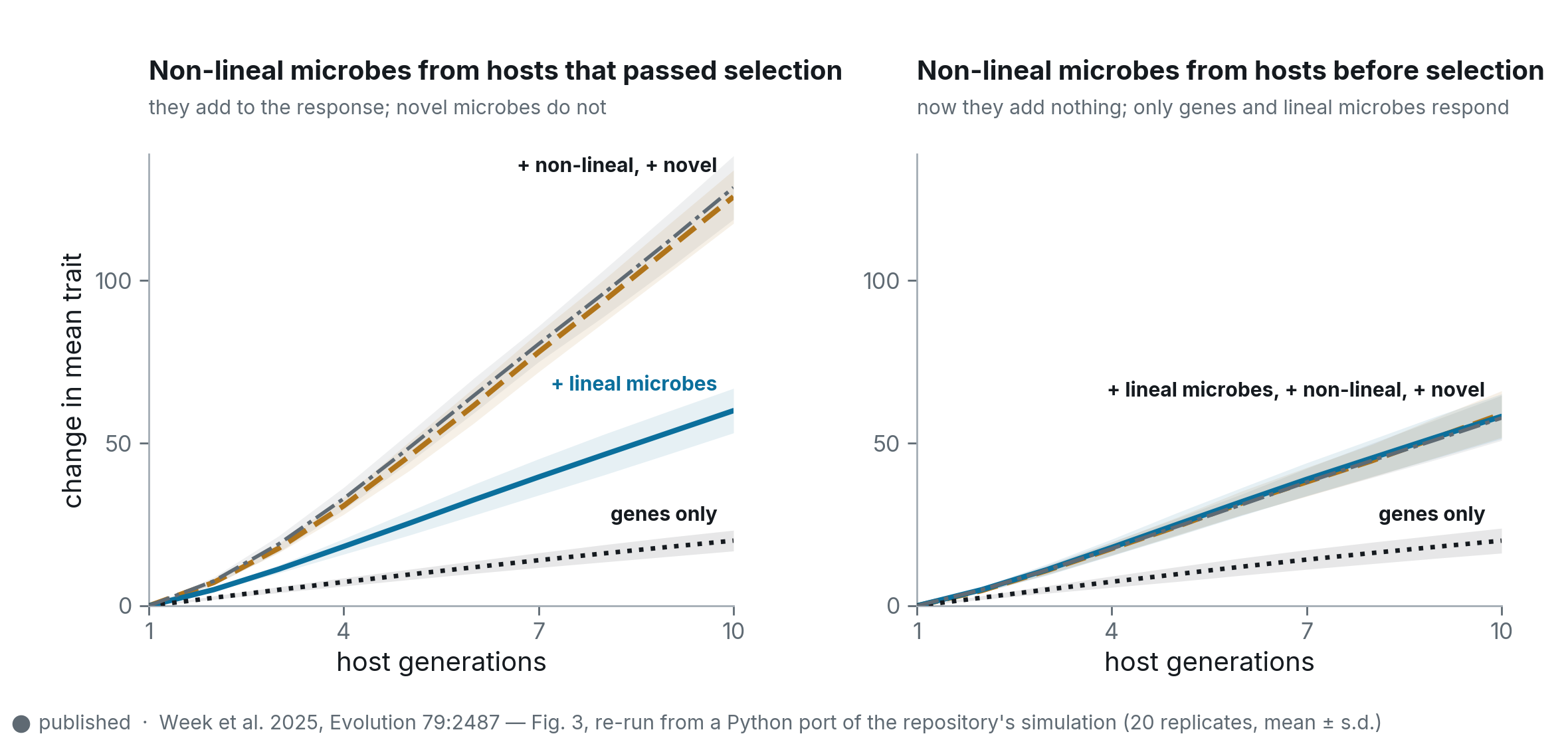
Backup: the response over generations
Backup published
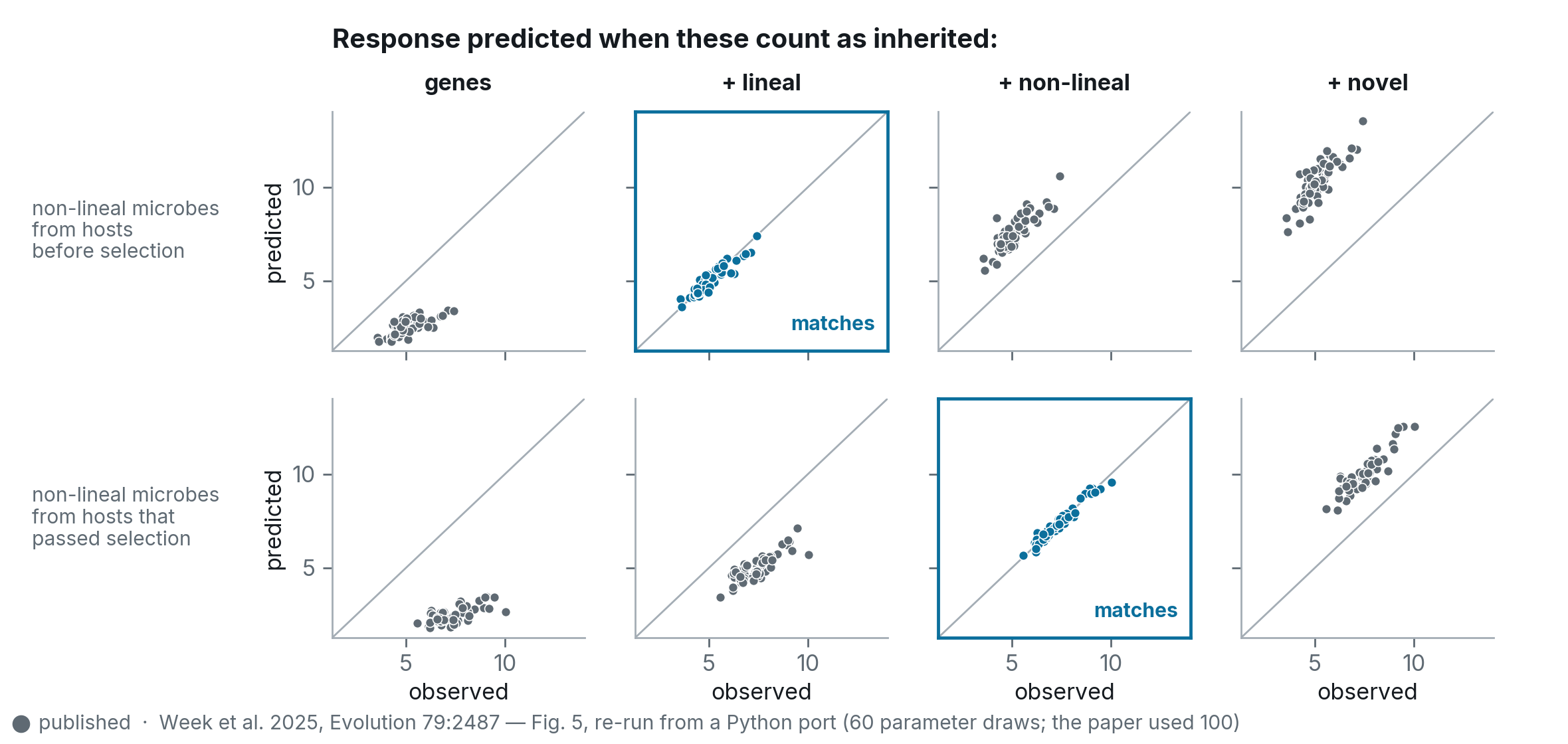
Backup: predicting the response
Backup published
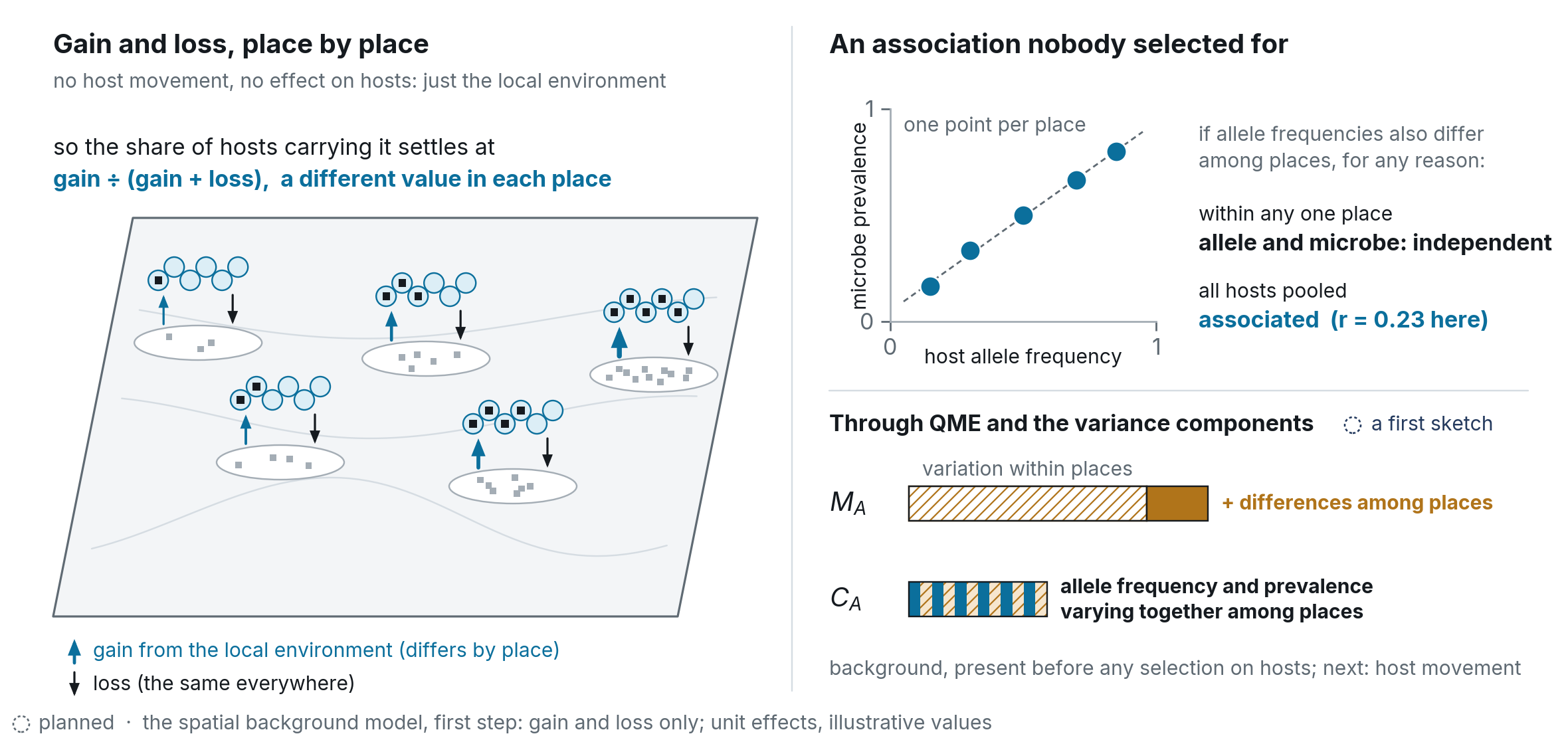
Backup: microbial geography before host selection
Backup planned
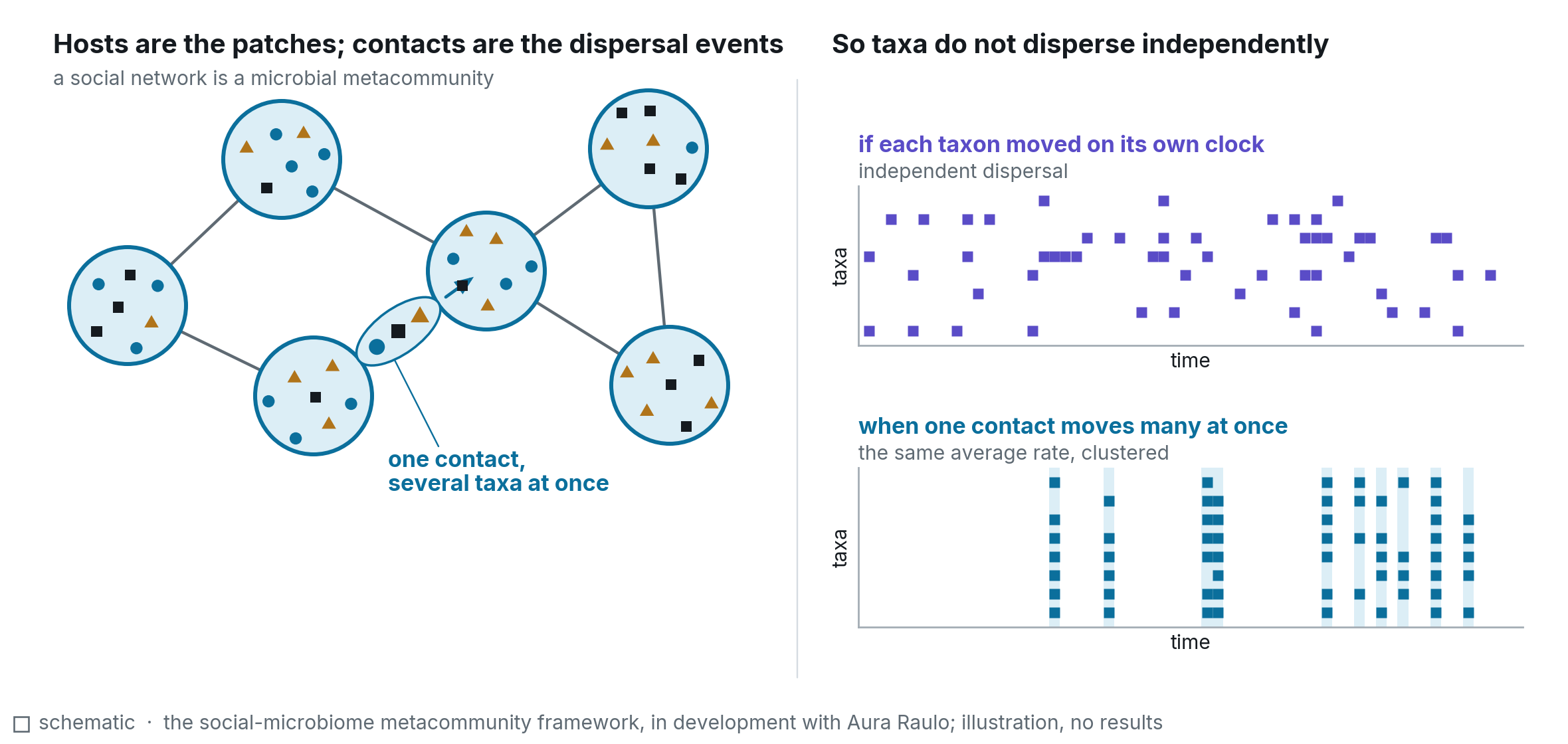
Backup: social contact is microbial dispersal
Backup schematic
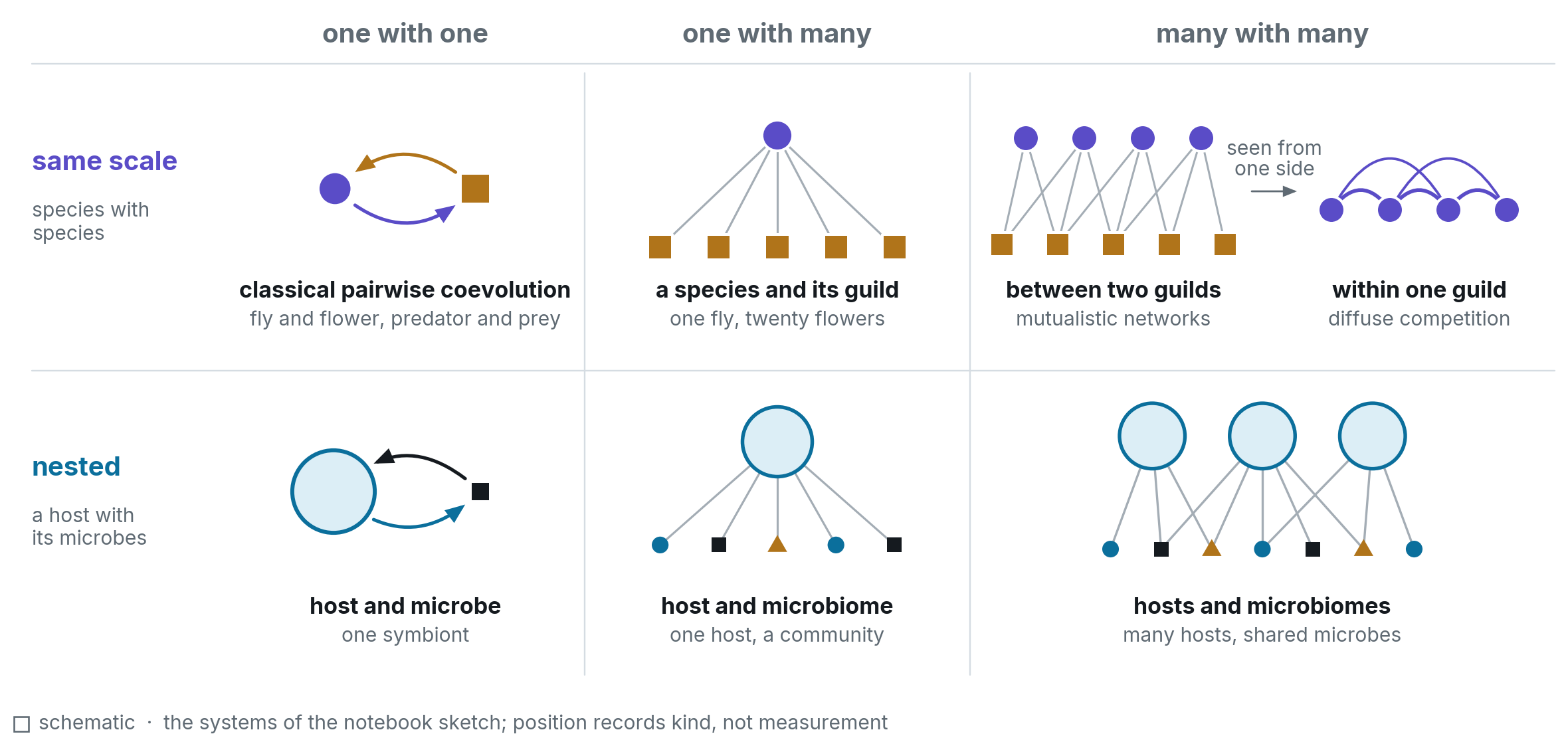
Backup: the systems as a grid
Backup schematic